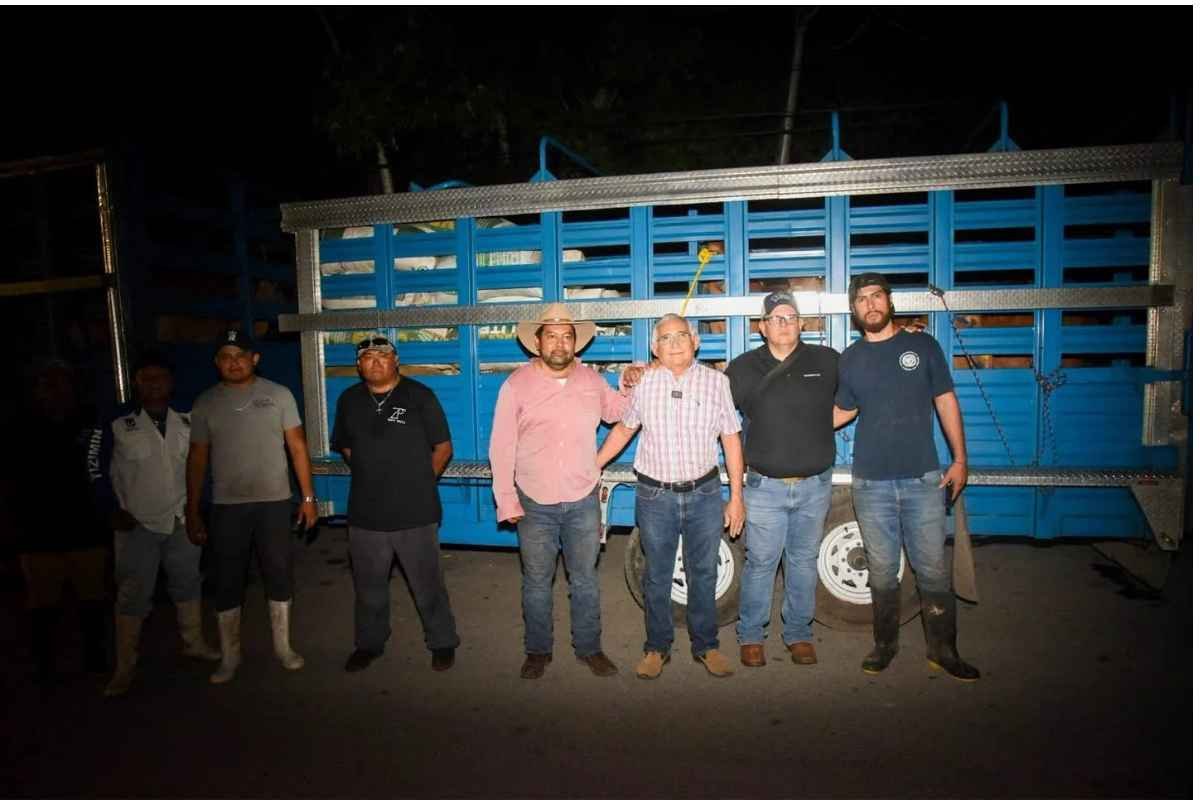
Mérida, Yucatán — Cattle trucks began entering the Xmatkuil fairgrounds again on Wednesday afternoon, roughly 24 hours after ejidatarios from Dzununcán blocked the site’s access roads and left animals penned inside transport cages for hours, some of them after journeys of up to 1,500 kilometers (about 930 miles).
The entrances reopened around 2:30 p.m. after the landowners met with Yucatán Governor Joaquín Díaz Mena at the state government palace and agreed to pull down their protest, opening the way for registered breeding stock headed to the exhibition halls and the World Brahman Congress.
Workers began unloading the animals and moving them into the areas set aside for their housing, according to news reports and images of the first trucks entering the grounds.
The reopening eased the immediate bottleneck but did not erase the damage done during the shutdown, particularly for breeders who warned that their animals’ health had been put at risk.
Four Trucks Held Since Tuesday
Manuel Medina Castro, president of the Association of Registered Cattle Breeders of Yucatán and a veterinarian, said four trucks with livestock cages had been waiting since 2 p.m. Tuesday with no way into the facility.
He said several of the animals came from distant states and had already logged long travel times before they ran into the blockade. Among them were pregnant females and cows that had recently given birth, which need proper hydration, feed, ventilation and rest.
Medina Castro warned that extended confinement inside the vehicles raised the risk of illnesses linked to transport stress, including so-called shipping fever, a respiratory condition that can cause serious complications. He also voiced concern about possible infections and other problems in especially vulnerable animals, with consequences that could include death.
Before the entrances reopened, producers reported that only about 30% of the cattle scheduled for exhibition and competition had been able to enter.
Breeders Threatened Legal Action Over Possible Deaths
The breeders’ association had demanded passage for the vehicles carrying live animals regardless of the land dispute between the protesters and the state government.
Medina Castro said the sector respected the ejidatarios’ right to demonstrate but questioned why the restrictions were applied to trucks hauling livestock after long journeys. Producers said they would file lawsuits against whoever was responsible if any animal died as a result of the waiting conditions.
Their concern went beyond the four trucks initially held back, since more shipments from Tabasco, Veracruz and other states were due to arrive in the following days.
The standoff also complicated preparations for the World Brahman Congress, scheduled for Nov. 10-15 with breeders from more than 30 countries announced as participants.
No animal deaths linked to the blockade have been officially reported so far, and no full veterinary assessment has been released that would establish what the animals suffered during the hours of detention.
The 150 Million Peso Claim Behind the Shutdown
The protest formally began Tuesday, Nov. 3, when ejidatarios from Dzununcán blocked the entrances to the fairgrounds to demand 150 million pesos in compensation for land they say has remained occupied for 22 years.
The dispute involves roughly 82 hectares whose occupation and legal status are contested between members of the agrarian community and the authorities. The protesters say successive state administrations never settled compensation for the land in use.
The blockade disrupted preparations ahead of the fair’s inauguration, scheduled for Friday, Nov. 6, by blocking the usual flow of suppliers, vendors, haulers and breeders.
On Wednesday morning, Government Secretary General Omar Pérez Avilés went to the site to talk with the protesters and arranged a 1 p.m. meeting with Díaz Mena at the government palace. The state government acknowledged at the time that the animals held in transport vehicles were among those affected by a dispute they had no part in resolving.
Blockade Lifted, Land Conflict Unresolved
After the meeting with the governor, the ejidatarios began clearing the access roads around 2:30 p.m., allowing vehicles to gradually resume entering the grounds. The talks produced an agreement to end the protest and continue dialogue, according to reports circulated that afternoon.
But the reopening does not mean the 150 million pesos have been paid, nor does it amount on its own to a definitive settlement of the land dispute.
With access restored, preparations for the Feria Yucatán Xmatkuil and the logistics of the World Brahman Congress can move forward, though the consequences of the hours the animals spent immobilized still have to be determined.
For producers, the immediate priority is to finish unloading, watering and inspecting the animals, especially those that waited the longest.
More Government
- Cancún Residents Halt Aguakan Roadworks in Villas Otoch Over Missing Permits
- Peccary Struck by Vehicle on Cozumel Road Prompts Call for Wildlife Warning Signs
- Playa del Carmen Residents Say Aguakan Leaves Streets Ruined After Unfinished Works
- Quintana Roo Congress Weighs Bill to Regulate AI Use in State and Municipal Government
- Cancún Leads Quintana Roo Will Drive as 2,104 Testaments Are Filed