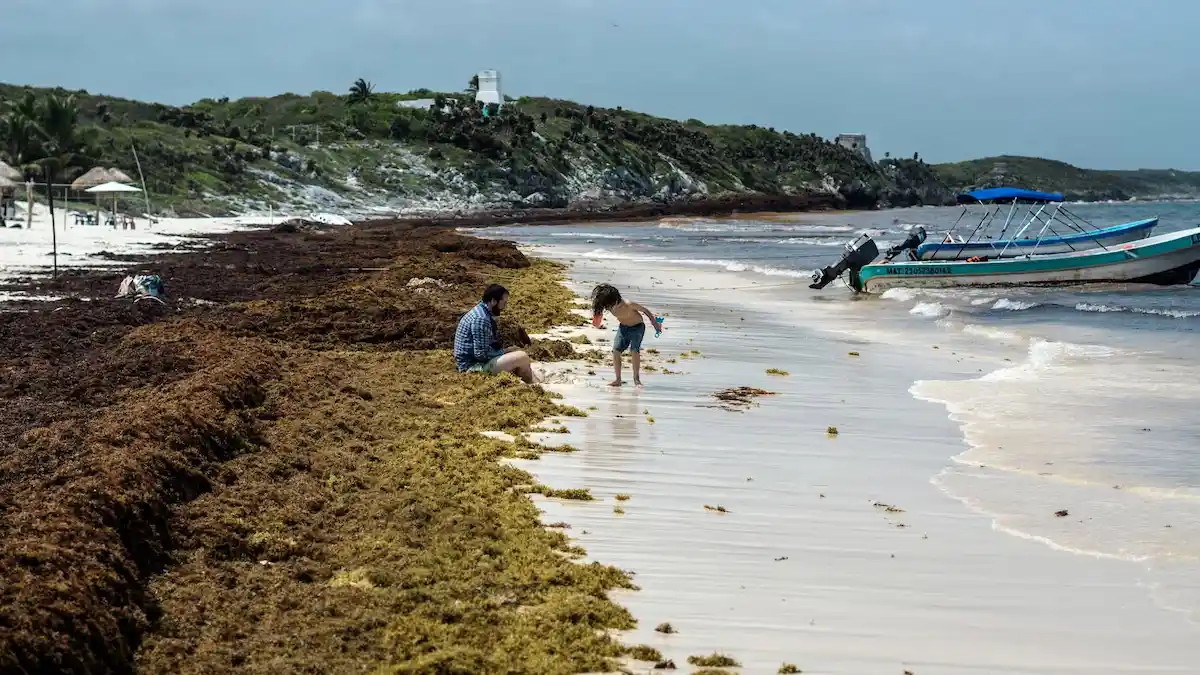
Tulum, Quintana Roo — More than 2,658 tons of sargasso have been removed from Tulum’s beaches so far this year, and crews have made over 1,000 trips to disposal sites. But the seaweed keeps arriving faster than they can clear it, prompting experts and local officials to call for extraordinary measures, including a possible environmental emergency declaration.
Ivan Penié, general manager of Ecoprotección Akumal A.C. and research coordinator at Oceanus International, said the volume of sargasso reaching the Mexican Caribbean has reached unprecedented levels, overwhelming the response capacity of the Mexican Navy, state and municipal brigades, and private sector cleanup teams.
“We are facing a phenomenon that has already exceeded any installed response capacity. The amount of sargasso arriving on the coasts makes it impossible to handle with current resources alone,” Penié said.
He added that the problem is not just the daily influx of seaweed but also the limited ability to process it once collected. Although Mexico has extensive knowledge about the phenomenon — with more than 600 scientific studies and around 30,000 academic papers on sargasso — many proposed solutions have not been implemented due to a lack of investment and public policies to scale them up.
Penié warned that the situation poses a risk to Quintana Roo’s economy, which relies heavily on tourism. Beaches covered in sargasso could deter visitors and directly harm workers and small tourism service providers.
David Buchanan García, director of the Federal Maritime Terrestrial Zone (Zofemat) in Tulum, acknowledged that cleanup efforts are ongoing but said the daily volume of sargasso makes them insufficient. The municipality has specialized machinery, state support, and disposal sites, but beaches can become covered again just hours after being cleaned, forcing crews to restart operations continuously.
More Environment
- Cave Divers Find Ancient Animal Bones in Yucatán Cave
- Pre-Hispanic Bee House Unearthed in Tulum Sheds Light on Ancient Maya Homesteads
- Cozumel Crocodile Sightings Rise With Rains and Habitat Changes, Biologist Says
- Quintana Roo Whale Shark Season Closes With Up to 400 Sightings
- Mara Lezama Unveils Quintana Roo Sustainable Tourism Master Plan Through 2050
More Tulum
- Tulum’s Feria de la Cancha Maya to Gather Five Ceremonial Centers
- Deported Mexicans Flock to Quintana Roo as Support Services Strain
- Tulum Airport to Add Direct Flights to Five Canadian and U.S. Cities
- Tulum Targets Sports Tourism With 350-Athlete Event and 4.7 Million Peso Boost
- Fuel Tanker Erupts in Flames on Federal Highway 307 Near Tulum