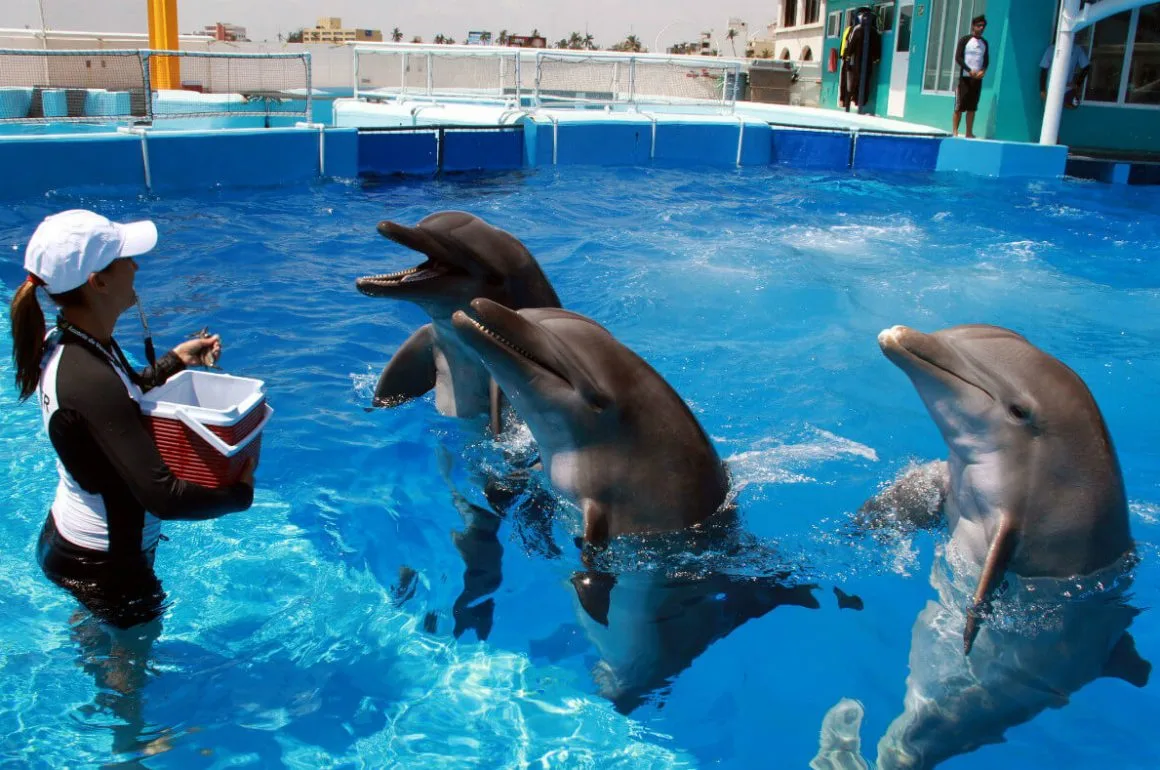
Cancún, Quintana Roo — Six companies that operate dolphinariums in Mexico have filed legal injunctions, known in Mexico as amparos, against the “Ley Mincho” reform, a wildlife law that bans the use of marine mammals in shows and breeding programs. The legal challenge comes one year after the measure took effect.
The reform to Article 60 Bis of the General Wildlife Law was introduced after the case of Mincho, a dolphin whose deteriorated health came to light after an accident during a show at a resort in Quintana Roo. The law restricts the reproduction, commercial use and performance of captive marine mammals.
The environmental group Empty the Tanks Mexico condemned the injunctions, saying companies are turning to the courts to avoid complying with the prohibition. The legal actions involve operators in Quintana Roo, Nayarit, Guanajuato, Guerrero and Mexico City, covering nearly all of the country’s main dolphinariums.
The group argues the amparo lawsuits are an attempt to prolong a decades-old practice of keeping dolphins in artificial tanks for tourism. Under the reform, dolphins must be transferred from conventional facilities to sea corrals by April 2027.
“Commercial interests should not be placed above measures designed to protect animals,” Empty the Tanks said. The organization has urged courts and the Supreme Court to uphold the reform and prevent legal challenges from becoming a way to keep dolphin shows and captive breeding alive.
The dispute also involves nine dolphins currently held in Cancún facilities. According to the group, the animals suffer from chronic diseases, injuries and other health problems. Activists have asked that they be moved to sea enclosures on the nearby island of Isla Mujeres, where conditions would be closer to their natural environment.
Biologist Selene Tejeda said the goal is not to immediately release dolphins that have lived for years under human care, but to begin rehabilitation and offer them a dignified retirement. “Sea corrals allow for greater mobility, natural currents and different water quality than concrete tanks,” she said. “These conditions could improve the animals’ welfare.”
The legal battle follows the permanent closure of a dolphinarium in the Riviera Maya after authorities detected violations of wildlife legislation and regulations governing the handling of the animals. The facility was fined more than 7.5 million pesos, and environmentalists point to the case as an example of the risks they say persist behind the oceanarium industry.
More Environment
- Two Atlantic Low-Pressure Areas Watched; One Shows 40% Cyclone Chance
- Tren Maya Freight Complex in Chetumal to Break Ground in 2027
- Lawmakers Propose One Tree Every 15 Meters in New Quintana Roo Developments
- Bacalar Aims to Show the World Its Appeal Goes Beyond the Lagoon
- Quintana Roo Weighs Permanent Revocation of Permits for Legacy by Awa Playacar After Closure Seals Broken
More Cancun
- IMSS Hospital Deputy Director in Cancún Reports Death Threats After Viral Video
- Judge Binds Over Driver in Fatal Cancún Motorcycle Crash
- Crews Begin Removing 14 Sunken Boats From Cancun’s Nichupte Lagoon
- Authorities Seize Drugs, Detain Three in Two Cancún Raids
- Two 13-Year-Old Girls Found Dead in Separate Cancún Homes