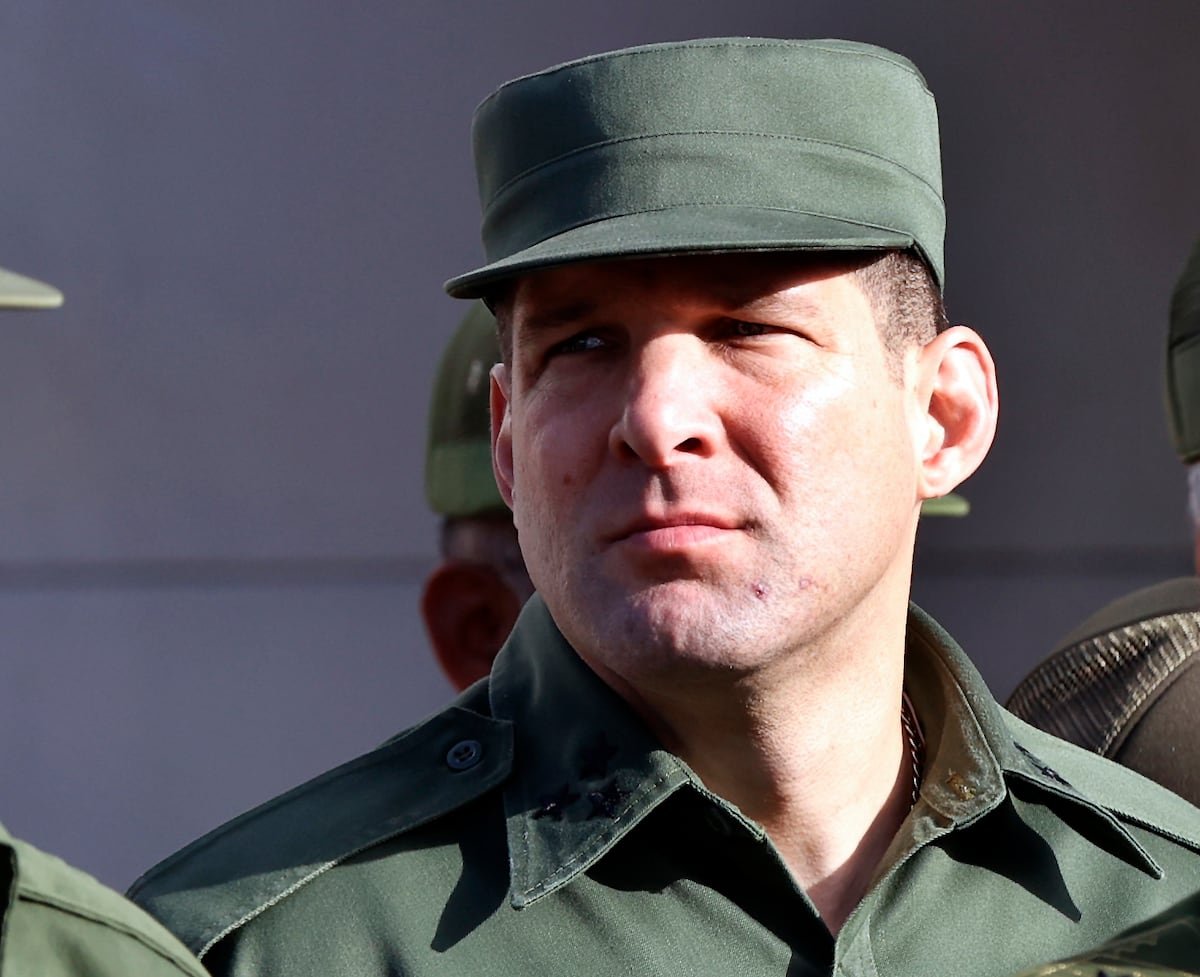
A detained member of a criminal network has stated that Raúl Rodríguez Castro, a key figure in negotiations between Cuba and the United States, supported his human trafficking operation from Havana, according to The New York Times. Rodríguez Castro, known as “El Cangrejo,” is the grandson of former Cuban president Raúl Castro.
For decades, Operation Sisyphus — spearheaded by the Federal Bureau of Investigation and the U.S. Department of Homeland Security — has targeted organized crime based in the Caribbean, focusing on international maritime migrant smuggling and long-standing theft networks operating between Florida, Cuba, and Mexico. In the last two years, court documents reveal that this special task force has secured convictions against more than 30 high-ranking members of a group known as the Cuban Mafia in Quintana Roo.
José Miguel González Vidal, one of the detainees who pleaded guilty, stated that Raúl Guillermo Rodríguez Castro had supported the criminal organization’s operations from Havana.
For years, luxury boats and nautical equipment disappeared in cities across southwest Florida, from Sarasota and Naples to Marco Island. Even after three men from South Florida were arrested in Sarasota in January 2010 — during a sting operation targeting GPS device thieves — it would take a decade before U.S. federal authorities linked these cases to a vast conspiracy involving human trafficking and boat theft between Cuba, Mexico, and the United States.
In 2020, the U.S. Department of Justice indicted several Cubans residing in Mexico suspected of belonging to the Cuban mafia operating in Quintana Roo, a southeastern state. They were accused of stealing boats in southwest Florida — an operation dating back to 2009 — and using them to smuggle thousands of migrants from Cuba to Mexico so they could reach the United States. Among those targeted by this illicit activity were professional baseball players, including Adeiny Hechavarría, who played for various teams and announced his retirement in 2025, and Los Angeles Dodgers slugger Yasiel Puig.
According to court documents, at least 25 people died during these journeys. The evidence indicates that those who could not pay the $10,000 fee were held captive in Mexico, tortured with electric shocks, whipped with wooden boards, and had their families extorted. Some women were forced to work in strip clubs.
The Justice Department revealed that traffickers contacted victims’ families and threatened to torture, starve, or kill them if they refused to pay. Those who paid were taken by bus to the U.S.-Mexico border and instructed on how to apply for asylum.
Members of the Cuban mafia also sought to profit from drug trafficking and fraud schemes that included smuggling boats, cars, and trucks, according to the Justice Department. Some of these boats were sold to pay off foreign officials or used as bribes, the documents state. At least six defendants pleaded guilty, including González Vidal, a 38-year-old Cuban-Spanish citizen whose criminal record included multiple convictions for unlawful detention, robbery, grand theft, simple theft, and fraudulent use of credit cards.
González Vidal, who pleaded guilty in late 2023 and was sentenced to 25 years in prison in the United States, testified that he delivered one of these stolen boats to Rodríguez Castro, nicknamed “El Cangrejo” by his associates because he has an extra finger due to a congenital condition. The Cuban government has called the accusations involving the man, who was also a bodyguard for his grandfather Raúl Castro, “slander.”
Among other activities, prosecutors uncovered the purchase of goods with stolen credit cards and their smuggling into Cuba for sale in government-run stores. The defendants were also charged with the theft of more than 600 boat motors and vessels in the Tampa area, which they then sent to migrant smugglers in Quintana Roo.
A witness in the investigation described the group as “the true pirates of the Caribbean” and called them “ruthless killers.” According to court documents, in 2009, several members of the Cuban mafia conspired to kidnap and murder a man as part of a dispute involving the Los Zetas cartel. His body was dismembered and dumped at sea, according to the investigation.
For months, Rodríguez Castro, said to be Raúl Castro’s “darling,” has gone from being the “bodyguard” not only of the former president’s brother, but also of the negotiations between Havana and Washington. Since the second Trump administration, the U.S. government has exerted maximum pressure and demanded profound political reforms and a change of system from the island’s government. “El Cangrejo” was present at talks that had been taking place since the beginning of the year, which Cuba denied. Rodríguez Castro traveled to the Caribbean Community summit to meet with advisors to Secretary of State Marco Rubio. When President Miguel Díaz-Canel first acknowledged in March that they were negotiating with the U.S. administration, “El Cangrejo” was there.
More Crime
- Nine Sick Dolphins Stranded in Abandoned Cancún Water Park
- Mexican Navy Rescues 45 Migrants From Two Yachts Near Ensenada
- Playa del Carmen Cuts Intentional Homicides by 51.6% in First Eight Months of 2026
- Tulum Firearms Seizures More Than Double 2024 Total, Officials Say
- Fatal Motorcycle Crash Closes Federal Highway 307 at Tulum
More Quintana Roo
- Scientists Detect Early Signs of Groundwater Contamination in Quintana Roo
- Measles Cases Surge 1,940% in Mexico’s Yucatan Peninsula
- Microplastics, Sunscreen Chemicals and Repellents Under Study in Quintana Roo Waters
- Quintana Roo to Present Mexican Caribbean Cenote Guide at DEMA Show 2026
- Quintana Roo Rethinks Tourism Model as Visitor Spending Falls