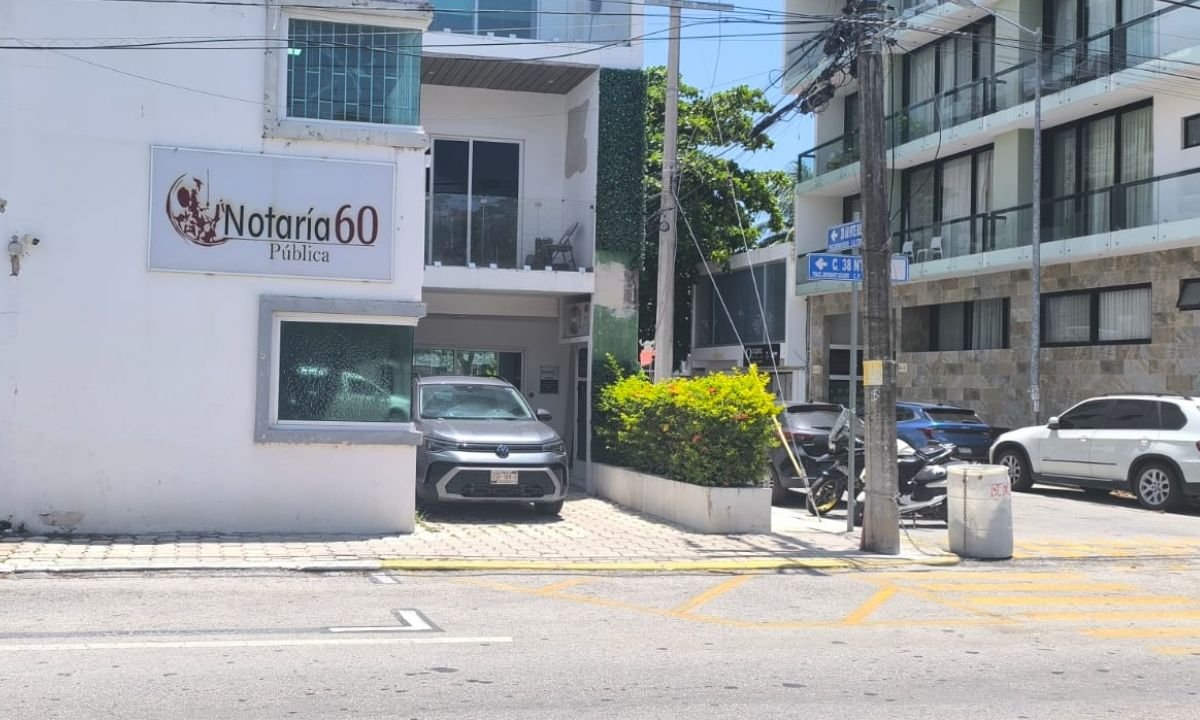
Cancun, Quintana Roo — Quintana Roo has 2.3 times more notaries per capita than Mexico City, according to a comparative analysis based on official directories and 2020 census data from INEGI, the national statistics agency.
The study found that the Caribbean state has 116 active notary offices for a population of 1.85 million, or 6.24 notaries per 100,000 residents. Mexico City, with 9.2 million residents, has 250 notaries — just 2.71 per 100,000.
That means Quintana Roo has one notary for every 16,000 people, while Mexico City has one for every 37,000.
The finding challenges the widespread belief among people handling property deeds in the Riviera Maya that notaries in the state are “much more” expensive than those in the capital.
Cancun and Playa del Carmen Concentrate 7 in 10 Notaries
The concentration is uneven within the state. The municipalities of Benito Juarez, home to Cancun, and Playa del Carmen together account for 82 of the 116 notary offices — 71% of the total — reflecting the real estate and tourism activity in the Riviera Maya.
Benito Juarez, with 61 notaries for 911,000 residents, has the highest density in the state: 6.69 per 100,000. Playa del Carmen, with 21 notaries for 334,000 residents, has 6.29 per 100,000. Both exceed the state average and nearly triple Mexico City’s rate.
The analysis found that the perception that notarizing a property in Quintana Roo costs significantly more stems from factors other than notary fees. The notary’s professional fee in the Riviera Maya is about 1.5% of the transaction value, similar to or slightly above Mexico City’s official fee of 6,331 pesos for standard transactions.
However, the study noted a transparency gap: while Mexico City publishes its complete fee schedule annually in the official gazette, Quintana Roo’s updated fee table was not found in official sources, making it difficult for the public to verify charges.
Tulum Surprises With Highest Notary Density
The analysis expanded to Cozumel and Tulum and found an unexpected result. Tulum, with just four active notaries for 46,721 residents, has a density of 8.56 per 100,000 — the highest among the four tourist municipalities analyzed, surpassing even Cancun and Playa del Carmen.
The finding is attributed to Tulum’s rapid population growth over the past decade, which appears to have outpaced the creation of new notary offices.
Cozumel, with five notaries for 88,626 residents, has a density of 5.64 per 100,000, close to the state average.
Becoming a Notary: Two Paths, Different Juries
The analysis also compared the process for obtaining a notary license in both entities. Both require a two-stage competitive exam: first an “aspirant” exam, then an exam for a specific notary office. This contrasts with other Mexican states where appointments are more discretionary.
The key difference lies in the examining jury. In Quintana Roo, the jury consists of three notaries: one appointed by the state executive, one by the Superior Court of Justice, and one by the Notary Council, giving the judiciary a role. In Mexico City, the five-member jury is drawn from the city government, the Legal Counsel’s Office, and the Notary College, with no judicial participation.
Quintana Roo also requires stronger local ties: five years of uninterrupted residency, four years of professional licensure, and 24 months of practice under a titular notary, plus a long list of prior public offices that disqualify candidates, from local deputy to magistrate. Mexico City requires only 12 months of prior notarial practice and no explicit residency requirement.
Mexico City’s process is more transparent: its calls for applications identify specific notary offices by number, and authorities have publicly reported that since December 2018, 14 notary patents and 25 aspirant patents have been awarded through this mechanism. For Quintana Roo, no similarly detailed follow-up reports were found.
More Business
- Supreme Court Reopens Mahahual Case Against Royal Caribbean
- Cozumel Triathlon Draws 350 Athletes and 13 Million Pesos in Tourism Spending
- Tourist Boat Traffic Slumps Across Quintana Roo Ports in September
- Mexico Tourism Secretary Acknowledges Tulum Crisis but Warns Alarmist Posts Deepen the Damage
- IMSS Raises Wage Increase to 8% After Workers Reject Initial Offer
More Cancun
- Hells Angels Leader Arrested in Cancun Over Cartel Drug Trade
- Cancún Waives 100% of Fines and Surcharges to Help Businesses Get Licensed
- Puerto Morelos Mayor Says Cancún Mansion Raided by Federal Agents Was ‘Lent’ to Her
- Mothers Keep Up Protest at Cancún Middle School Over Alleged Attack on Student
- Moderna COVID-19 Vaccine to Be Offered to Children in Cancún