
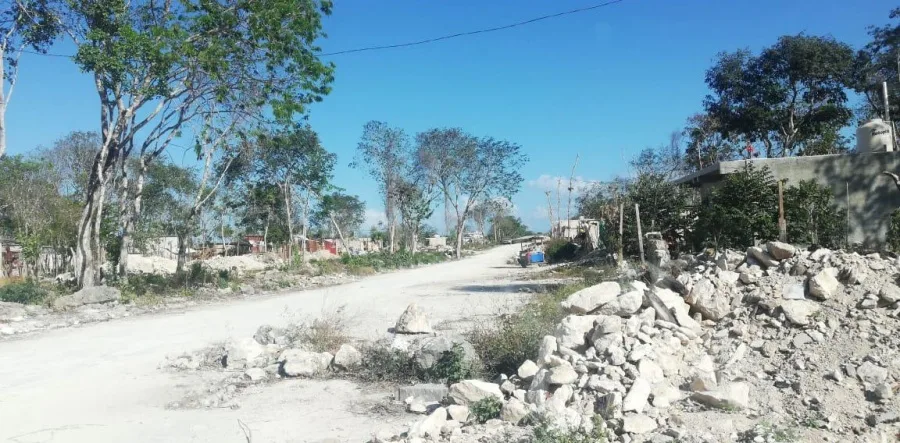
Playa del Carmen, Quintana Roo — Playa del Carmen will urbanize the neighborhoods currently moving through the land-regularization process in stages, drawing on a mix of public funding sources to pay for the work, city officials said.
Alberto Farfán Bravo, the city’s director of Housing and Regularization, said that installing drinking water and drainage will not necessarily fall to the private utility Aguakan to finance.
San Judas Tadeo and In House, both in the Ejido zone, will be the first neighborhoods to be regularized. While progress has been made, officials have not yet scheduled the installation of the basic services required by law, including Article 4 of the Constitution, which guarantees the right to decent housing and to access, availability and sanitation of drinking water, and Article 115, which obliges municipalities to provide basic public services.
Those services include:
- Drinking water
- Drainage and sewerage
- Public lighting
- Garbage collection
- Streets
- Parks
Farfán Bravo acknowledged that the city has not yet estimated how much it will cost to invest in all of those services.
Although Aguakan has the budget to invest in a project of this scale, the housing director said the work does not necessarily fall to the company, meaning the two sides will have to reach an agreement once the amounts are set. The investment, he said, could end up being shared.
Electricity service will be defined once the distribution of blocks and the number of lots is settled, so that crews can carry out the work with precision, he added.
As for public spaces such as parks and sports facilities, Farfán Bravo said the city cannot yet provide specifics, but that officials will try to salvage what exists. In the case of In House, recreational areas were designated from the start of the failed subdivision, he noted.
More Development
- Paseo de las Sirenas Becomes a New Isla Mujeres Attraction
- Autocar Adds 100 Hybrid Buses to Its Cancún Fleet
- Quintana Roo Governor Announces Start of CFE Submarine Cable Works in Cozumel
- Profepa Shuts Down Work Damaging Coastal Dune in Yucatán
- Cancún Urban Development Plan Reaches 50% as Officials Weigh Where City Can Grow
More Playa del Carmen
- Playa del Carmen Opens One-Stop Shop to Streamline Business Permits
- Taxi Union Flags Rise in Unregulated Ride-Hailing Vehicles in Playa del Carmen
- Federal Judge Delays Hearing on Lili Campos Suspension Bid
- Four Arrested in Playa del Carmen Kidnapping Case
- Playa Spice Returns With Six Weeks of Restaurant Promotions Across Playa del Carmen