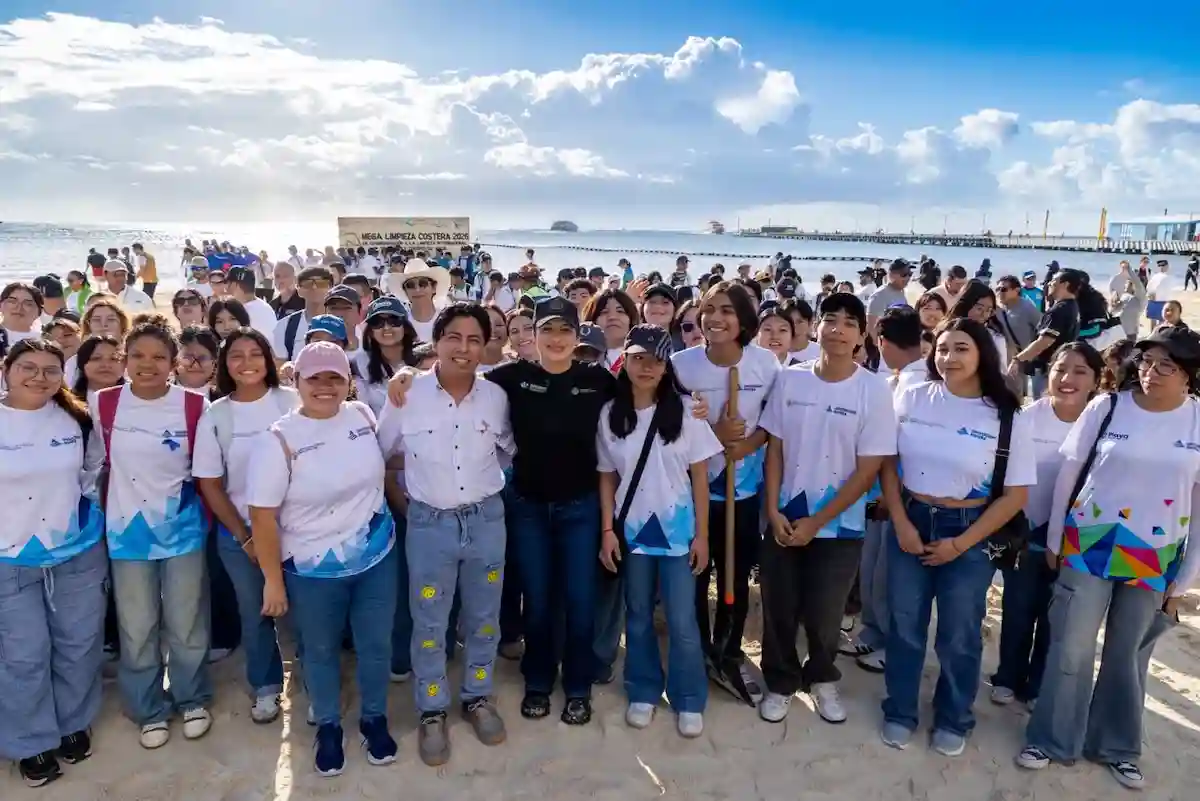
Playa del Carmen, Quintana Roo — Mayor Estefanía Mercado led the 2026 Mega Coastal Cleanup, a municipality-wide effort that drew more than 2,000 volunteers to 21 beach access points, eight kilometers of shoreline and three urban water bodies.
The event was held as part of the International Coastal and Water Body Cleanup (LICCA), an annual global campaign. Organizers said the day strengthened citizen participation and coordination between institutions to remove waste, prevent marine pollution and promote a culture of environmental responsibility.
The mobilization brought together residents, municipal workers, civil associations, unions, the Mexican Navy and representatives from other sectors in simultaneous cleanup work aimed at protecting coastal ecosystems and improving the condition of the municipality’s natural spaces.
Speaking at the launch of the event, Mercado stressed the importance of combining efforts and coordinating between government and society to preserve beaches and water bodies, which she said are essential to biodiversity, family well-being and the tourism industry.
The mayor thanked the more than 2,000 volunteers who took part in the 2026 edition, describing it as a social mobilization that expanded the reach of the cleanup and reinforced shared responsibility for the environment.
“These actions are part of a strategy aimed not only at removing waste, but also at raising awareness about the consequences of pollution and the need to prevent it at the source,” Mercado said.
Officials pointed to past editions to show the value of sustaining and expanding the recovery effort. In 2024, crews collected 460.9 kilograms of waste across 14 beach routes and four cenotes. In 2025, that figure rose to roughly 1,236 kilograms of trash and recyclable materials gathered along 15 beach routes and three cenotes.
Beyond clearing debris, LICCA promotes registering and classifying the waste collected so authorities can identify the main pollutants and use the data to shape public policy and preventive measures.
The cleanup was coordinated by the municipal Secretariat of Sustainable Environment and Climate Change, headed by Kandy Joana Mendoza Ramírez, working with Irving Lili Madrigal, director of the Federal Maritime Land Zone, along with other city departments and private-sector participants.
Mendoza said conserving the coastline is strategically important for Playa del Carmen, whose natural wealth is one of its main tourist draws and a core part of its economic and social development.
More Environment
- Residents Warn of Sewage Contamination in Puerto Aventuras Marina Canals
- Aquaponics Congress in Riviera Maya Takes Aim at Quintana Roo’s Food Dependence
- Activists File Complaints Over Heavy Machinery on Cancún’s Playa Delfines Dune
- Semarnat Denies Permit for Beach Restoration Project in Puerto Morelos
- Cancún Hoteliers Push to Reactivate Beach Recovery Trust
More Playa del Carmen
- Xcaret Reports Data Breach Affecting 8,300 Customers’ Contact Information
- Anti-Corruption Prosecutor’s Office Seizes House in Playa del Carmen
- AMEXME Riviera Maya Holds First General Assembly of Members in Playa del Carmen
- Former Puerto Aventuras Mayor and Two Ex-Officials Ordered to Trial on Extortion Charges
- Mexico’s Environment Ministry Denies Permits for Kantal Megaproject North of Playa del Carmen