
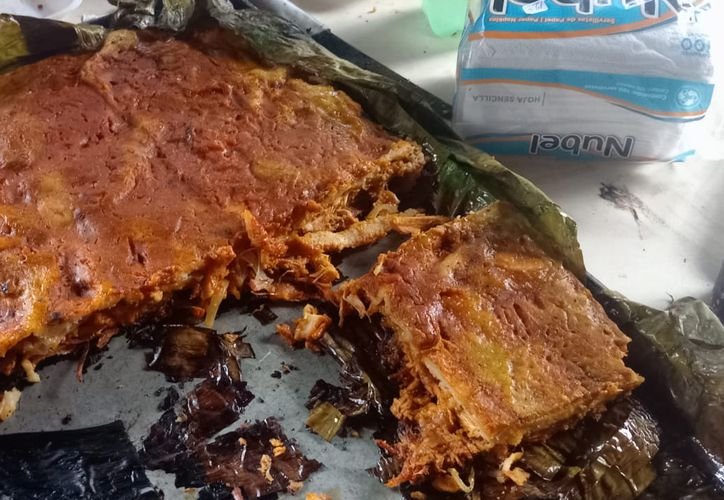
Cancún, Quintana Roo — A family-sized mucbipollo could cost as much as 1,500 pesos this Day of the Dead season, as inflation drives up the price of the ceremonial dish’s ingredients across the Yucatan Peninsula.
Businesses began advertising and taking orders for the traditional tamal in late September, when it becomes a staple on family tables during the holiday.
How Much Does a Mucbipollo Cost in 2026?
The cost of mucbipollo ingredients rose considerably this year, tracking inflation in basic food staples, which climbed at least 4.4 percent overall.
Options advertised on social media run 500, 750 and 900 pesos. Commercially made versions have risen by as much as 35 percent because of ingredient costs.
Ingredient Prices Climb
Carely Conrado Chay, a cook and mucbipollo vendor at Cancún’s Mercado 23, said pork rose between 10 and 15 percent, while corn masa and banana leaves went up around 10 percent.
“The price of many products went up, but vendors only raised the price of the pib by about 50 pesos so it wouldn’t hit people’s pockets,” she said.
She said her family’s recipe is more than 50 years old, a tradition passed down by her grandmother, who made it to share with loved ones and to place on the Day of the Dead altar.
“I was brought into making this dish when I was six years old, and now every year I cook more than 100 mucbipollos to sell during the Day of the Dead season,” she said.
The traditional recipe includes pieces of chicken, pork, hard-boiled egg and a habanero chile salsa that adds a kick of flavor.
“Some cook the mucbipollo buried and over firewood, which gives it a special flavor, but today most people make it in ovens,” she said.
Modern Twists and a Traditional Dish
The dish has not escaped modernization: vendors now offer versions with seafood, vegetable-only vegan fillings, and even ham and cream cheese. Conrado Chay said those preparations are no longer traditional mucbipollos, and noted that gourmet combinations can cost more than 1,000 pesos.
For those not from the Yucatan Peninsula, the mucbipollo — also known as “pib” or “mukbil pollo” — is a traditional and ceremonial dish of the region.
It is a kind of giant tamal made with corn masa, pork lard, espelón (tender beans) and a filling of chicken and pork seasoned with achiote, along with a thick salsa known as k’óol.
Its name in Maya means “chicken that must be buried.” It is the main dish of Janal Pixán, the Maya celebration of the Day of the Dead, when it is prepared as an offering to honor the faithful departed.
More Culture
- Cozumel Day of the Dead Festival Opens With Michoacán and Monarch Butterfly as Guests
- Graffiti Artists Erase Cancún’s ‘Wall of Corrupt Politicians’ as Activists Prepared to Restore It
- Isla Mujeres Opens Registration for Third ‘Bailando con el Corazón’ Dance Contest
- Día de Muertos Ofrendas in Cancún Can Cost Up to 1,500 Pesos
- Maya Legends Festival in José María Morelos to Showcase Oral Tradition on Nov. 11-12
More Cancun
- Fire Destroys Del Pacífico Restaurant on Cancún Avenue With History of Extortion
- Cancún Airport Schedules 386 Flights as Aer Lingus Relaunches Dublin Route
- Activists File Complaints Over Heavy Machinery on Cancún’s Playa Delfines Dune
- Same-Sex Couples in Cancún Face Hurdles Certifying Concubinage
- Cancún–Isla Mujeres Boat Cooperatives Sink Under Heavy Losses as Only 20 of 130 Vessels Stay Active
