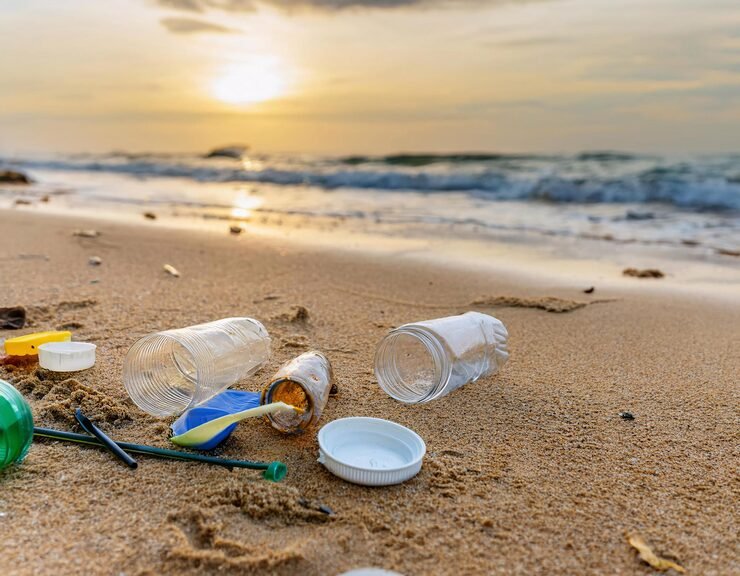
Cancún, Quintana Roo — As sea turtles arrive on the beaches of the Mexican Caribbean for their annual nesting season, plastic pollution remains one of the biggest threats to the region’s biodiversity, according to environmental authorities.
The Secretariat of Environment and Natural Resources (Semarnat) estimates that between 60% and 90% of waste reaching beaches and oceans is plastic. The National Inventory of Plastic Pollution Sources, prepared by Semarnat with support from the United Nations Environment Programme (UNEP), identifies tourism as a major land-based source of plastic waste, with the Mexican Caribbean listed as a priority region due to pressure on its coastal ecosystems.
Quintana Roo hosts some of Mexico’s most important nesting beaches for species such as the white turtle (green turtle), loggerhead, hawksbill, and leatherback turtles. Their breeding season runs from May to October. During this period, trash can block female turtles from reaching nesting sites and hinder hatchlings from making their way to the sea after emerging from nests.
Semarnat warns that turtles often mistake plastic bags, wrappers, and other debris for food, and can become entangled in floating waste. Microplastics — tiny particles that persist in the environment for years — enter the food chain and affect various marine species.
In this context, the international Plastic Free July campaign promotes reducing consumption of single-use items such as bags, bottles, straws, cups, and cutlery. Environmental authorities also urge keeping beaches clean, participating in cleanup drives, and respecting nesting areas to help conserve one of the Caribbean’s iconic species.
More Environment
- Screwworm Cases Detected in Two Dogs and a Horse in Tulum
- Playa del Carmen Recognized as International Bull Shark Zone
- Five Zones in Playa del Carmen Lose Urban Jungle to Construction Boom
- Hurricane Isaias Strengthens to Category 3 as Heavy Rain Hits Quintana Roo
- Hurricane Isaías to Bring Rain and Heat to Cancún and Playa del Carmen This Weekend
More Quintana Roo
- Tren Maya Freight Project Targets 4.7 Million Tons by 2030
- Cancún Business Council Launches Push to Diversify Quintana Roo’s Economy Beyond Tourism
- Mexico Adds COVID-19 Vaccine to Routine Childhood Schedule for Infants and Toddlers
- Power Outage in Chetumal Forces Closure of Quintana Roo Labor Courts
- Cancún Restaurants in the Red as Power Outages Add to Mounting Losses