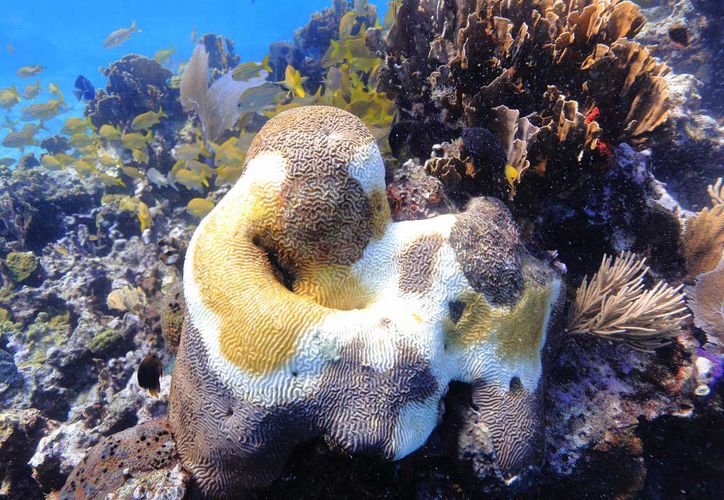
Cancún, Quintana Roo — Abnormally high ocean temperatures are pushing coral reefs in Quintana Roo toward a mass bleaching event, endangering the coastal biodiversity of the Mexican Caribbean, according to experts and satellite data.
Thermal monitoring and satellite data from the U.S. National Oceanic and Atmospheric Administration (NOAA) show that ocean surface heat anomalies have put the Caribbean region on maximum alert. In specific areas of Quintana Roo, past heat stress episodes have impacted up to 80 percent of coral colonies, with damage compounded by local pollution and urban development that has ignored natural cycles.
“These conditions are depleting coral colonies, as there are areas where survival barely reaches 50 percent, putting the state’s natural coastal protection at risk,” said Miguel Ángel García Salgado, director of the environmental organization Oceanus.
The threat of a new ocean heat wave comes after a string of setbacks. Coral resistance to another period of thermal stress is alarmingly low because their immune and metabolic systems are already compromised, said Claudia Padilla Souza, a marine science researcher and former collaborator of the Mexican Institute for Fisheries and Aquaculture Research (Inepesca).
“Devastating diseases such as tissue loss syndrome — which has consumed up to 90 percent of biomass in some colonies — along with bleaching from overheating, hurricanes, overfishing, and heavy tourist visitation, have practically wiped out several species from their natural habitat in Quintana Roo,” Padilla Souza said.
Coral reefs harbor more than 25 percent of the world’s marine life and act as natural barriers that reduce wave impact and prevent beach erosion. They also support artisanal fishing and diving and snorkeling tourism, both fundamental to the regional economy.
Key thermal records in the Caribbean basin
- Average summer temperatures: up to 3.5 degrees Celsius above the usual average.
- Absolute peaks and atypical milestones: up to 33 degrees Celsius recorded during the summers of 2023 to 2025.
- Thermal anomalies: variations of up to 2.5 degrees above normal in Tropical Atlantic and Caribbean waters.
Although the global mass bleaching phenomenon formally ended in late 2025, recurring warm patterns continue to keep thermal stress at “Alert Level 1 and 2.”
In response, the scientific community is calling for strengthened coastal monitoring, reduced discharge of untreated wastewater, and restoration projects using heat-resistant coral strains.
More Environment
- Brain-Eating Amoeba in Mérida Mall Lake Prompts Surveillance of 240 People
- Beach Weddings Plummet as Sargassum Swamps Quintana Roo
- Quintana Roo Business Group Seeks Public Dashboard for Sargassum Spending
- Autocar Adds 100 Hybrid Buses to Its Cancún Fleet
- Crews Remove Fuel From Yacht Grounded on Mahahual Reef to Prevent Spill
More Quintana Roo
- Mexico Drill Saturday Will Sound Alerts on 80 Million Phones
- Cancun Hotels Look to 2027 for Rate and Occupancy Rebound
- Cancún Mayor Ana Paty Peralta Says She Will Finish Her Term and Skip ‘Gino’ Segura’s Campaign
- Tren Maya Finds Reshape Understanding of the Maya ‘Collapse’
- Quintana Roo Enacts ‘Ley Nicole’ Banning Cosmetic Surgery on Minors