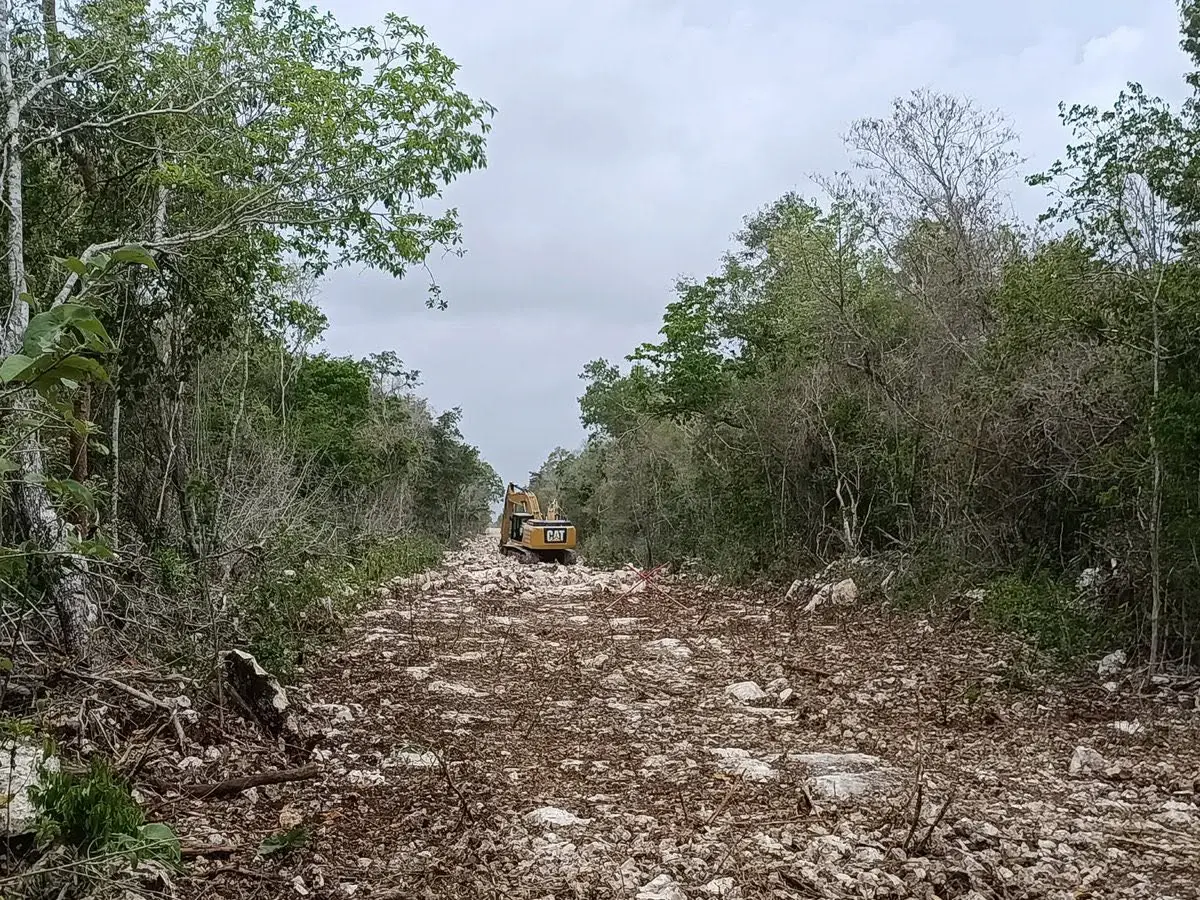
Tulum, Quintana Roo — Environmental organizations, specialists, and Maya community representatives have denounced that the construction and rehabilitation of a roughly 16-kilometer road in the Tulum area poses a direct threat to the Sac Actun system, considered one of the most important flooded cave complexes on the planet and the largest in Mexico.
Greenpeace Mexico, Sélvame MX, and the Mexican Center for Environmental Law (CEMDA) warned that the project is being developed in one of the most fragile regions of the Yucatan Peninsula, where an extensive network of cenotes, caverns, and interconnected underground rivers exists.
During a press conference in Mexico City, CEMDA Executive Director Gustavo Alanís stated that the construction was exempted from presenting an Environmental Impact Statement (MIA) under the argument that it was an improvement to an existing rural road, but he maintained that it is actually a new roadway that has caused damage to the jungle.
According to the activists, the use of heavy machinery and paving over limestone could cause irreversible damage to the region’s hydrological system.
Key risks highlighted include possible collapses and sinkholes due to the natural fragility of the terrain, interruption of underground freshwater flows, and direct contamination of the aquifer through leaks of fuel, oil, and waste from road operations.
Sac Actun is part of the Great Maya Aquifer and supplies water to local communities, tourism activities, and urban centers along the Riviera Maya, meaning any damage could have large-scale environmental and economic consequences.
CEMDA representatives reported that affected Maya communities filed a review appeal with the Secretariat of Environment and Natural Resources (Semarnat) on June 8, but have not yet received an official response. They did not rule out seeking a judicial injunction to try to halt the work.
The activists also questioned the legality of the environmental exemption granted to the project, arguing that the Regulations of the General Law of Ecological Balance and Environmental Protection impose restrictions on such works when they exceed certain dimensions. According to the complainants, the new road would be approximately seven meters wide, exceeding the parameters that allow a full environmental assessment to be waived.
Activist José Urbina argued that the road does not respond to the mobility needs of local communities or improve regional connectivity, and suggested its construction could be linked to real estate and tourism development in areas currently covered by jungle.
The organizations noted that the Sac Actun system harbors enormous biodiversity and serves as a habitat for dozens of species of flora and fauna, including protected species such as the spider monkey and other species dependent on the biological corridors of the Maya jungle.
Territorial defenders recalled that the Yucatan Peninsula faces growing environmental pressure from tourism projects, real estate developments, industrial farms, and land-use changes, a situation they say is pushing the regional ecosystem ever closer to a critical point.
So far, Semarnat has not issued a public position on the allegations made by the environmental organizations or on the appeals filed by the Maya communities. The groups are demanding an immediate suspension of the work and a comprehensive assessment of the environmental impacts before allowing the project to continue advancing over one of the most important water and geological reserves of the Maya world.
More Environment
- Playa Aventuras DIF Records Historic Sea Turtle Nesting Season
- Pacific Tropical Depression Forecast to Become Hurricane Polo, Possibly Category 3
- Isla Contoy Cleanup Removes 249 Kilos of Waste From Marine Park
- Cancún Ranks Second in Mexico for Food Waste as Residents Discard 260 Grams Daily
- Quintana Roo Reports 33 New Dengue Cases, Reinforces Prevention Efforts
More Tulum
- Tulum Faces Budget Deficit as Tourism Slump Slashes Revenue
- Drought Stalls Corn Planting in Tulum’s Maya Communities
- Mexico Moves to Curb Misleading Hotel Ads Claiming Private Beaches
- Tulum Tour Guides Pin Recovery Hopes on Cruise Ships and Year-End Holidays
- Man Shot Dead in Tulum Irregular Settlement as Neighbors Cite Land Threats