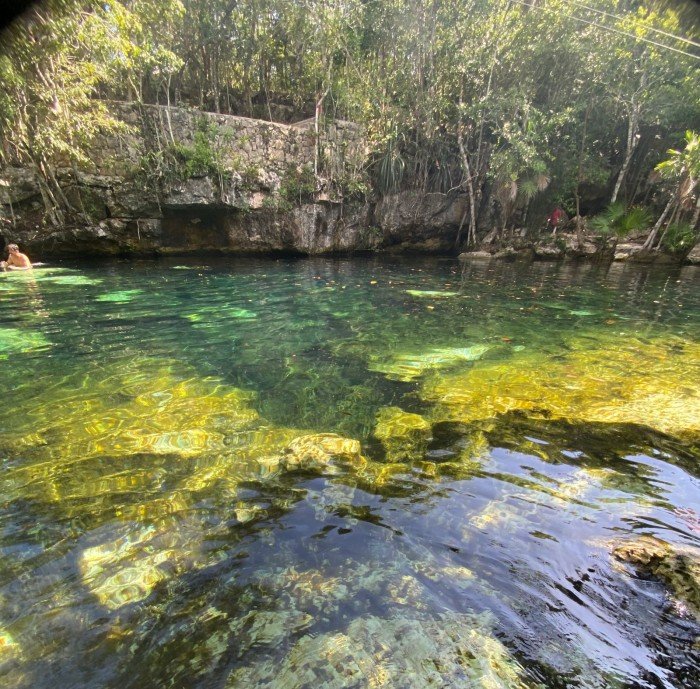
Playa del Carmen, Quintana Roo — Ninety-seven percent of the urban cenotes monitored in Playa del Carmen show high levels of contamination, according to Guillermo D’Christy, a member of the citizen science group Cenotes Urbanos.
D’Christy said roughly 30 of these natural sinkholes are affected. The cenotes have faced decades of threats from agricultural waste and leaking residential sewage, but in recent years the contamination has accelerated to alarming levels.
The degradation of the aquifer is closely tied to urban growth, septic tanks, faulty drainage systems, and developments that lack proper wastewater treatment infrastructure, he said.
The situation carries public health significance because cenotes across the Riviera Maya draw millions of domestic and international visitors each year, while the aquifer is the main source of fresh water for local residents and the region’s tourism industry.
D’Christy said authorities have yet to take concrete action to stop the trend, even as urban development continues without a plan that considers local ecosystems.
“Urbanization continues in an unmeasured way, without resolving outstanding environmental issues such as broken sanitation infrastructure, which we have already experienced in different places,” he said. “Drainage pipes burst and everything ends up in the aquifer.”
Given the severity of the situation, the organization is working with institutions including the National Autonomous University of Mexico (UNAM) to assess contamination of the region’s aquifer. D’Christy said they will soon analyze ten urban cenotes to determine their current contamination levels.
He warned that aquifer pollution can also harm public health, and stressed the need for authorities to act quickly.
“For the health of the population, for the health of the environment, and for economic health, we need to start resolving environmental issues. It’s urgent,” he said.
More Environment
- Yucatán Peninsula Lost 285,580 Hectares of Jungle in 4 Years
- Quintana Roo Crews Clear 70,000 Liters of Water in Bacalar and Chetumal After Heavy Rains
- Yucatan Drafts Rules for Artificial Lakes After Worker Dies of Amoeba Infection
- Quintana Roo Wins SEMARNAT Approval to Restore 33.5 Km of Beaches
- Yucatán Monitors Low-Pressure System in Gulf of Mexico for Possible Cyclone
More Playa del Carmen
- Tropical Wave 36 Floods Northern Quintana Roo, Hits Tourism
- Police Rescue Mother and Son From Playa del Carmen House Fire
- Technical Study Advances for Quintana Roo’s Grand Subterranean Rivers Reserve
- Playa del Carmen to Spend 66 Million Pesos on Fifth Avenue and Road Repaving
- Business Leaders Propose Autonomous Committee to Run Quinta Avenida Trust