
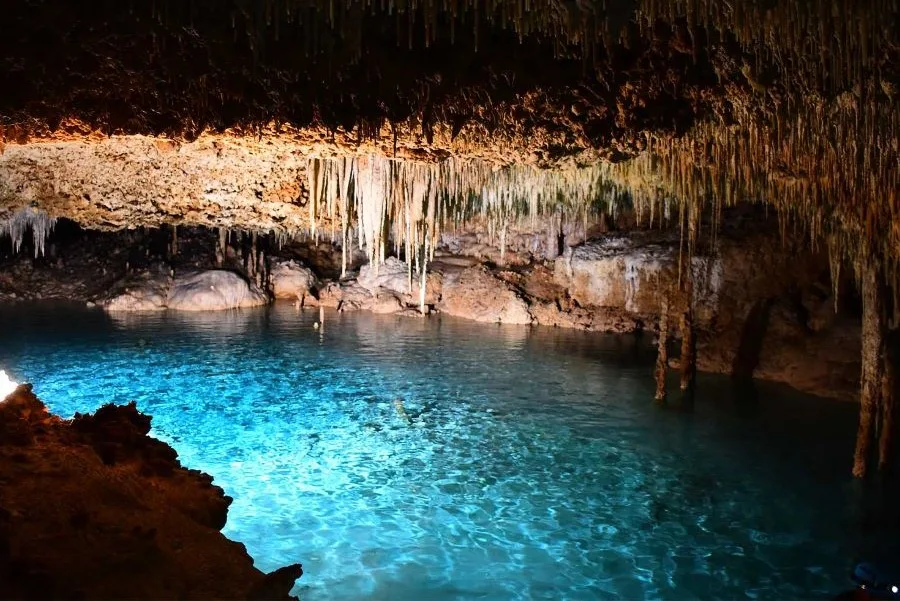
Playa del Carmen, Quintana Roo — A technical study to formalize the Grand Subterranean Rivers Reserve of Quintana Roo is moving forward with the support of specialists, after the federal government approved the initiative to create it, according to Guillermo D’Christy, president of the organizations Selvame MX and Cenotes Urbanos.
In an interview, D’Christy said that once the technical study phase is finished, the project will move into a socialization stage. During that phase, organizers will seek to discuss the plan with hoteliers, civil society and authorities in order to harmonize it with each municipality’s existing protection instruments, such as Urban Development Programs.
That stage will end with a public consultation open to all citizens who wish to share their views.
Protection for 100 years
According to D’Christy, the reserve would shield the karst aquifer for 100 years and protect the world’s two largest flooded cave systems from accelerating deforestation and urban development.
Roughly 3 million hectares could be included in the reserve, equivalent to 66 percent of Quintana Roo’s territory. D’Christy said that scale explains both the complexity and the importance of completing the technical study.
He noted that damage linked to the construction of the Maya Train helped accelerate work to consolidate the reserve project, and said an eventual decree creating the reserve could help guarantee protection of the state’s aquifer.
“It is not that a decree will begin protecting cenotes by magic, but rather that it would be one more legal instrument that could help protect the Great Maya Aquifer, one that could obligate all of us to be more aware of the norms and regulations governing both water extraction and wastewater discharge,” he said.
More Environment
- Yucatán Peninsula Lost 285,580 Hectares of Jungle in 4 Years
- Quintana Roo Crews Clear 70,000 Liters of Water in Bacalar and Chetumal After Heavy Rains
- Yucatan Drafts Rules for Artificial Lakes After Worker Dies of Amoeba Infection
- Quintana Roo Wins SEMARNAT Approval to Restore 33.5 Km of Beaches
- Yucatán Monitors Low-Pressure System in Gulf of Mexico for Possible Cyclone
More Playa del Carmen
- Tropical Wave 36 Floods Northern Quintana Roo, Hits Tourism
- Police Rescue Mother and Son From Playa del Carmen House Fire
- Playa del Carmen to Spend 66 Million Pesos on Fifth Avenue and Road Repaving
- Business Leaders Propose Autonomous Committee to Run Quinta Avenida Trust
- New Cracks Around Playa del Carmen Sinkhole Raise Fears of Expansion