
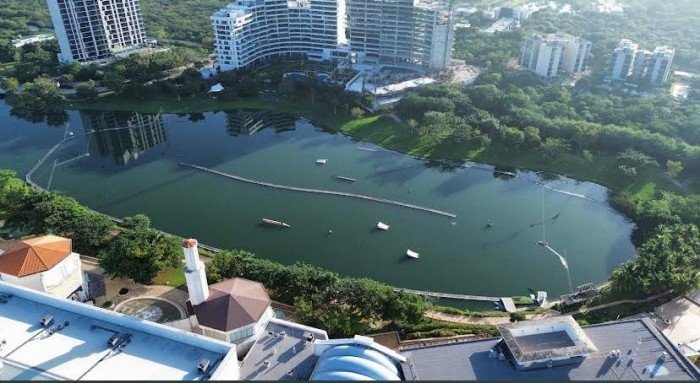
Mérida, Yucatán — Health authorities in Yucatán are preparing a proposal to regulate artificial lakes used for recreation after a worker died from a brain infection contracted through contact with the artificial lake at the Cabo Norte development.
The Yucatán Health Services (SSY) installed an interinstitutional panel to form the State Commission for Safe Water, which proposed strengthening the regulatory framework covering artificial lakes — water bodies that have multiplied alongside real estate and commercial developments across the state.
Initial measures include assessing conditions in these aquatic ecosystems, evaluating the wildlife that lives in them, improving filtration systems, and tightening sanitary oversight of recreational and public spaces. The aim is to draft a regulatory proposal and an action plan with input from specialists, academic institutions, and government agencies.
The commission’s creation follows the case at the Cabo Norte lake, where a worker died after contracting primary amebic meningoencephalitis.
Cabo Norte Lake Flagged as Priority
As part of the panel’s work, authorities met with representatives of Cabo Norte, Grupo GICSA, the La Isla Mérida shopping center, and Fornelos Wake Yucatán to coordinate cleanup of the lake. The site was identified in the authorities’ assessment as a priority.
The lake holds aquatic wildlife and has also been used for recreational activities by Fornelos Wake Yucatán — conditions that officials say require interdisciplinary technical management to determine the appropriate cleanup measures.
Broader Mandate on Water Safety
The new State Commission for Safe Water will also monitor natural and artificial water bodies as well as drinking water supply systems, with the goal of preventing microbiological and physicochemical risks to the public. It will additionally promote water conservation, responsible use, and pollution prevention.
Health Secretary and SSY Director General Miguel Alberto Alcocer Gamboa led the installation of the panel, alongside Domitilo Carballo Cámara, director of Protection Against Sanitary Risks.
The panel also includes the Secretariat of Sustainable Development, the Yucatán Water and Sewer Board (JAPAY), the National Water Commission (Conagua), the State Public Health Laboratory, the Autonomous University of Yucatán (UADY), the “Dr. Hideyo Noguchi” Regional Research Center, and the Cinvestav Mérida unit.
More Government
- Same-Sex Marriages Nearly Triple in Yucatán as 2025 Sets an Eight-Year Record
- Quintana Roo Wins SEMARNAT Approval to Restore 33.5 Km of Beaches
- Aeroméxico Admits Hack Exposed Passenger Passport Data
- Playa del Carmen to Spend 66 Million Pesos on Fifth Avenue and Road Repaving
- Business Leaders Propose Autonomous Committee to Run Quinta Avenida Trust
