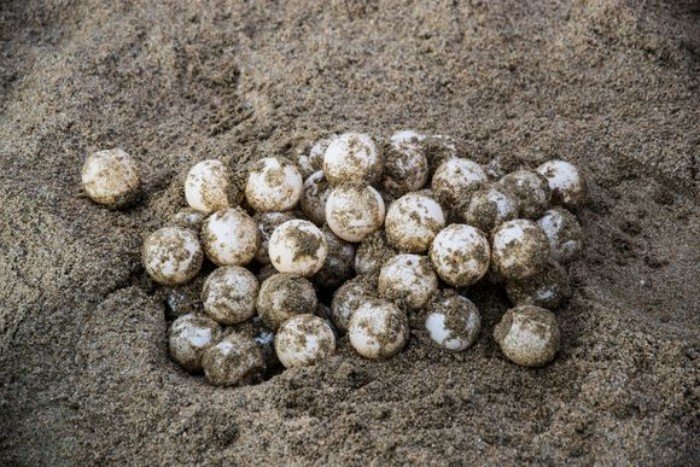
Cancún, Quintana Roo — More than one million sea turtle eggs are under protection on Cancún’s beaches as the season’s peak hatching period gets underway, with 8,710 nests currently safeguarded.
Fernando Haro, director general of ecology for the Benito Juárez municipal government, said the nests contain around 1,019,000 eggs, and 42,161 hatchlings have been released so far.
“We are now entering the months when the strongest hatching of all the hatchlings will begin,” he said.
The species that come to Cancún’s beaches are mainly the white or green turtle, as well as loggerhead and hawksbill turtles, according to municipal records.
The number of nests has also led to expanded protected areas. There are currently 51 corrals spread across roughly 12 kilometers of coastline covered by the wildlife management permit, officials said. Six are run by the Ecology Department, while the other 45 are managed by hotels and condominiums.
Given this season’s high nest count, authorities have asked to expand the capacity of existing corrals rather than increase their number.
The hatching period also raises the chances that residents and tourists will encounter turtles or hatchlings directly on the beach. Haro said hotels and visitors report sightings of turtles laying eggs or nests where hatchlings are emerging.
While he said Cancún residents have become more aware, he acknowledged that more information should be directed at visitors, especially those who have never interacted with sea turtles.
“Often they do it not out of bad faith but out of ignorance. They see the turtle, they want to go over, take a photo with flash, touch it,” he explained.
Authorities recommend avoiding handling the animals, keeping distance, and not using lights or flash while a turtle is nesting.
The challenge will grow in the coming weeks as many of the more than 8,700 protected nests approach hatching. Haro noted that the 1,019,000 eggs counted does not guarantee the same number of hatchlings will reach the sea, since hatching and survival success depend on various factors.
More Environment
- Cancun’s Tourism Reset: Regenerative Travel Takes Center Stage
- Quintana Roo Moves to Power Public Buildings With Clean Energy
- Hurricane Season 2026: What Quintana Roo Faces Before It Ends Nov. 30
- Mexican Navy Prepares 2027 Sargassum Strategy With 17 New Vessels
- New MARAP App Opens Anonymous Environmental Reporting in Playa del Carmen
More Cancun
- Cinépolis at Plaza Las Américas in Cancún Closes Over Water Leaks
- Cancún Airport Receives First Deported Mexicans From the United States
- Former Tulum Treasurer Sentenced to Nearly 4 Years for Unlicensed Firearms
- Judge Orders Pretrial Detention for Driver in Cancún Crash That Cost Motorcyclist a Leg
- Two Detained, Vehicles Seized After Woman Killed in Cancún Shooting