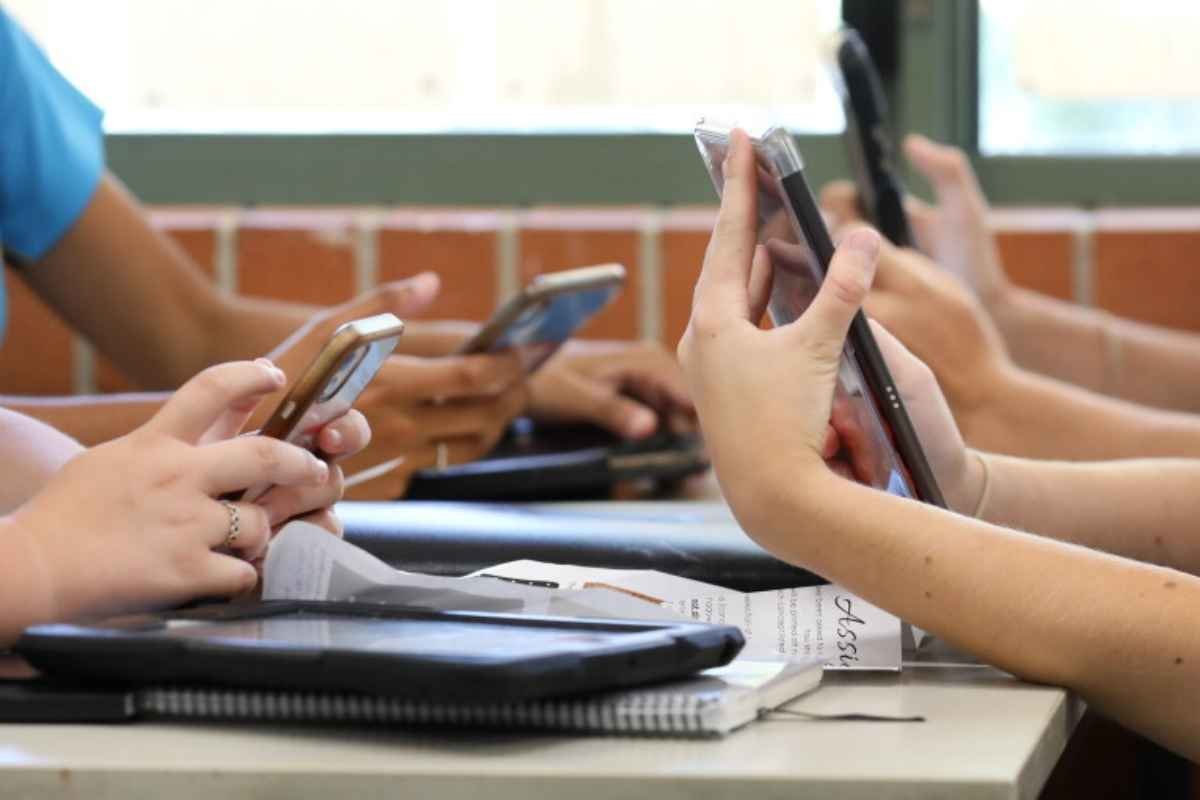
Mexico City — Nearly two weeks after Mexico’s federal restriction on cellphones in basic education took effect, schools across the country are enforcing it in markedly different ways. Some campuses bar students from bringing devices at all; others allow phones on school grounds but require them to stay stowed during the school day.
The absence of a single standard has prompted talks between administrators and families, who are looking for practical arrangements that satisfy the rule without cutting off communication in emergencies or ignoring students’ particular needs.
Provisional solutions vary by campus
At one public primary school, officials decided that no student may bring a phone as of November 1. For some families, the change meant little, especially where children did not routinely use devices at school.
A public middle school opted for a middle ground: students hand in their phones at the start of classes and collect them at the end of the day. That arrangement remains under review and will be discussed with mothers and fathers at a meeting scheduled for November 25, where the school community will decide whether to keep the temporary storage system or move to a full ban on bringing phones.
Another middle school took a similar but distinct approach. Officials there announced at the start of the school year that students could not use cellphones on campus, and clarified that if families allowed students to bring them, the families would be responsible for any loss or misplacement.
What the SEP says about the rule
The federal regulation sets a general framework but leaves room for each school community to agree on how to apply it. Agreement 09/09/26 from the Public Education Department (SEP), published in the Official Gazette, states that cellphones, smart devices and other personal electronic equipment must be restricted throughout the school day in early childhood, preschool, primary and secondary education. The measure took effect on November 3, 2026.
The agreement does not necessarily require every student to be barred from entering with a phone. It also allows students to leave devices at home or keep them switched off and stored during school hours. It recognizes exceptions for educational activities planned by teachers, personal emergencies and needs related to health, disability, accessibility and inclusion, as well as other extraordinary circumstances determined by school communities.
A measure still being adjusted
Education Secretary Mario Delgado has said the goal is to encourage a responsible relationship with technology and support learning, rather than to base enforcement of the rule on surveillance or punishment.
In practice, temporary storage of devices has become an alternative at some campuses, though how it works and who is responsible for keeping the phones safe are still being negotiated with families. For now, early accounts show that enforcement is not uniform and that each school is moving forward with its own arrangements as it tries to balance discipline, safety and communication with students.
More Lifestyle
- Grand Outlet Riviera Maya to Light ‘Dulce Resplandor’ Christmas Tree on Nov. 21
- More Than 480,000 Quintana Roo Students Get Long Weekend for Revolution Day
- Cancún’s Tardes de Lucha Libre Wraps 2026 Season with 6,400 Fans
- Heavy Rain Floods Streets and Catches Pedestrians Off Guard in Playa del Carmen
- Playa del Carmen Marks 124th Anniversary by Honoring Its Founding Families