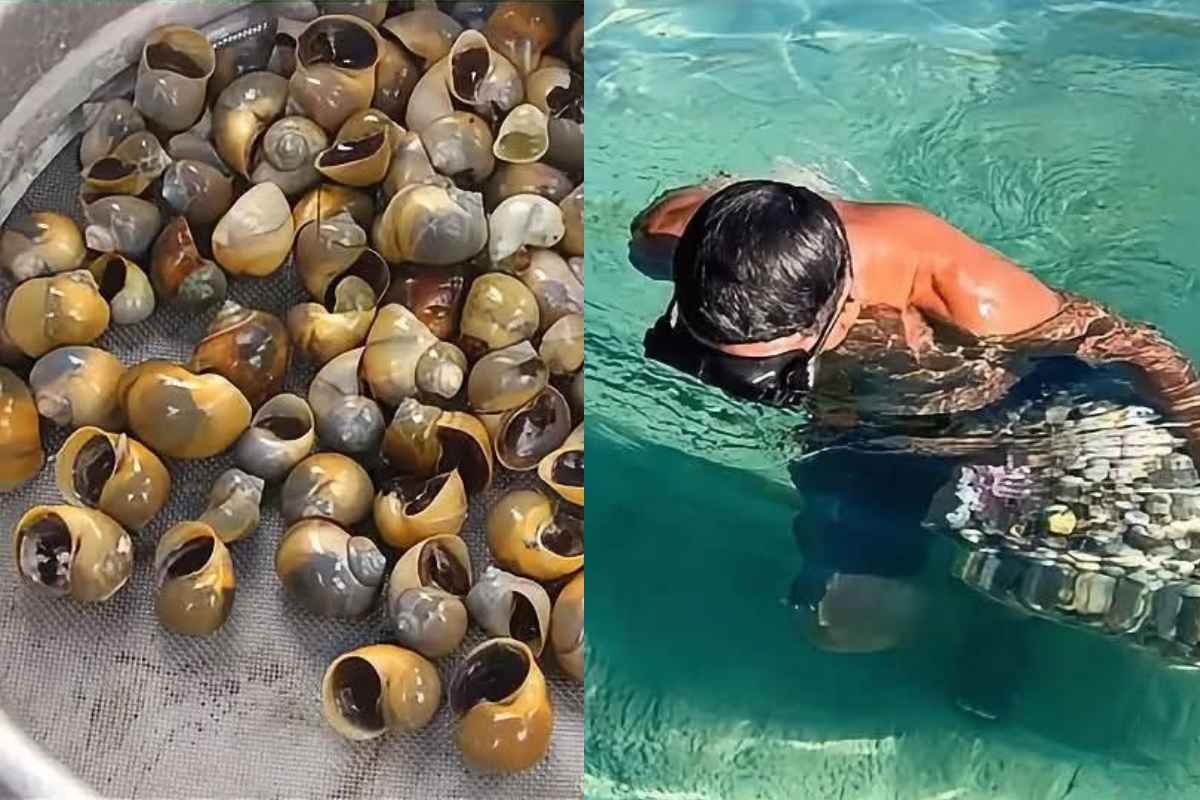
Bacalar, Quintana Roo — Residents are calling for an investigation after images circulated of people gathering what they say are caracol chivita snails from Bacalar Lagoon. The complaint has drawn attention because researchers have already documented a steep decline in the freshwater mollusk at sites around the lagoon.
The reported collection took place near Hotel Rancho Encantado, according to a local account of the residents’ complaint. Residents allege that people have repeatedly removed snails in sacks. The images and complaint do not, on their own, establish how many animals were taken, whether the activity was authorized or what happened to the snails afterward. Residents have asked authorities to check those questions.
The concern is grounded in more than a single sighting. In a study of 15 sites around Bacalar Lagoon, researchers from El Colegio de la Frontera Sur (ECOSUR) counted 6,306 caracol chivita in 2013, compared with 426 in comparable sampling in 2023. That is a decline of about 93% in the study’s counts. It is not a census of every snail in the lagoon, but it shows why reports of continued collection warrant attention.
A Small Animal With a Role in the Lagoon
The caracol chivita (Pomacea flagellata) lives in calm freshwater. It helps recycle organic matter on the lagoon floor and provides food for birds, including the snail kite and limpkin. Researchers warn that a sharp reduction in its numbers could affect those relationships within the ecosystem.
The study did find both young and mature snails in its later sampling, so the species has not disappeared from Bacalar. Its distribution was uneven, however, and numbers remained low even at sites where it was still present.
Collection is one pressure among several identified by researchers. ECOSUR has also pointed to shoreline development, disturbance of habitat and changes in water quality. That makes it difficult to assign the overall decline to any one cause. It does make protecting the remaining concentrations more urgent.
What Authorities Are Being Asked to Establish
The residents’ complaint calls for an on-site response: identify the animals being collected, determine the quantities involved, check whether the people taking them have the required authorization and assess whether collection is occurring repeatedly.
The snail’s decline should not be confused with a formal endangered-species designation. Researchers have proposed adding caracol chivita to Mexico’s NOM-059 list of species at risk and recommended measures such as protecting areas where it remains most abundant and restricting collection during reproduction. A reported risk of disappearing from Bacalar Lagoon is also different from a finding that the species is disappearing everywhere it occurs.
For visitors, the case is a reminder that the Lagoon of Seven Colors is a living ecosystem as well as a place to swim and take photographs. For residents, the immediate question is whether authorities will investigate the reported collection—and use the existing research to decide where the snail needs protection most.
More Environment
- Heavy Rain Floods Streets and Catches Pedestrians Off Guard in Playa del Carmen
- Sargassum Eases on Northern Quintana Roo Beaches, but Southern Stretches Still Overwhelmed
- Fonatur Prepares Two-Stage, $108 Million Sargassum Plan for 2027
- Secrets Marina Seeks Semarnat Approval for 7,933-Square-Meter Beach Club in Puerto Morelos
- Uxuxubi Seeks Tourism Distinction, Asks for Water Tests at Its Cenotes