
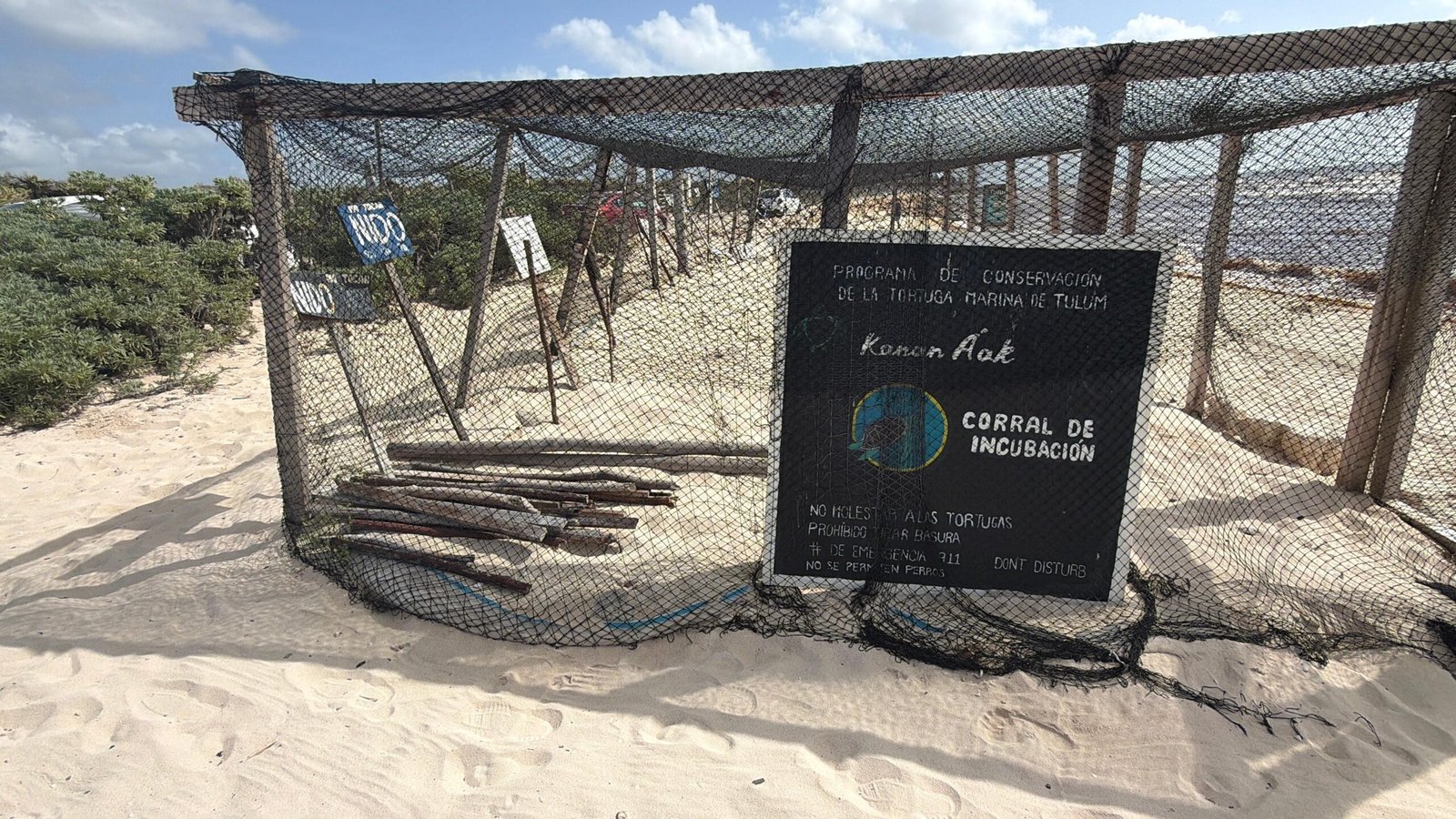
Tulum, Quintana Roo — More than 6,000 sea turtle nests have been recorded on the beaches of Tulum this season, but loungers, umbrellas and other furniture left on the sand by tourism businesses continue to threaten the hatchlings’ path to the sea.
Volunteers at the Punta Piedra turtle camp reported that the green turtle (Chelonia mydas) accounts for most of the nestings, followed by the loggerhead turtle (Caretta caretta). So far this season, no leatherback (Dermochelys coriacea) nests have been detected.
Monitoring began in April, and the official season started on May 3. Since then, patrols have covered the coastline from Punta Piedra to Playa Maya Tulum to locate new nests and follow the hatching process. Work is scheduled to continue through the end of November.
According to the volunteers, predation by wild animals and dogs has been low, which has helped protect the nests. However, they said leaving furniture on the sand overnight remains a common practice that undermines conditions for the turtles’ reproduction.
Objects placed on the beach can obstruct adult turtles emerging from the sea to lay their eggs, as well as the route of newborn hatchlings that need a clear path to the water. Such obstacles can raise the risk of disorientation and jeopardize the young turtles’ survival.
The monitoring teams called on hotel operators, tourism service providers and visitors to remove loungers and umbrellas at the end of each day, avoid leaving piles of waste and respect the areas set aside for nesting.
While the count of more than 6,000 nests marks progress for sea turtle conservation in Tulum, the volunteers stressed that protecting the animals depends not only on the camps’ patrols but also on the practices maintained on the beaches.
With roughly six weeks of activity remaining, they insisted that the coast must stay free of obstacles to give hatchlings a better chance of emerging and reaching the sea.
More Environment
- Lab Coral Restoration Urgent as Caribbean Reefs Decline, Expert Warns
- Quintana Roo Bolsters Sargassum Strategy With Satellite Monitoring and Research
- Stationary Front to Bring Rain Across Yucatán on Tuesday
- Documentary on Puebla River Defenders Screens Free in Cancún
- Cancún Announces October Environmental Days With Cenote Cleanups and Recycling Drive
More Tulum
- Free Mammograms Offered in Three Quintana Roo Municipalities
- Anyma Brings ÆDEN to Zamna Tulum for 10th Anniversary Show on January 4
- Tulum Pivots to Luxury as Airlines Cut Flights, Occupancy Drops
- Cancún Seaweed Firm Ensol Caribe Eyes Expansion Into Dominican Republic and Belize
- Environmentalists Warn Tulum Jungle Road Could Open Door to Real Estate Expansion
