
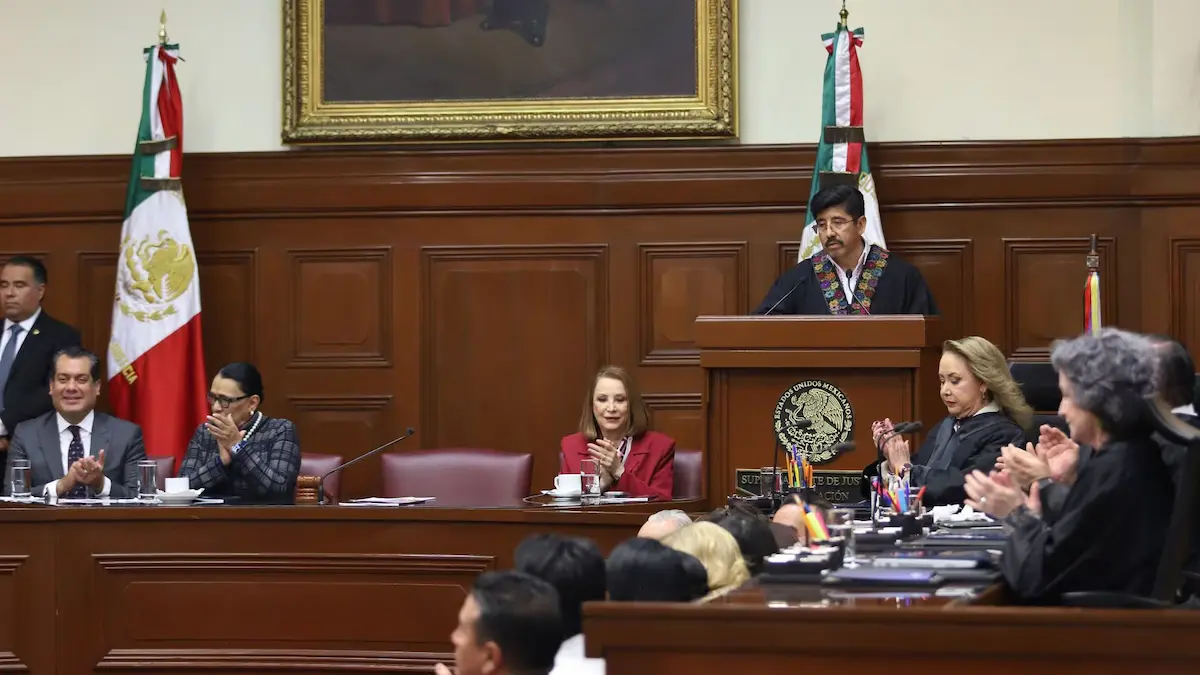
Mexico City — Mexico’s Supreme Court has ruled against tourism giant Grupo Xcaret in a case involving the company’s use of Maya cultural symbols, but critics argue the court missed a critical opportunity to establish clear legal protocols for protecting indigenous cultural rights.
The court’s full bench resolved an injunction filed by Grupo Xcaret, which sought to continue using Maya cultural emblems in its advertising. In its ruling, the court emphasized that, according to a 2024 constitutional reform and federal law, the material and intangible cultural heritage of indigenous peoples belongs to them collectively, and its protection is a matter of public order and social interest.
The court stated that the government has an obligation to safeguard this heritage against any improper or unauthorized use. It concluded that the alleged impact on Xcaret was merely economic and could not override the collective interest in protecting the cultural identity of the Maya people. The court therefore revoked a previous ruling that had granted Xcaret a definitive suspension.
However, the practical effect of the decision is that Grupo Xcaret must comply with precautionary measures ordered by the National Copyright Institute (INDAUTOR) to withdraw from circulation and exhibition any advertising content that uses elements of Maya cultural heritage.
Legal observers and indigenous rights advocates say the Supreme Court failed to seize the moment to design and establish a studied, analyzed, and approved jurisprudential protocol in favor of the country’s original peoples, as mandated in various rulings by the Inter-American Court of Human Rights.
“The court lost the opportunity to set a precedent to define, as the highest tribunal, the protocols, procedures, and methodologies for handling these cases in accordance with the law,” the analysis notes. “Now, the legal void has grown larger to the detriment of the cultural rights of Mexico’s indigenous peoples.”
The case has also revived scrutiny of the political and commercial exploitation of Maya cultural rights in Quintana Roo. Critics point to the creation of the “Gran Consejo Maya” (Great Maya Council) during the administration of former Governor Carlos Joaquín González. They allege this association was given legal personality through state law reforms in July 2017, enabling it to authorize commercial exploitation of Maya cultural elements, a move they claim served private interests.
The controversy extends to land use. The analysis references a 1998 state congressional decree that authorized incorporating nearly 40,000 hectares of state-owned land in the Costa Maya tourist corridor into a public trust, which critics say ultimately benefited Grupo Xcaret. They allege the company’s intensive tourism operations in areas like the Caleta de Xel-há have led to environmental degradation, with once-clear waters now turbid, while generating billions in profits that do not benefit the Maya communities.
The article claims that intermediaries, such as a figure named Hernán Villatoro, have been involved in financial dealings between the company and the council, despite legal provisions supposedly prohibiting such intermediaries.
“In Quintana Roo, the politicians win, the business owners win, the managers, the intermediaries, the ‘coyotes’ win,” the piece concludes, “but the Maya people remain in abandonment and marginalization.”
More Business
- Quintana Roo Expands Free High-Speed Internet to New Tourist Destinations
- Semarnat Approves 43-Room Hotel on Holbox With Conditions
- Cancún Airport Workers Question What Happens to Lost Items
- Mexico Seizes 27 Tons of Chinese Tartaric Acid at Michoacán Customs
- Miami Restaurant Heir Charged With Fatally Stabbing His Mother
