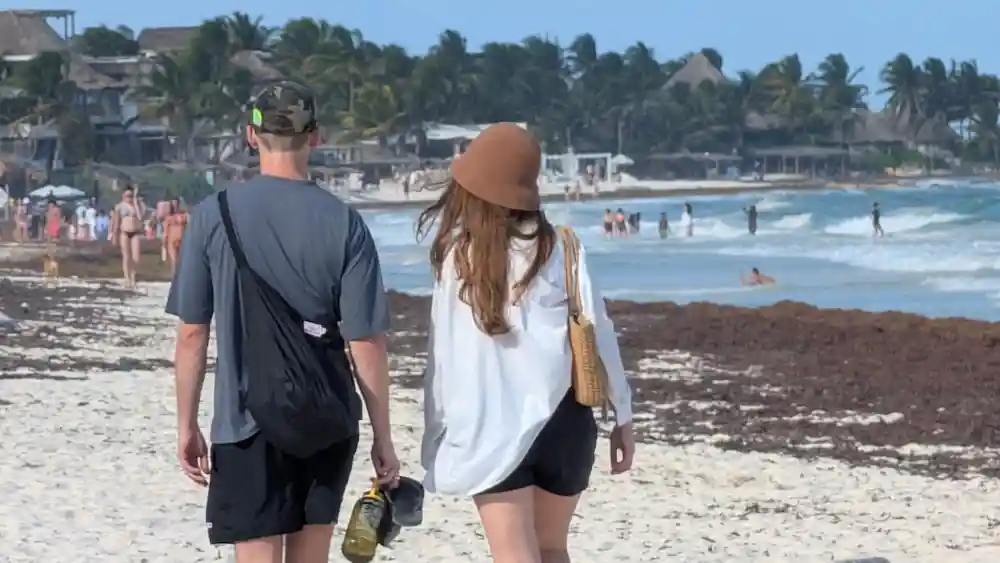
Chetumal, Quintana Roo — The Mexican Senate has once again shelved a reform that would guarantee free access to the country’s public beaches and protected natural areas, after concluding its second regular session period on April 30 without bringing the measure to a floor vote.
The bill, which would ensure free and unrestricted entry to all public beaches and establish at least one free admission day per week to protected natural areas, was approved unanimously by the Chamber of Deputies on October 1, 2025. It was sent to the Senate on October 7, but the Tourism Committee — chaired by Senator Eugenio Segura Vázquez of Quintana Roo’s Morena party — delayed consideration for two months before finally approving the draft opinion on December 9, 2025.
That approval came just one day before the end of the first regular session period. In the final session on December 10, the reform was not included on the agenda and was not put to a vote.
Many expected the measure to be taken up during the second session period, which began on February 3, 2026. But the three-month period passed without the draft even receiving a first reading, let alone a floor vote.
According to the reform’s file on the Senate’s official portal, the legislative process remains stuck at the committee referral stage, with no record that the opinion was ever sent to the floor.
The reform’s original promoter, Tulum Mayor Diego Castañón, has remained silent on the delay. Since the federal government’s Tourism Secretariat intervened in Tulum, Castañón has stepped back from matters related to the Jaguar Park and its beach access restrictions.
The delay means that none of the reform’s benefits were in place for the peak tourist seasons of December 2025 or Easter 2026, and they will not be ready for the summer high season either. The Senate will not hold regular sessions again until September 1 — nearly a year after the Chamber of Deputies originally approved the measure.
Meanwhile, the problems that sparked the reform persist in Quintana Roo, particularly in Tulum. Restrictions and fees imposed by the Jaguar Park and the Tulum National Park have led to renewed protests from residents and business owners, who say the barriers to beach access have caused a sharp drop in tourism for hotels and service providers along the coast.
The reform would establish that access to maritime beaches and the adjacent federal maritime-terrestrial zone must be free, open, and permanent for all people, regardless of origin, nationality, or social status. It would prohibit any fees or restrictions except those justified by environmental protection, public safety, or national interest.
It also mandates the creation of a National Beach Registry, based on joint identification and validation of urban, semi-urban, and rural layouts according to urban development programs, ecological management programs, and protected area management plans.
Municipalities would be required to register beach access points in their cadastres and public property registries, ensuring their permanence and recognition in property transactions and boundary disputes.
The reform would also require at least one free admission day per week to protected natural areas, expanding access to national parks and reserves with recreational zones — several of which in Quintana Roo contain beaches.
More Lifestyle
- WHO Warns El Niño Poses Major Global Health Threat
- Progreso to Open Historic Muelle de Arcos for Sunset Walk Marking 85 Years
- Cozumel Reports Alcohol and Drug Use Starting at Age 11
- Cancún Officials Urge Residents to Protect Pets After Reported Puma Sighting in Cuna Maya
- Cozumel Launches Rabies Vaccination Drive With 3,000 Free Doses for Pets
More Tulum
- Tulum Adds Artisan Market and Caribbean Culture Festival to Its Tourism Lineup
- Culture Ministry to Inspect Ceremonial Pole Ahead of Voladores de Papantla Return to Tulum
- Tulum Beach Cleanup Pulls 32 Kilos of Marine Debris From Playa del Pueblo
- Coastal Dune Loss Weakens Natural Defenses in Quintana Roo
- Felipe Carrillo Puerto Weighs Access Fee for Puerta al Mar