
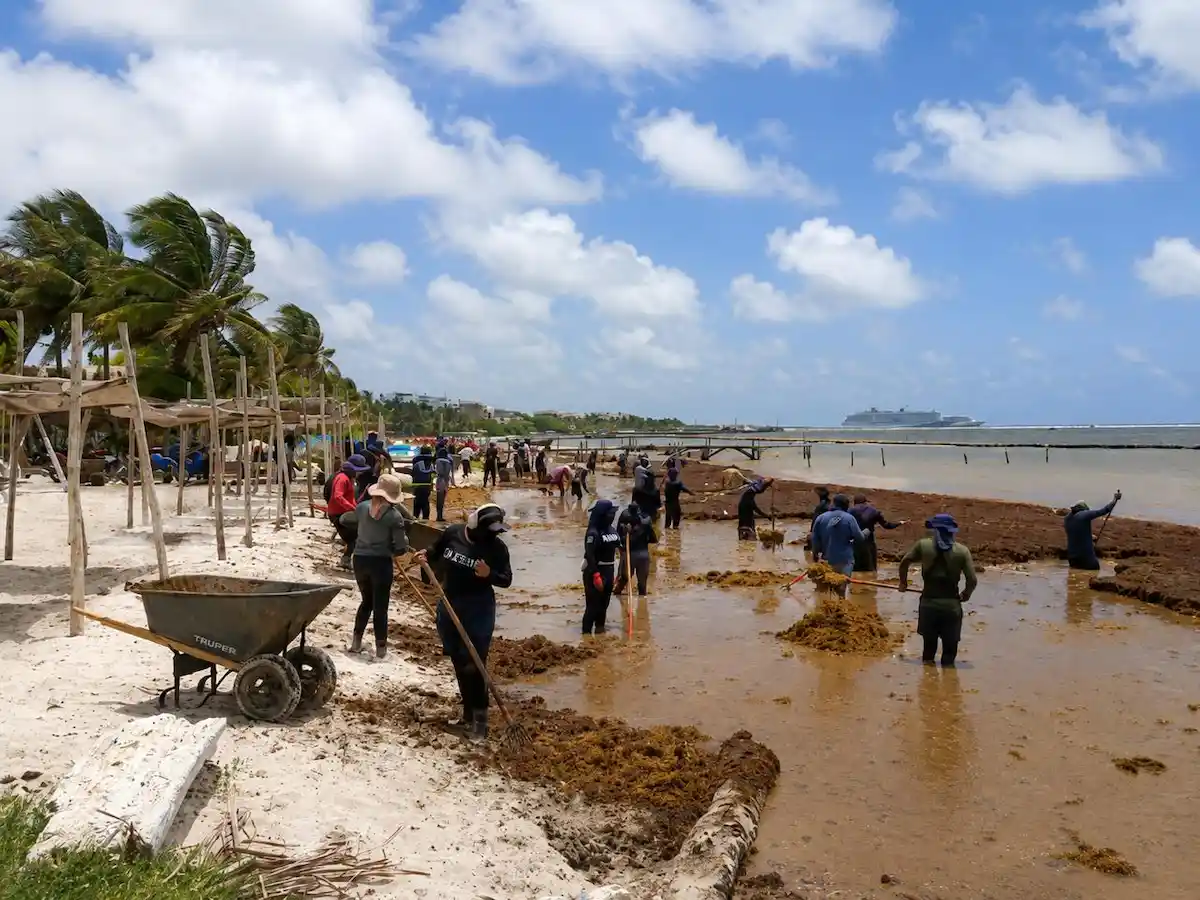
Othón P. Blanco, Quintana Roo — The Mexican Navy has collected approximately 7,897.45 tons of sargassum from beaches in Mahahual and Xcalak since January as part of the 2026 Sargassum Response Strategy for the Mexican Caribbean, officials announced Saturday.
The Navy’s 11th Naval Zone is deploying an average of 100 personnel daily, along with specialized machinery and support equipment, to contain and remove the macroalgae. More than 2,200 meters of containment barriers have been installed to reduce the amount of sargassum reaching the shoreline.
The operation aims to mitigate the effects of the massive influx of sargassum, protecting marine and coastal ecosystems as well as tourism, commercial, and fishing activities that are key economic drivers for the region.
Naval personnel are working in coordination with federal, state, and municipal authorities, as well as business owners, restaurateurs, and tourism service providers in the port of Mahahual.
More Environment
- Mexican Navy Opens Youth Photography Contest on Ocean Conservation
- WHO Warns El Niño Poses Major Global Health Threat
- Hurricane Polo Hits Category 5; Five Mexican States Brace for Heavy Rain
- Isla Mujeres Fishermen Face Grouper Shortage as Catch Barely Covers Local Demand
- Cancún Officials Urge Residents to Protect Pets After Reported Puma Sighting in Cuna Maya
