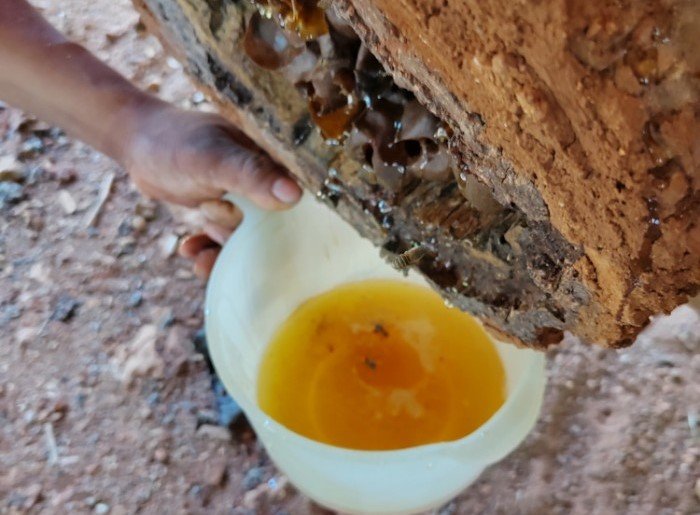
José María Morelos, Quintana Roo — Melipona honey production in this municipality has dropped by about 50% this season due to reduced flowering, according to local beekeeper Nazario Huchin Chan.
The beekeeper said the season started with favorable conditions, but flowering then declined, reducing the bees’ food supply and limiting the amount of honey that could be harvested. “This year there wasn’t much production; we only managed to get a little honey at the beginning,” he said.
In past years, Huchin Chan said, each jobón — a traditional log hive used for native stingless bees — produced up to a liter of honey. This year, yields fell by roughly half. With the harvest so small, most of the honey was kept for the family’s own consumption.
The shortage also limited commercial sales, he said, although the price of melipona honey reached about 1,800 pesos per liter.
“Flowering has a lot to do with it; you can really feel it. There’s not as much now, and we can’t predict whether it will help us or hurt us,” he said.
Huchin Chan said he hopes conditions in the countryside will improve and allow production to recover in the coming seasons.
More Environment
- Activists Protest Pig Mega-Farms in Yucatán, Demand Crackdown on Pollution
- Quintana Roo to Pitch Sustainability in Reworked International Tourism Push
- Cancún Seaweed Firm Ensol Caribe Eyes Expansion Into Dominican Republic and Belize
- Environmentalists Warn Tulum Jungle Road Could Open Door to Real Estate Expansion
- Only Four Sargassum Fishing Permits Processed in Mexico, Imipas Says
More Zona Maya
- Man Sentenced to 108 Years for Raping and Sexually Abusing His Three Stepdaughters
- Artists Plan Night Festival to Revive Mayan Legends in José María Morelos
- Quintana Roo Youth Institute Seeks 13 Million Peso Budget Boost for Scholarships
- Five Ejidos Seek Alliance to Protect Chichankanab Lagoon in José María Morelos
- Maya Frog and Toad Shell Pendants May Reveal Ancient Trade Routes