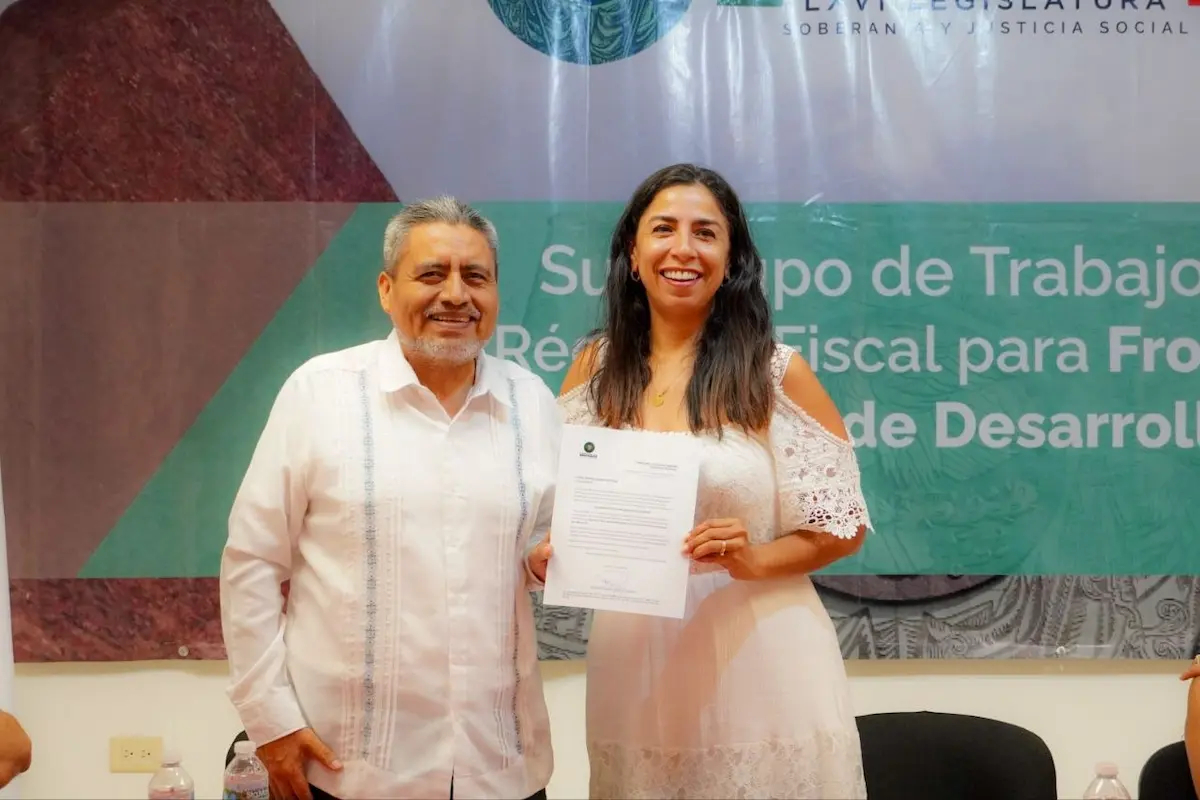
Isla Mujeres, Quintana Roo — A proposal to establish a special tax regime for Mexico’s island communities has won support from the finance committee of the Chamber of Deputies and from lawmakers in Morena and other parties.
The initiative, promoted by federal deputy on leave Marybel Villegas Canché, seeks to ease the extra costs faced by residents and businesses on Cozumel, Isla Mujeres and Holbox. Supporters say it would reduce tax burdens, slow the rising cost of goods and services, improve tourism competitiveness and strengthen the economy for thousands of families in Quintana Roo.
Villegas and fellow deputy Rocío Abreu Artiñano introduced the measure during the previous legislative session before Villegas took leave. It calls for adding Article 39 Bis to the Federal Fiscal Code to give legal recognition to the insular status of Mexican islands within the federal tax framework and to authorize the president to grant tax incentives through executive decrees.
The proposal starts from the reality that for years has left island communities at a disadvantage compared with mainland territories. Transporting food, merchandise, fuel and other supplies adds costs that are passed on through prices and affect families, workers, businesses and service providers alike.
Among the incentives under consideration are cutting the value-added tax (VAT) from 16 percent to 8 percent, creating income tax credit mechanisms and exploring measures to support the price and supply of fuel.
Villegas has said the proposal is not meant to create privileges but to correct the economic and logistical inequalities that island communities face because of their geography. She is currently seeking the Morena party coordination post in Quintana Roo as part of the Defense of Transformation movement.
The measure is part of broader congressional work on the fiscal regime for the southern border and development hubs, and is expected to factor into discussions of the 2027 Economic Package and Revenue Law. Its goal is to ensure national tax decisions take each region’s economic, social and geographic conditions into account.
Villegas and Abreu say the proposal has the backing of representatives from the business, tourism, industrial and social sectors as well as residents of the island communities. That participation, they say, will help ensure the proposed incentives respond to the real needs of those who live and work on the islands.
More Economy
- Mexico Clears Sonora of Foot-and-Mouth Disease, Exports Resume
- AI and New Travel Trends to Headline AFEET Trends 2026 Summit in Cancún
- Tulum Pivots to Luxury as Airlines Cut Flights, Occupancy Drops
- Yucatan Preps for Winter Season With More Flights From Canada
- Cancún Delivers 460 Property Deeds to Families in 14 Neighborhoods
More Cozumel
- Quintana Roo Names Winners of 2026 State Craft and Embroidery Prizes
- Cruise Tourism Trust Fund Spends 1.27 Billion Pesos Across Quintana Roo
- CFE and Playa del Carmen to Review Plan for Submarine Power Line to Cozumel
- Cozumel’s Museum of the Island Opens Exhibition by Architect José Manuel Sáenz ‘Txepo’
- Mexican Caribbean Destinations and Resorts Win Across 2026 World Travel Awards