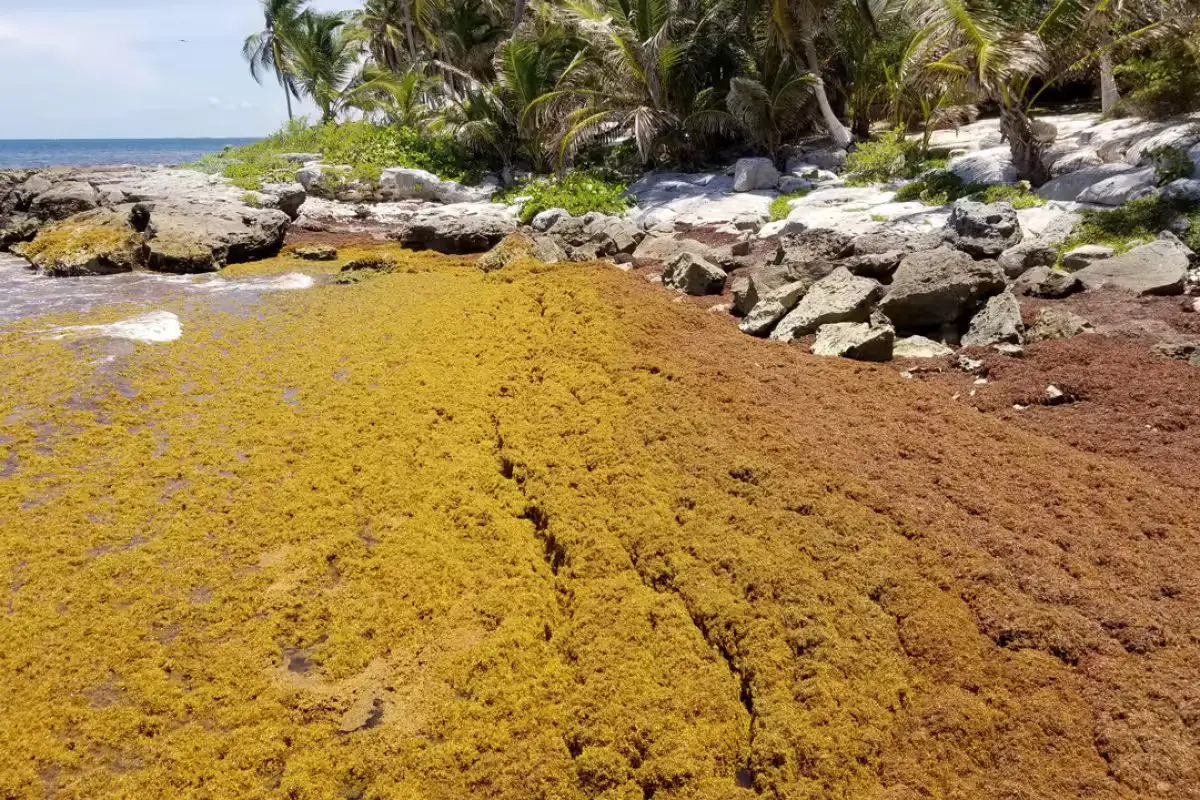
Tulum, Quintana Roo — The beaches of Tulum are facing a devastating influx of sargasso seaweed during the peak summer tourist season, overwhelming the capacity of local authorities to keep the coastline clean. Despite daily cleanup efforts, the macroalgae returns within hours, blanketing the sand and releasing a pungent smell of decay.
A recent tour along the shoreline revealed extensive stretches of beach completely covered in sargasso, with a strong odor dominating the coastal area. The scene contrasts sharply with the postcard image of white sand and turquoise waters that usually draws visitors to this Caribbean destination. Many tourists were seen observing the sea from a distance, unable to enter the water, while others opted to travel to other parts of the state in search of cleaner beaches.
Fernando Barrera and Daniel Palma, local tourism service providers, said the seaweed has become the main obstacle to the area’s economic activity. They explained that although cleanup crews work from early morning, the volume arriving from the sea far exceeds their operational capacity. As a result, many visitors are canceling water activities or shortening their beach time, which is already affecting sales at local businesses.
Two Spanish tourists interviewed during the tour expressed surprise at the conditions. Felipe Antonio, vacationing with his wife Maria Ernestina, said: “We came from Spain on holiday. We love Tulum — it’s a unique destination — but right now we can’t enjoy it as we’d like because of the sargasso and the bad smell. We just came to look at the sea for a moment and then we have other plans.” They noted that they had expected crystal-clear waters but found a very different scene from what is promoted.
According to the Sargasso Monitoring Network of Quintana Roo, several beaches in the municipality continue to have abundant seaweed, a situation that has persisted for weeks. Despite ongoing cleanup operations on land and at sea, the constant arrival of the algae prevents beaches from staying clear for long.
During a recent visit to Tulum, President Claudia Sheinbaum announced that combating sargasso would be a key part of the “Tulum Renace” program. However, as long as the seaweed influx continues at its current intensity, the phenomenon will remain the biggest challenge for the local tourism industry, impacting the livelihoods of hundreds of families who depend on it.
More Environment
- Cancún’s Benito Juárez Recycling Drive Recovers 6.8 Tons of Waste
- US Releases 1 Billion Sterile Flies to Stop Screwworm’s Return
- Delphinus Blue Planet Pulls Out of Deal to Buy The Dolphin Company, Leaving 101 Marine Animals in Limbo
- New Pemex Oil Spill in Gulf Won’t Reach Campeche Beaches, Company Says
- Cozumel Beach Club Kuzá Targets 4,000 Daily Visitors in Protected Area With CONANP Backing
More Tulum
- Sargassum and Low Season Drive Tulum Beach Weddings to Decade Low
- Least Tern Nests Under Watch in Sian Ka’an Reserve as Threats Mount
- Quintana Roo Signs Co-Management Deal to Protect Xcacel-Xcacelito Turtle Sanctuary
- Chetumal Police Purge Tourist Unit After Officers Accused of Handing Youths to Organized Crime
- Judge Rejects Injunction to Protect Sac Actún Cave System From Riviera Maya Highway