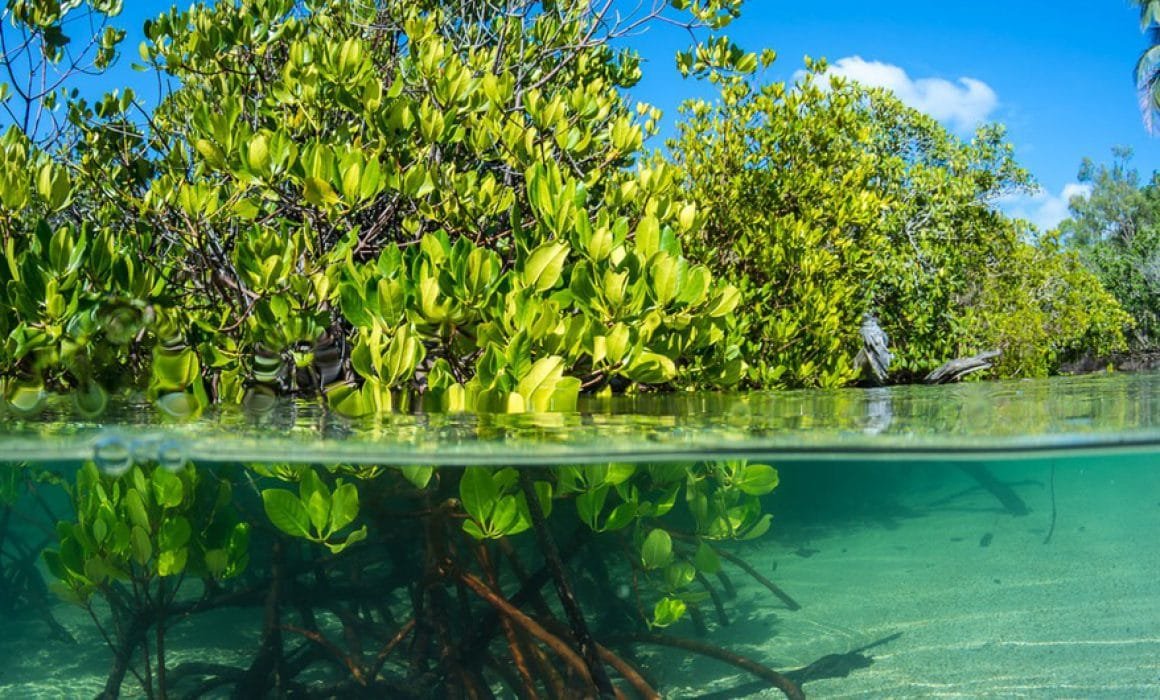
Cancún, Quintana Roo — Mangrove forests are regaining ground in various regions around the world after decades of degradation from coastal development, pollution, and climate change, according to a study published in the journal Science. The research documents a significant reduction in mangrove loss over recent decades.
Based on satellite imagery analysis from 1980 to 2023, the study found that natural regeneration and conservation efforts have reversed the loss trend in many coastal areas, estuaries, and deltas, marking one of the most important advances recorded for these ecosystems.
The findings align with assessments by the United Nations Environment Programme (UNEP), which highlight greater stability in global mangrove cover and the positive impact of restoration programs launched in various countries to protect biodiversity and strengthen coastal resilience against climate change.
In this context, Quintana Roo remains the Mexican state with the largest mangrove area, concentrating 27.3% of the national coverage, equivalent to more than 247,000 hectares, according to data from the National Commission for the Knowledge and Use of Biodiversity (Conabio). This places it ahead of Campeche and Yucatán.
Beyond hosting one of the country’s largest mangrove expanses, Quintana Roo relies on these ecosystems as a natural barrier against hurricanes, to reduce erosion, capture large amounts of carbon, and serve as a refuge and breeding ground for numerous marine species — factors that also support the state’s fishing and tourism industries.
Specialists consider that while the results are encouraging, sustaining the recovery will depend on strengthening conservation, restoration, and sustainable management policies for mangroves, particularly in regions under intense pressure from urban growth and tourism development, such as the Mexican Caribbean.
More Environment
- Cancún Orders Removal of Grounded Boats From Nichupté Lagoon
- Profepa Shuts Down Work Damaging Coastal Dune in Yucatán
- Yacht Grounded on Mahahual Reef Caused No Coral Damage, Conservationists Say
- Playa del Carmen Awaits Federal Approval to Return 20,000 Tons of Sand Recovered from Sargassum
- Playa del Carmen Councilor Questions Semarnat’s Indigenous Consultation Requirements
More Cozumel
- Cozumel Residents March Against Malecón Rehabilitation Project
- Explorers Document New Underwater Cave System South of Cozumel
- Ángeles Viajeros to Take 16 Children With Cancer to Cozumel for a Week by the Sea
- Leonardo Aguilar to Headline Free Cozumel Concert for Grito de Independencia 2026
- Cueva Popotitos: New Underwater Cave System Found South of Cozumel