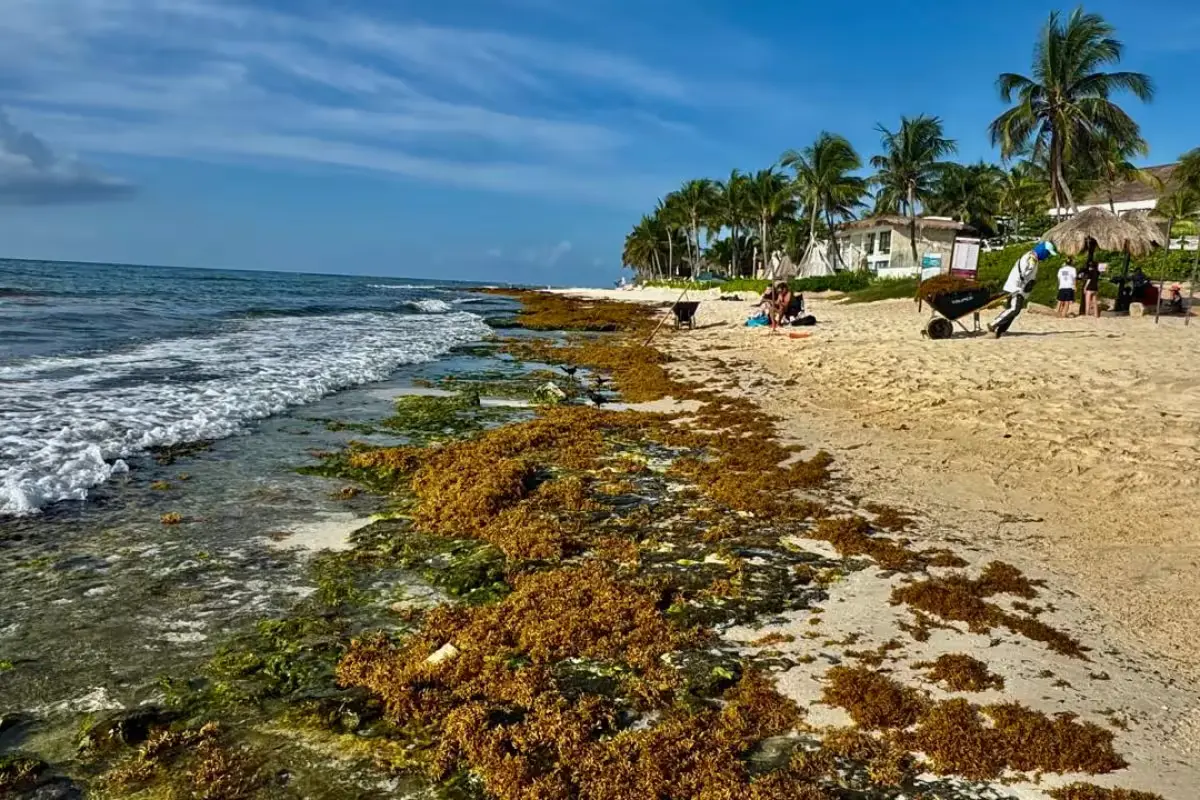
Playa del Carmen, Quintana Roo — Residents of the Xcalacoco beach area in Playa del Carmen say groins installed offshore have shifted marine currents and stripped sand from the shoreline, leaving rocky stretches that are dangerous for swimmers and beachgoers.
Sargassum continues to wash up in the area, but local residents José Luis Osorio, Luis Mendoza, Uriel Santos, Sandra Vázquez and Andrea López agree that the barriers placed off the coast — along with the construction of a pier — have changed the condition of the beach and need to be evaluated for their impact on the ecosystem.
Osorio said the offshore barriers, intended to keep sargassum away or curb erosion, have not stopped the seaweed entirely, while the sea continues to reshape the shoreline. Even where the coastal dune is protected, wave action has removed enough sand to expose rocky areas, creating hazards for anyone entering the water or walking along the water’s edge, he said.
He added that artificial barriers like groins and pier construction can have both positive and negative effects on marine ecosystems, mainly by disrupting natural coastal dynamics and affecting local biodiversity.
Mendoza said the groins and the pier have had an impact on the beach, and such measures should not be implemented without studies ensuring the protection of dunes and the surrounding environment.
“We have beaches to enjoy under the sun, but you can’t walk along the water’s edge because the sea currents have washed away the sand and left sharp rocks exposed,” said Santos. “Those groins help on one hand, but at the same time, they affect the ecosystem.”
Activist Roger de la Mora said structures of this kind can alter marine currents and block the natural flow of sand, potentially causing sediment to build up on one side of the groins and increasing erosion on nearby beaches. He also warned that such modifications can lead to the loss of natural habitats and damage seabeds, including areas with coral communities.
Sandra Vázquez said the beach now has noticeably more rocks, making it difficult to reach the water or walk along the shore, with the stones posing a risk of foot injuries.
“Every wave drags sand away, and this area has been affected,” she said.
Andrea López recalled that the beach used to be safer. “Before, you could enjoy it more safely, but now there are lots of rocks that cut your feet when walking or trying to get into the water,” she said. “This started after they placed those groins in the sea.”
More Environment
- Greenpeace Finds Contamination at 17 Yucatán Wells and Cenotes as Maya Communities Demand Action
- Quintana Roo Tops 152,000 Metric Tons of Sargassum as Playa del Carmen and Cancún Lead
- Profepa Shuts Down Los Rápidos Swimming Spot in Xul-Ha Over Missing Environmental Permit
- Court Gives Profepa 72 Hours to Clarify Tren Maya Closure Order
- National Geographic Names Maya Ka’an Among Top Destinations to Visit in 2027
More Playa del Carmen
- Playa del Carmen Taps HR Directors to Boost Local Hiring
- Two Drivers Hurt in Playa del Carmen Crash at Wet Zazil-Há Intersection
- Influencer Discards 2,500-Peso SpongeBob Cake at Nickelodeon Riviera Maya, Citing Bad Taste
- Playa del Carmen Opens Registration for Audiovisual Workshops
- Playa del Carmen Businesses Seek Later Closing Hours for Bars and Restaurants