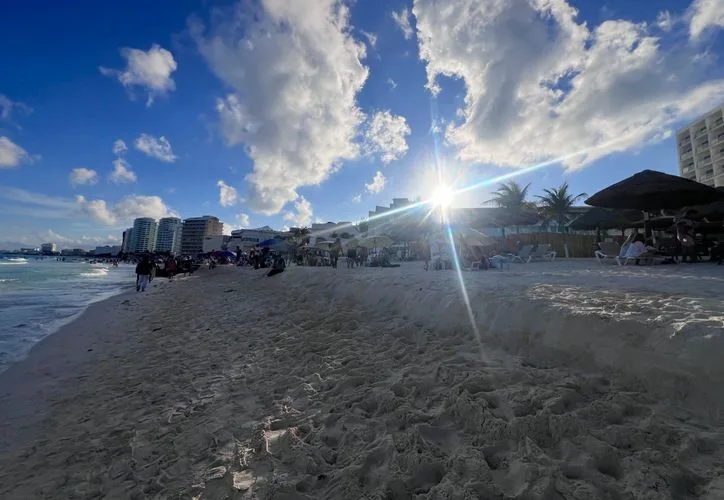
Cancún, Quintana Roo — El Niño is intensifying to a “very strong” level and is likely to last well into 2027, bringing prolonged drought, record temperatures and severe pressure on Quintana Roo’s power and drinking-water infrastructure, according to the World Meteorological Organization (WMO).
The extraordinary event will alter regional rainfall patterns and increase thermal stress on the Maya jungle and the Great Maya Reef, prompting local authorities and productive sectors to draw up long-term mitigation plans.
Heat Expected to Strain Power Grids
One of the most immediate effects on the Mexican Caribbean will be a sustained rise in air temperatures, triggering more frequent and intense heat waves in urban and tourist areas. That will push electricity demand to historic levels as hotels, shops and homes increase air-conditioning use, potentially saturating distribution networks operated by the Federal Electricity Commission (CFE) and raising the risk of blackouts during peak travel seasons.
The precipitation deficit will also put critical pressure on water supplies. With less rain, the natural recharge of aquifers beneath the Yucatan Peninsula will slow, complicating drinking-water production for the state utility CAPA and private concessionaires. High-density tourism hubs such as Benito Juárez, Solidaridad and Cozumel could experience low water pressure or shortages.
Wildfire and Reef Threats
In environmental terms, dry vegetation, low humidity and extreme heat will sharply increase the risk of wildfires in jungle areas, threatening native biodiversity. Meanwhile, warmer-than-normal waters in the Atlantic and Caribbean are expected to accelerate mass bleaching on the Great Maya Reef, endangering coral colonies and reducing the reef’s ability to protect the shoreline from waves.
Changing atmospheric circulation and sea-surface temperatures could also affect the arrival of sargassum along the coast in unpredictable ways.
While El Niño usually increases wind shear over the Atlantic and reduces the overall number of tropical cyclones, unusually warm ocean conditions mean any storm that forms could gain destructive strength rapidly. The phenomenon is also likely to prolong storm surges and bring atypical macroalgae arrivals to public beaches.
The WMO projects a nearly 100 percent probability that El Niño will continue into the first months of 2027, giving the Mexican Caribbean a critical window to strengthen early-response protocols.
More Environment
- Cancún Fumigates Cemeteries to Curb Dengue Ahead of Day of the Dead
- Selvame MX Calls HAZUL Project With Artificial Beach a ‘Fantasy’ in Playa del Carmen
- Six Dead as Hurricane Simón and Storm Rachel Remnants Batter Mexico’s Pacific Coast
- Farmer Warns of Difficult Corn Season Ahead in José María Morelos
- Video Shows Rescue of Large Sea Turtle Trapped Between Rocks on Isla Mujeres
More Quintana Roo
- Vacation Clubs Report 73% Occupancy in Quintana Roo Low Season
- Insurers Pull Back Coastal Coverage as Category 5 Hurricanes Multiply
- What Pluricultural Nation Day Means for Quintana Roo
- Maya Train’s Entire Route Gets Internet Next January
- Electoral Institute of Quintana Roo Opens 152 Jobs Paying Up to 23,000 Pesos a Month