
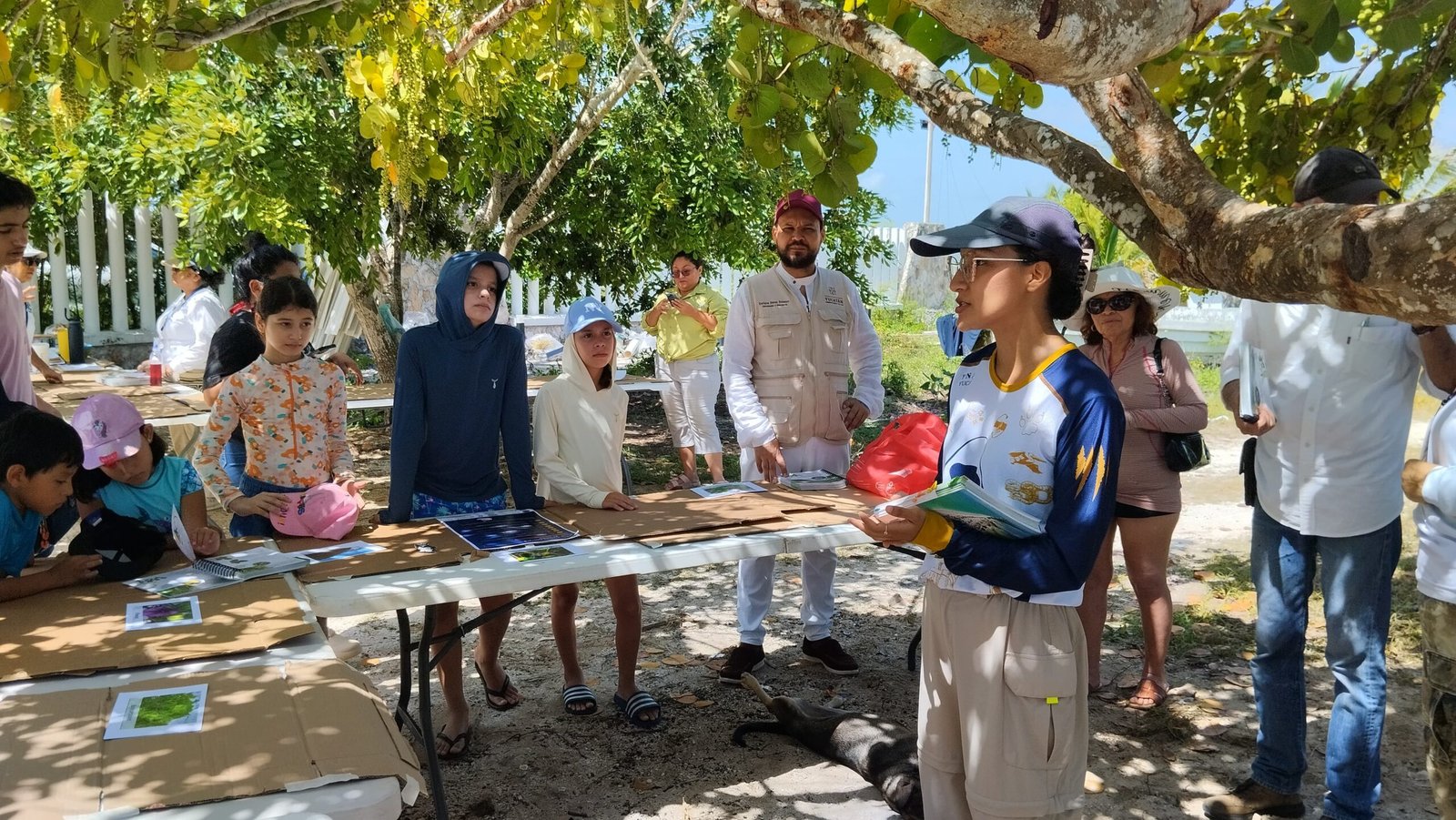
Chelem, Yucatan — The Center for Research and Advanced Studies (Cinvestav) hosted the first edition of “Clean Beaches, Living Seas” on Saturday, a beach cleanup and environmental education day aimed at getting the public involved in protecting the Yucatan coast.
Volunteers collected and separated waste, attended talks on sea turtle and nest protection and the importance of coastal dunes, and made posters with environmental awareness messages.
Dalila Aldana Aranda, a Cinvestav researcher who organized the event, said it marked the first time the institution’s Marine Unit in Mérida has opened its doors to the community, 20 years after the unit was established.
“This is the first open-doors activity for the community at the Cinvestav Marine Unit, which is turning 20 years old. It is called the First Session because it will be the first of several,” she said.
Aldana said the goal is to hold the sessions twice a year and strengthen the link between scientific research and the public.
She also noted that about 80 percent of marine debris comes from land, making it essential to change everyday waste-management habits.
“If the land isn’t clean, the sea won’t be clean either. Everything we generate on land ends up in the sea,” she said.
Aldana stressed that citizen participation is key to driving changes in public policy and environmental protection. “The power of citizens is very great. When citizens organize, they achieve many things,” she said.
She added that the activities help dispel the idea that beach care is the responsibility only of governments or cleaning services. “We can’t keep leaving it to the authorities. We also have to contribute to improving the health of Yucatan’s beaches,” she said.
Beyond the environmental benefits, Aldana said these gatherings strengthen the social fabric, bringing together people of different ages and occupations around a common goal. “You can be with a child, with an authority, with a neighbor you didn’t know. These activities create social fabric,” she said.
More Environment
- Brain-Eating Amoeba in Mérida Mall Lake Prompts Surveillance of 240 People
- Beach Weddings Plummet as Sargassum Swamps Quintana Roo
- Quintana Roo Business Group Seeks Public Dashboard for Sargassum Spending
- Autocar Adds 100 Hybrid Buses to Its Cancún Fleet
- Crews Remove Fuel From Yacht Grounded on Mahahual Reef to Prevent Spill
