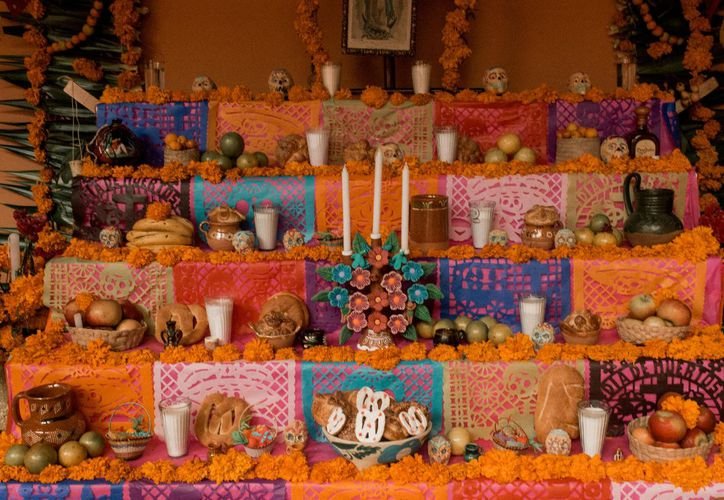
Mérida, Yucatán — The Day of the Dead altar is one of the most recognizable symbols of Mexico’s best-known tradition. Every object placed on the ofrenda carries a spiritual meaning tied to welcoming the dead, purifying the space and marking the path that souls are believed to travel to reunite with their families on Nov. 1 and 2.
By tradition, the elements of the altar correspond to the four elements of nature: water, earth, fire and wind. Water is represented by containers of liquid, fire by candles, earth by flowers and food, and wind by the perforated paper banners known as papel picado.
That ritual order reflects a blend of funeral practices from Mexico’s Indigenous peoples with Catholic traditions brought during the Spanish colonization.
Water and Salt: Purification and Protection
Water is one of the essential components of the offering. Its presence symbolizes the vital liquid that lets souls regain strength and quench their thirst after their supposed journey from the afterlife. It is also associated with spiritual purity and renewal.
In some Indigenous communities, the water vessel is paired with salt, an element linked to preservation and protection. Popular belief holds that it helps prevent the spiritual corruption of the deceased during the passage between the two worlds.
Among the Matlatzinca people, salt is part of the first offerings laid out on Oct. 31 for the souls of children, often alongside milk, fruit, bread and water. The white tablecloth that covers some altars reinforces the idea of purity and ritual cleanliness.
Candles Light the Way Back
Candles represent faith, hope and the light that guides the dead to the homes of their loved ones. In this tradition, the flame serves as a beacon so that souls can find their way to the offering.
Before candles were introduced, some communities used splinters of ocote pine for a similar purpose. In various Indigenous communities, each candle can stand for one deceased person, so the number depends on how many souls the family hopes to receive.
Color can also carry meaning. Purple tapers are associated with mourning, while four candles arranged in a cross may represent the cardinal directions and spiritual orientation.
Cempasúchil Flowers Guide Souls to the Altar
The cempasúchil, or marigold, is among the most emblematic flowers of the holiday. Its intense yellow or orange stands out on the offering and, according to popular belief, helps souls identify the road home.
For that reason, many families scatter its petals from the doorway of the house or the cemetery to the altar. The flower’s color and scent are part of the symbolic depiction of that path.
Altars dedicated to deceased children may also feature flowers such as stock and the flor de nube, associated with purity, tenderness and innocence.
Copal Cleanses the Space
Copal has roots in pre-Hispanic ceremonies, when Indigenous peoples offered it to their deities as a symbol of prayer and reverence. European-style incense was later incorporated into ceremonial practice.
Today both may be used during the holiday to scent and symbolically purify the space where the dead are received. The smoke is part of the ritual atmosphere and accompanies the preparation of the offering.
Sugar Skulls and the Presence of Death
Sugar skulls recall the presence of death, but within a celebration meant to honor the deceased and keep their memory alive among family and friends.
Their meaning is usually linked to ancient skull imagery in Mesoamerican cultures, although today’s sugar skulls also reflect the historical evolution of the traditions and the arrival of new practices.
Besides sugar, there are versions made of chocolate or amaranth. These sweets are placed on the altar as part of the offering and represent a way of folding death into everyday life through a festive cultural expression.
A Tradition That Keeps Memory Alive
Each element of the Day of the Dead altar contributes a specific meaning: water refreshes, salt protects, candles illuminate, flowers orient and copal accompanies the symbolic purification of the space. The skulls, for their part, serve as a reminder that death is part of existence.
Together, these objects turn the offering into a space of family memory and cultural expression, where beliefs, symbols and customs passed between generations keep one of Mexico’s most important traditions alive.
More Culture
- Cave Divers Push to Revive Jacinto Pat Museum in Tulum to Showcase Caves and Underground Rivers
- Bacalar’s Paseo de las Almas to Feature More Than 20 Decorated Boats
- Quintana Roo Hands Two Artisan Carts to 33 Craftspeople in Playa del Carmen
- Mucbipollo Prices in Cancun Could Hit 1,500 Pesos This Day of the Dead
- Cozumel Day of the Dead Festival Opens With Michoacán and Monarch Butterfly as Guests