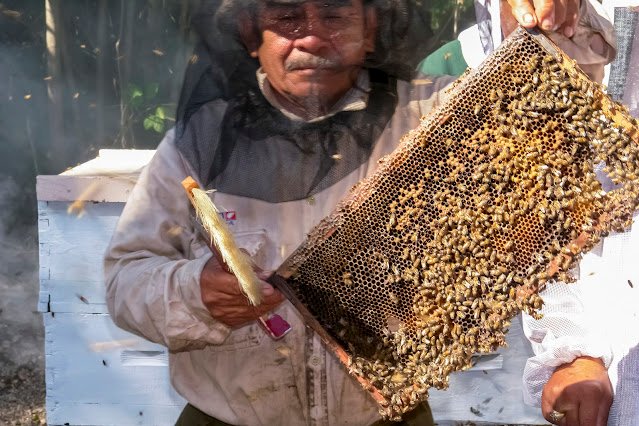
Mexico City — Yucatán has cemented its position as Mexico’s leading honey producer, with output reaching approximately 10,000 metric tons in 2025, according to the Ministry of Agriculture and Rural Development (Agricultura).
The announcement came during World Bee Day celebrations. Officials noted that 80% of Yucatán’s honey is exported to Europe and the United States, and the state is home to around 11,000 beekeepers.
Nationally, Mexico achieved a record honey production of 60,297 metric tons in 2025, a 5% increase from the 57,430 tons produced in 2024. The growth reflects the efforts of more than 47,000 honey producers across the country, according to the National Atlas of Bees and Beekeeping Products, compiled by the national statistics agency INEGI.
Mexico ranks 10th worldwide in honey production among 115 countries, with 45 species of honey-producing bees. Mexican honey is recognized internationally for its quality and safety.
Agricultura highlighted the importance of beekeeping for hundreds of rural communities where it provides a vital livelihood. The ministry is promoting sustainable practices to protect bees and open higher-value markets for Mexican honey.
Among the initiatives is a campaign to foster coexistence between agriculture and beekeeping through proper pesticide use, developed in coordination with the German development agency GIZ under the POLILAC project, which aims to protect pollinating insects.
In the states of Chiapas and Quintana Roo, authorities have implemented measures to reduce pesticide poisoning incidents. Together with the Ministry of Environment and Natural Resources (Semarnat), they are developing a prevention protocol to safeguard pollinators, including the Apis mellifera honeybee.
Through field schools, the ministry promotes agroecological practices, preventive pest and disease monitoring, and technologies to improve honey and other beekeeping products. These efforts help beekeepers succeed in the food, cosmetic, and ecological industries at both national and international levels.
Animal health campaigns by the National Service for Agrifood Health, Safety and Quality (Senasica) also work to protect bees from pests and diseases.
The Food and Agriculture Organization of the United Nations (FAO) noted that this year’s World Bee Day theme is “Together with bees, for people and the planet. A partnership that sustains us all.” FAO urged urban populations to contribute to bee conservation by creating pollinator-friendly gardens, balconies, and terraces, and by supporting local beekeepers through purchases of bee products.
More Business
- Imports Hit Record, US Trade Deficit Widens Despite Tariffs
- MarAlliance Launches Free MARAP App to Track Marine Wildlife in the Mexican Caribbean
- Playa del Carmen Seeks Million-Dollar Investment for Sargassum Processing Plants
- Cancún Restaurant Sector Welcomes Extended Hours in Hotel Zone
- Yucatan Debuts Southeast Mexico’s First Cyclotron for Precision Oncology