
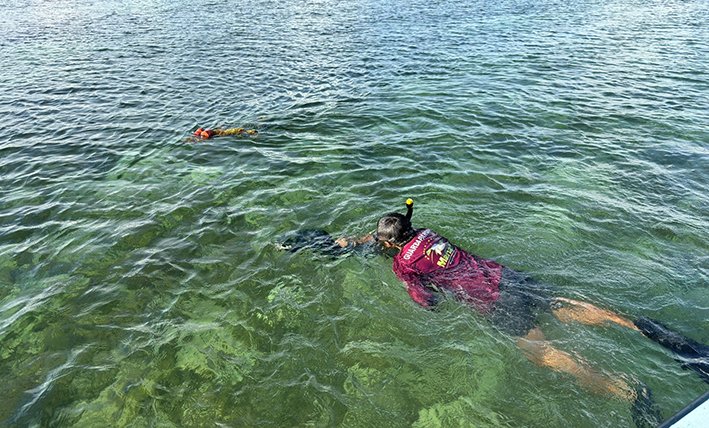
Chetumal, Quintana Roo — Fishermen and fly-fishing guides from Xcalak have teamed up with researchers and state officials to track the earliest life stages of reef fish in Chetumal Bay, part of a regional effort to safeguard the Mesoamerican Reef.
The Quintana Roo Institute of Biodiversity and Protected Natural Areas (IBANQROO), the College of the Southern Frontier (ECOSUR) and guides from the Xcalak fishing community took part in the 16th Mesoamerican Reef Connectivity Exercise (ECOME-16), held in the Zaragoza Canal area inside Chetumal Bay.
The monitoring is part of a wider regional program across the Mesoamerican Reef System that involves 16 marine protected areas in Mexico, Belize, Guatemala and Honduras. Its goal is to generate data on how reef fish connect during the first stages of their lives.
During the exercise at the Manatí Sanctuary in Chetumal Bay, participants recorded the larvae of several species, including snappers and jacks, which are important to the region’s artisanal and sport fisheries.
For the third consecutive year, they also documented the arrival of tarpon larvae (Megalops atlanticus), a species prized in catch-and-release sport fishing, particularly among fly anglers.
IBANQROO said the Manatí Sanctuary is a key site for the recruitment of commercially important fish, and that tracking larvae gives researchers a better understanding of the ecological processes at work in the area.
Officials described the involvement of Xcalak fishermen and guides as a valuable part of the exercise, citing their knowledge of the marine environment. The collaboration feeds information into strategies for managing and conserving the region’s natural resources.
More Environment
- Polo strengthens to a Category 5 hurricane off Mexico’s Pacific coast in Record Time
- Cozumel Launches Rabies Vaccination Drive With 3,000 Free Doses for Pets
- Sargassum Collection in Quintana Roo Tops 133,000 Tons, Setting New Record
- Isla Mujeres Collects Over 160,000 Tons of Waste in Five Years
- Tulum Beach Cleanup Pulls 32 Kilos of Marine Debris From Playa del Pueblo
