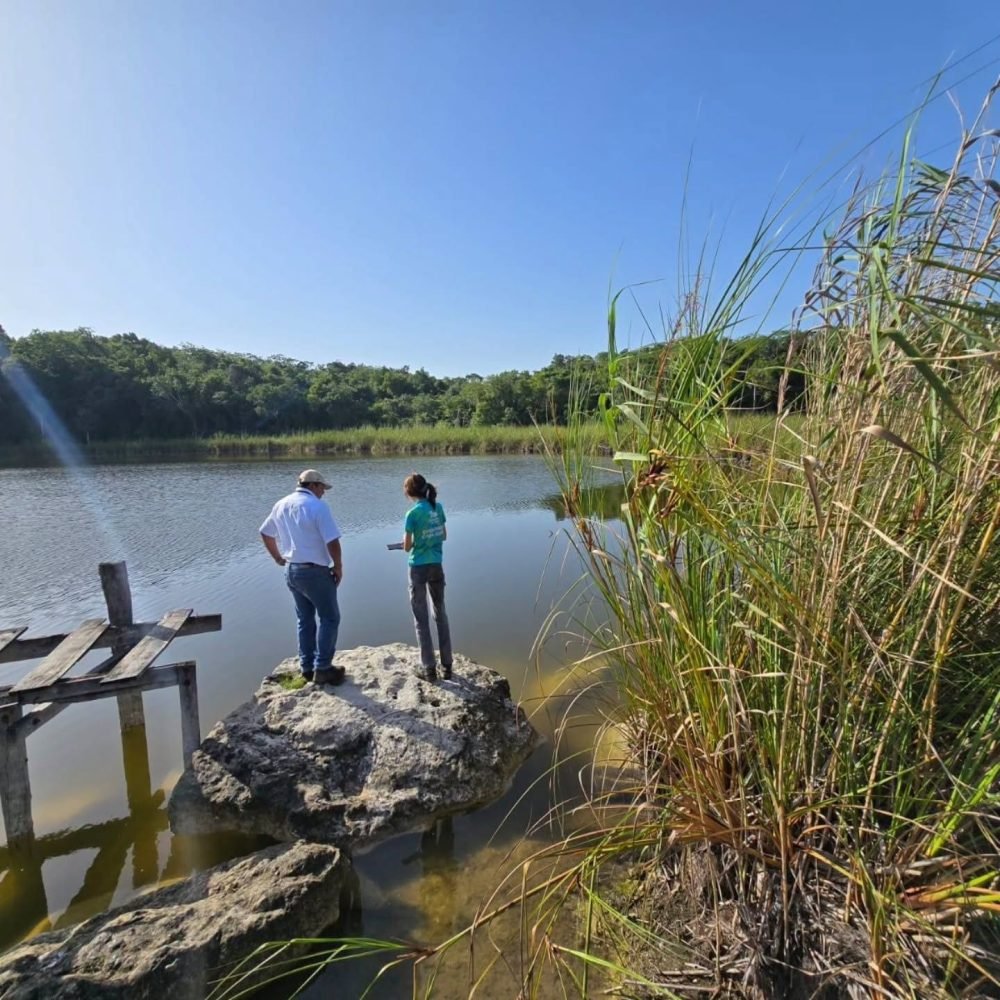
Felipe Carrillo Puerto, Quintana Roo — Water Sentinels, an environmental organization, has begun testing drinking-water wells in 30 rural communities across Quintana Roo and Yucatán after previous studies found dangerous levels of nitrites, nitrates, agricultural pesticides and heavy organic compounds in groundwater. The group said the contamination exceeds limits set by Mexico’s NOM-127-SSA1 health standard.
Unlike bacteria and other pathogens, these chemical contaminants cannot be eliminated with standard chlorine treatment, the group said. Alejandro López Tamayo, the organization’s director general, said removing such toxins requires specialized filtration technology such as reverse osmosis. He warned that prolonged consumption of contaminated water has been linked to severe gastrointestinal illnesses and cancer in the region.
Water Sentinels said about 90 percent of the communities evaluated lack a functioning chlorination system. Extraction wells are frequently left uncovered and unprotected, and residents sometimes disable chlorine dosing pumps after noticing changes in the water’s taste, leaving the supply even more vulnerable.
The monitoring covers the Quintana Roo municipalities of Felipe Carrillo Puerto, José María Morelos, Lázaro Cárdenas, Puerto Morelos, Solidaridad and Tulum, as well as areas in eastern Yucatán. Because local custom is to drink well water without boiling or filtering, children are the most exposed to chronic health conditions, the organization said.
As an immediate step, Water Sentinels is installing drinking fountains with filtration systems at 15 schools. The group also urged state and municipal governments to provide technical training for residents and ensure adequate infrastructure at pumping stations.
The organization said it is unacceptable that rural communities in 2026 still rely on open wells exposed to agricultural chemical contamination, putting thousands of families at risk.
More Environment
- Brain-Eating Amoeba in Mérida Mall Lake Prompts Surveillance of 240 People
- Beach Weddings Plummet as Sargassum Swamps Quintana Roo
- Quintana Roo Business Group Seeks Public Dashboard for Sargassum Spending
- Autocar Adds 100 Hybrid Buses to Its Cancún Fleet
- Crews Remove Fuel From Yacht Grounded on Mahahual Reef to Prevent Spill
More Zona Maya
- Farm and Cattle Expansion in Quintana Roo Squeezes Native Wild Bees
- UIMQROO to Build Student Dormitories With 19 Million Peso Investment
- Tulum Delivers Free Medicines to Health Houses in Vulnerable Communities
- Tulum Tourism Slump Spreads to Inland Maya Communities as Businesses Close Along Cobá Route
- Mahahual Groups Build Reinforced Dog Shelters to Shield Pets From Jaguar Attacks