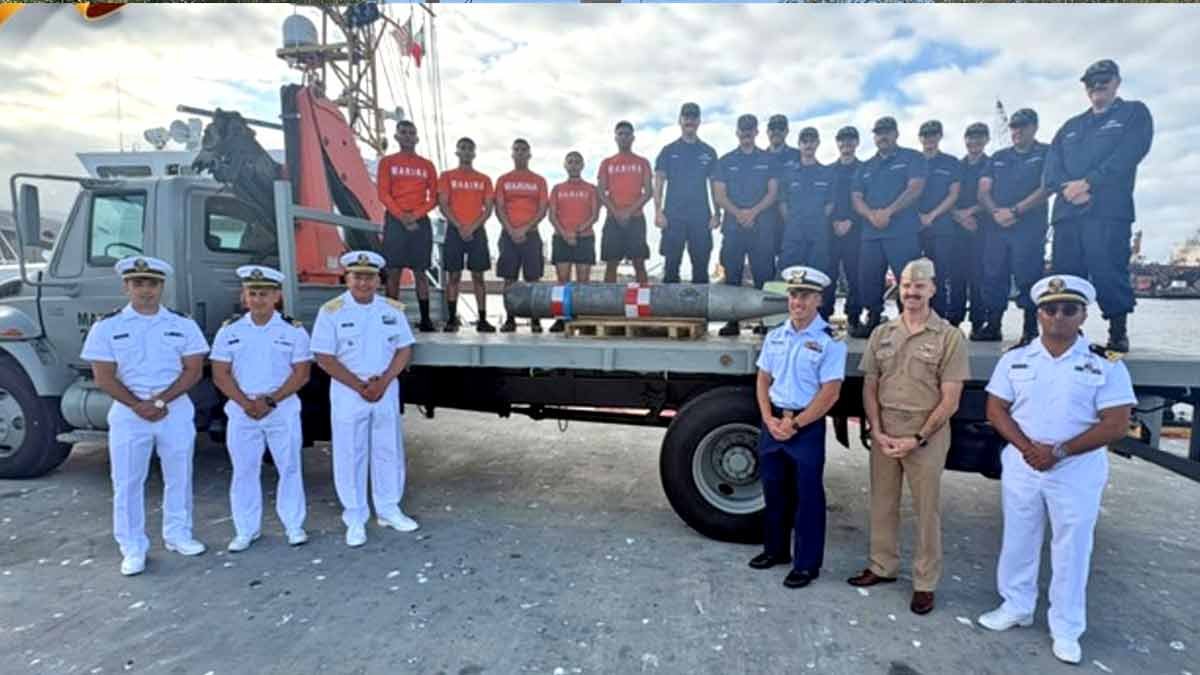
Ensenada, Baja California — Mexican fishermen recovered a US Navy torpedo off the coast of Baja California after it went missing during a naval training exercise near San Diego, officials said.
The device, an MK 54 REXTORP manufactured by Raytheon in partnership with the US Navy, is a lightweight torpedo built mainly for shallow-water operations. It is designed to classify and engage underwater targets during drills.
The Mexican Navy (SEMAR) said it recovered the torpedo on September 15 and then contacted US authorities to establish where it came from.
Currents and winds carried the device from the San Diego area, where the US sailors had been conducting their exercises, into Mexican waters.
Torpedo Drifted South Into Mexico’s Exclusive Economic Zone
Once the US Navy confirmed it owned the torpedo, the device was handed over to US personnel through the commander of Mexico’s Second Naval Zone.
The US Defense Attaché office said the torpedo was lost during a training exercise on September 2, roughly 18 nautical miles west of San Clemente Island, off the California coast.
Weather conditions hampered efforts to locate it after it disappeared during the maneuvers. The battery in its locating system also ran out, which further complicated the search.
Marine currents and winds then pushed the device south until it reached waters off Ensenada, inside Mexico’s Exclusive Economic Zone, where fishermen eventually found it.
The device is an MK 54 REXTORP — short for Recoverable Exercise Torpedo — a model intended for military training. It is recoverable and carries no explosive charge. According to official information, torpedoes of this type are designed to be launched from aircraft and vessels, allowing crews to conduct drills without using live weaponry.
More Government
- Polo strengthens to a Category 5 hurricane off Mexico’s Pacific coast in Record Time
- Quintana Roo Climbs 12 Spots to 9th in Competitiveness Index
- Culture Ministry to Inspect Ceremonial Pole Ahead of Voladores de Papantla Return to Tulum
- Cozumel Launches Rabies Vaccination Drive With 3,000 Free Doses for Pets
- Isla Mujeres Collects Over 160,000 Tons of Waste in Five Years