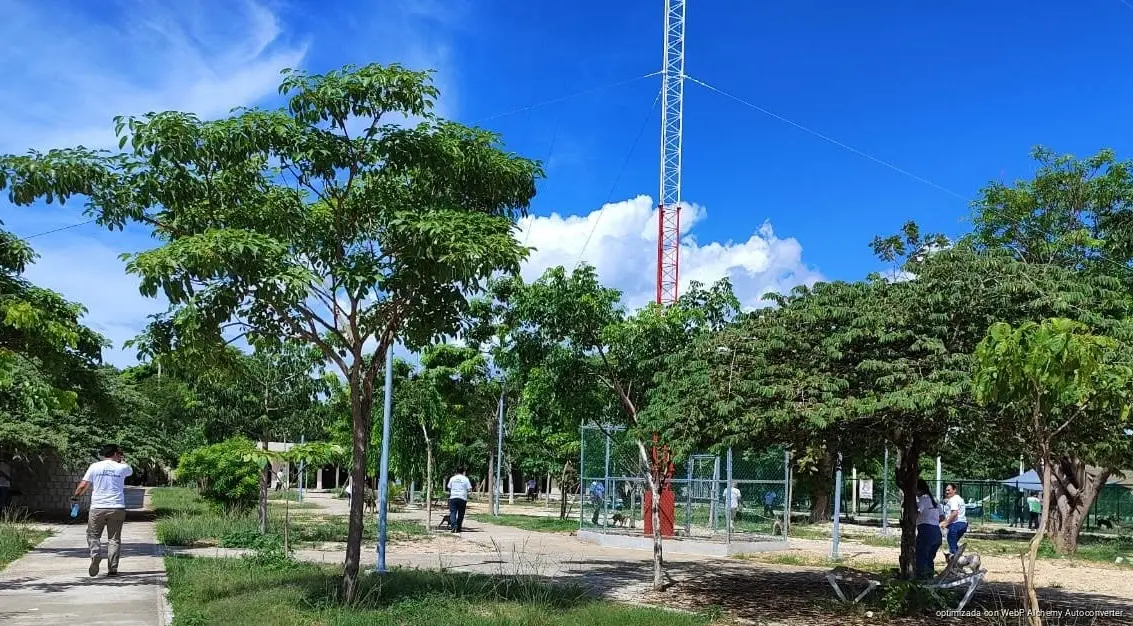
Playa del Carmen, Quintana Roo — Between 15 and 20 people sanctioned for administrative offenses are sent to perform community service every day at Playa del Carmen’s Animal Control, Assistance and Zoonosis Center (Cencaaz), where they clean facilities, wash cages and walk dogs as part of the penalties imposed through the city’s Civic Justice system.
Andrea Piña Valle, secretary of Civic Justice and Human Coexistence, said the work is one of the alternatives applied to people referred for administrative violations. She said the goal is for the sanction to provide a benefit to the municipality’s public spaces and services.
From Beaches to Parks and Medians
The Cencaaz is not the only site where the work takes place. Sanctioned individuals are also assigned to parks, medians and other public spaces to carry out cleaning and maintenance shifts, depending on the needs determined by city authorities.
Piña Valle noted that part of this work was previously concentrated on beaches during sargassum arrivals. As the seaweed’s presence declined, the community service shifts were moved to other parts of the city that require cleaning and attention.
Among the main reasons people are referred to Civic Justice are illegal dumping of trash, involvement in fights and drinking alcohol in public. Depending on the offense and the corresponding ruling, community service can be set as one of the measures used to complete the sanction.
More Government
- Canaco-Servytur Seeks Tax Incentives for Sargassum Management in Quintana Roo
- Cancún to Hand Out 117,000 Pairs of School Sneakers Starting Monday
- Hepatitis A Outbreak Prompts Class Suspension in Tizimín Village
- Cancún Animal Welfare Hospital Reaches 85% Completion in First Phase
- Quintana Roo Border Dispute Reaches Final Stage at Mexico’s Supreme Court
More Playa del Carmen
- Two Suspected Drug Dealers Arrested in Playa del Carmen
- Teen Pianist Amir Akil Makes Debut in Playa del Carmen With ‘Fractales del Viento’
- Online Escort Ruse Ends in Attempted Robbery in Playa del Carmen
- Internet Installer Dies After Touching High-Voltage Cables in Playa del Carmen
- Elderly Couple in Playa del Carmen Accuse Daughter of Fraud and Attempted Seizure of Home