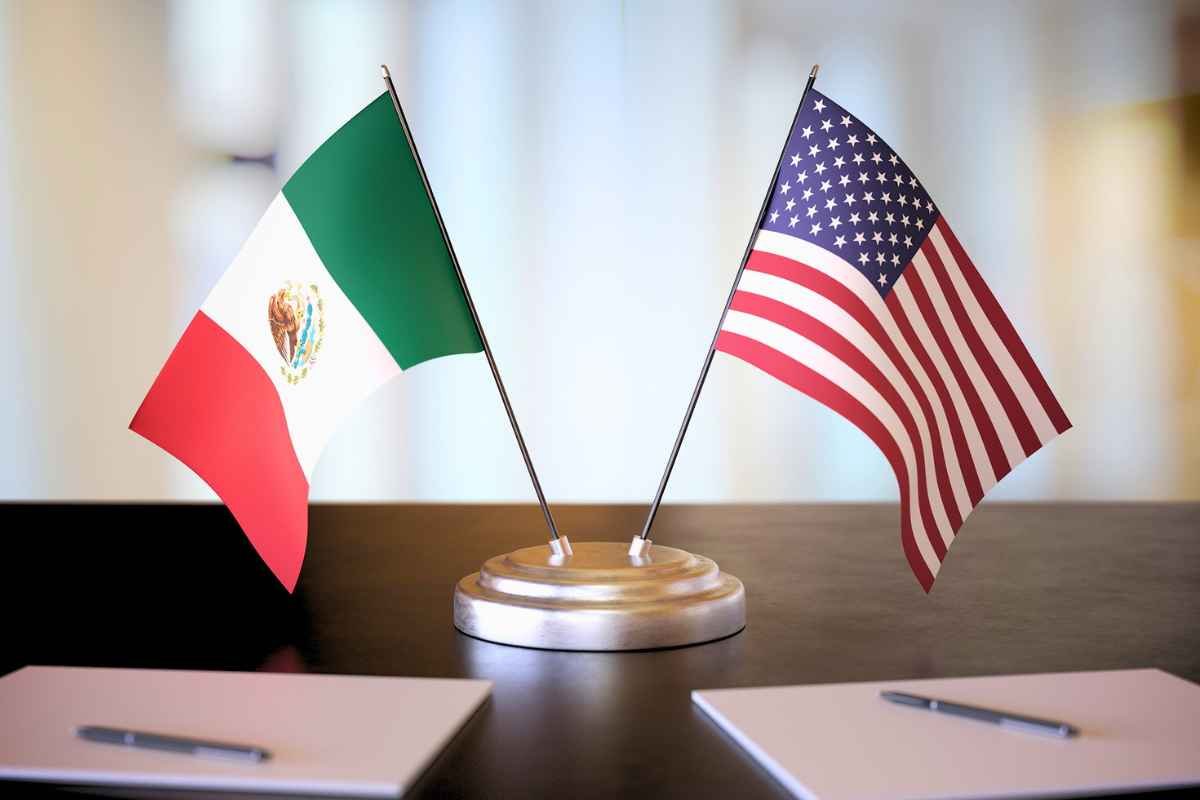
Mexico City — U.S. pressure on Mexico over tariffs, security, migration and Chinese participation in North American supply chains is likely to persist through 2027 and 2028 regardless of the outcome of the Nov. 3 U.S. midterm elections, according to a report by the consultancy Integralia.
The review of the United States-Mexico-Canada Agreement (USMCA) and the U.S. congressional elections will shape the bilateral relationship over the next two years, the analysis found. Economic integration between the two countries makes a full commercial decoupling difficult, but it does not rule out the possibility that the administration of President Donald Trump will use tariffs and trade rules as instruments of political pressure.
“The midterm elections will change the checks on Trump, but they will not necessarily reduce pressure on Mexico,” the report said.
Divided Congress, Same Demands
A Democratic majority in one or both chambers of the U.S. Congress could increase investigations and oversight of the Trump administration, according to Integralia. But that scenario would not necessarily ease demands on Mexico: facing greater domestic constraints, the U.S. president could focus more heavily on foreign policy to build his legacy.
The consultancy also said the fight against drug trafficking and organized crime could take on greater prominence, since those issues enjoy broader bipartisan consensus in Washington than other foreign policy matters.
USMCA Review Adds New Fronts
The trade review is one of the main challenges for the economic relationship. After the United States declined in July 2026 to extend the agreement for 16 years, the annual review mechanism set for 2027-2036 took effect.
The negotiating agenda has also widened. Pending issues rose from 54 to 94, with topics such as digital platforms added to the list.
Among the main points of friction, Integralia listed automotive rules of origin, the use of inputs from countries outside North America, traceability of steel and aluminum, electronic components and China’s role in regional production chains.
Security Moves Onto the Trade Table
U.S. security demands have also been folded into the USMCA review. The issue was included in the first and third formal rounds of negotiations, allowing Washington to tie its calls for cooperation against organized crime to other parts of the economic relationship, including tariffs and trade conditions.
Integralia said that linkage raises the risks for Mexico, because disagreements over security can spill into economic negotiations and create new pressure on productive sectors.
Migration is another area where U.S. demands are expected to continue. Washington treats the containment of migrant flows at its southern border as a national security matter, so the Trump administration’s restrictive policy is unlikely to change because of the composition of Congress.
Border records show that encounters with Mexican nationals by U.S. authorities fell from a peak of 808,340 in 2022 to 96,960 in 2025. Despite that decline, Integralia expects Mexico to keep facing pressure to curb migration routes and receive deportees from the United States.
China, Another Pressure Point
The analysis identified the containment of China as one pillar of U.S. economic security policy. Washington has pressed its regional partners to limit Chinese capital, investment and inputs in North American production chains.
Integralia warned that Mexico faces U.S. accusations over the growth of its trade and investment with China, amid claims that it could serve as a “backdoor” for Chinese goods entering the U.S. market.
Given that outlook, the consultancy said Mexican companies should strengthen the traceability of their inputs, due diligence and the management of tariff and regulatory risks to reduce potential allegations of trade triangulation.