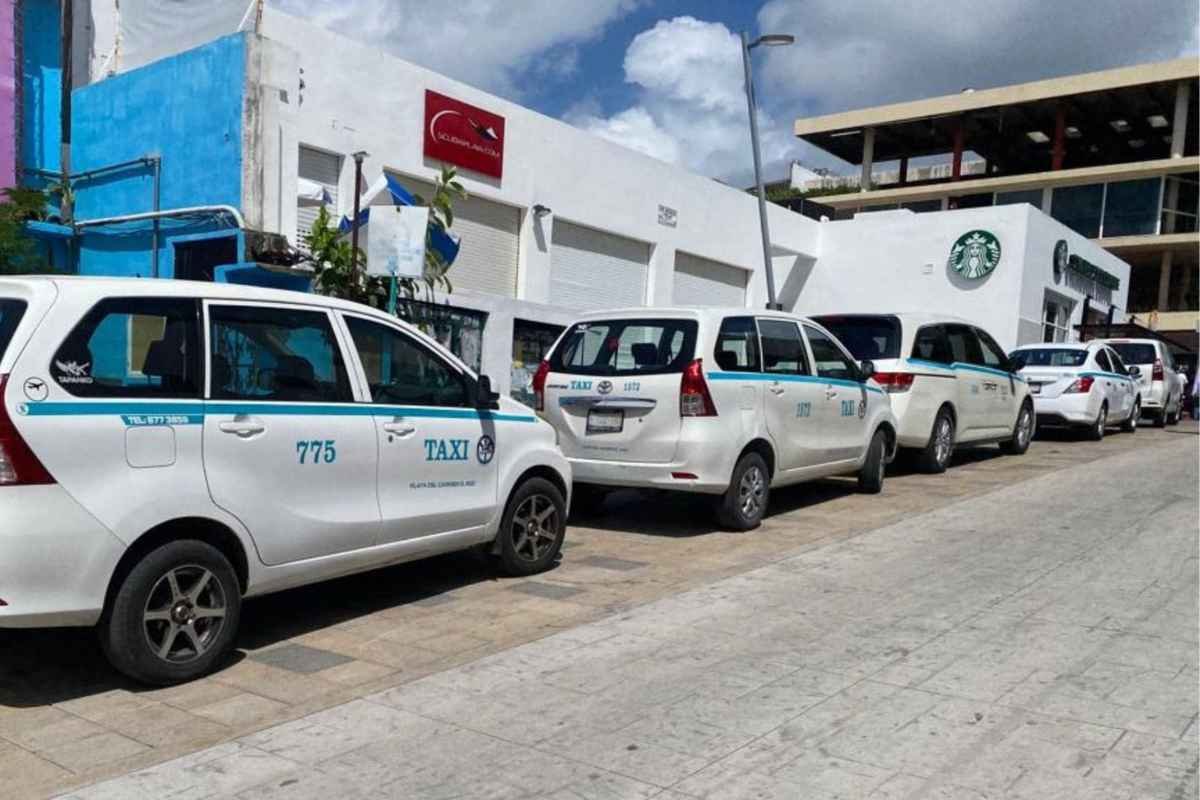
Playa del Carmen, Quintana Roo — Uber has officially begun operating in Playa del Carmen under a model that prioritizes concession-issued taxi units belonging to the Lázaro Cárdenas del Río taxi drivers’ union, while excluding private vehicles during the initial phase.
The service runs through the app’s public transport vehicle function. According to the company’s digital platform, the strategy aims to gradually bring the traditional taxi sector into digital technology, following the precedent set in Cancún, where more than 2,200 taxi operators joined the platform after periods of operational and legal complications.
The incorporation of concession-issued transport units into the app has come with a temporary package of economic incentives designed to encourage both passengers to use the service and drivers to stay in the system.
The service launched in Playa del Carmen on October 19, 2026, with promotions that included discounts of up to 99% and trips at minimal cost to the customer, offers that ran through the end of October. Drivers registered on the platform say the company absorbs the cost of those promotions.
“The app pays us. It’s paying me about 89 pesos for the service… The users don’t pay us anything, the app is paying us. If it’s true, I’ve done about 10 trips, and the app gives you bonuses for meeting targets, number of trips, distance traveled, things like that,” said Alejandro, who has worked as a taxi driver for eight months.
Under this financial arrangement, the driver receives the stated value of the trip or an average base fare of roughly 80 to 90 pesos per service, regardless of whether the user pays only a symbolic amount through promotional coupons. Drivers also report weekly bonuses for meeting trip targets ranging from 1,800 to 3,600 pesos on top of the direct payment for each service, depending on how many trips they complete within a given period through the app.
Operations with concession-issued rental units fall under current legislation overseen by the Quintana Roo Mobility Institute (IMOVEQROO). State regulations require specific conditions for vehicles and drivers on digital platforms, including:
- A valid B3 driver’s license.
- An annual permit issued by the state mobility institute.
- Vehicles no more than five years old.
- An insurance policy with broad coverage.
- A technical inspection through the vehicle review process.
- Real-time geolocation devices, security cameras and panic buttons connected to the relevant systems.
So far the platform has not commented on the situation of private drivers interested in joining to work, giving clear priority to those who hold state concessions and permits already backed by the taxi unions. Those left on the sidelines are operators based at taxi stands, where units gather to wait for passengers; because they are organized under internal arrangements, they cannot look for fares on the streets or use the app to take jobs.
“I’ve come across two or three colleagues who were bothered [by Uber entering the area], but I’ve seen young people who did get into this, who didn’t see it badly, though I have come across people who have made comments that they don’t like the competition,” said Luis Alberto, a taxi driver with 14 years of service.
The app’s current arrangement keeps the debate open in the Riviera Maya transport sector over how technological alternatives and traditional service can coexist in a market marked by strong local and tourist demand.
More Business
- Riviera Maya businesses pitch concerts for low season
- Quintana Roo Courts British Travelers at WTM London Trade Fair
- Mexican Judge Declares Magnicharters Bankrupt After Airline Halts Flights
- Michelin Guide Adds Five Quintana Roo Hotels to 2026 Keys Selection
- Nine Zona Maya Communities Earn Federal Community Tourism Certification in Quintana Roo
More Playa del Carmen
- Quintana Roo Takes Its Seven Dive Destinations to DEMA Show in New Orleans
- IMSS Delivers Ultrasound and Heart Equipment to Hospitals in Cozumel and Playa del Carmen
- Xcaret Says Final Ruling on Maya Symbol Use Still Pending After Injunction Withdrawal
- Residents Report Constant Sewage Overflows at Playa del Carmen’s Colosio Crossing
- Playa del Carmen Business Leaders Seek Broader Tax Breaks for 2027