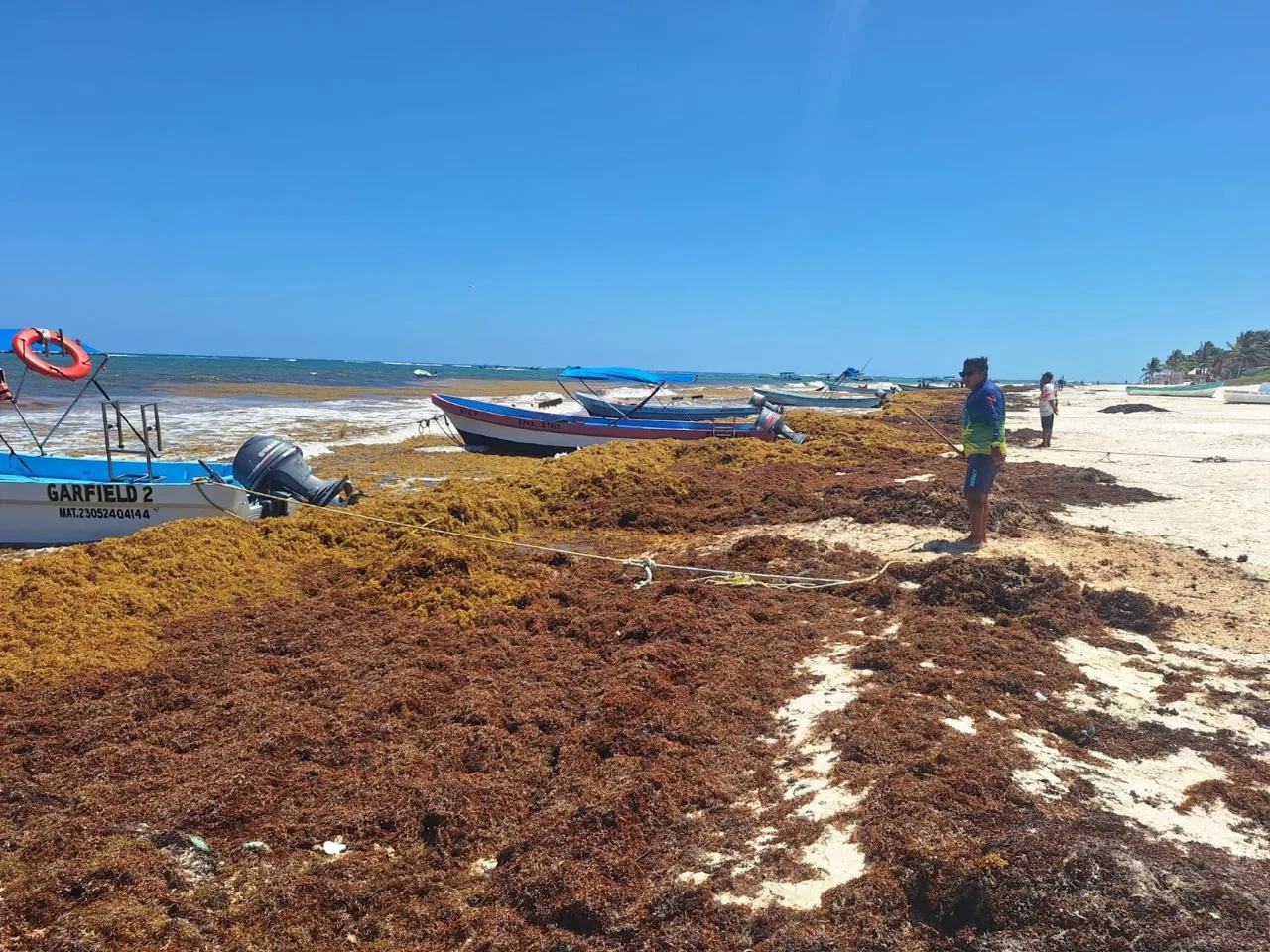
Tulum, Quintana Roo — Tulum has expanded its capacity for final sargassum disposal this year to avoid the complications seen during previous massive seaweed influxes, according to David Buchanan, director of the Federal Maritime Terrestrial Zone (Zofemat). The municipality now has more space and a greater number of containers to manage the phenomenon.
Buchanan explained that the measures follow last year’s experience, when sargassum volumes began to exceed operational capacity. In response, authorities doubled the number of collection containers and opened a larger final disposal site to ensure sufficient space for handling the seaweed.
“The intention is to start working on sand recovery,” Buchanan said, referring to the process currently underway at the confinement area. Sargassum is distributed across different cells to facilitate drying, allowing later separation and recovery of reusable materials, including sand that gets mixed in during cleanup.
According to the Zofemat director, the procedure involves constantly moving collected material to accelerate dehydration and optimize management of accumulated volume. He added that although crews try to remove only sargassum, the joint efforts of various agencies inevitably drag some sand away during cleanup.
Buchanan highlighted the work of beach cleanup teams, who aim to minimize impact on the sand. Personnel from Zofemat, the Mexican Navy, hotel workers, and brigades from the National Commission of Natural Protected Areas (Conanp) participate in keeping the tourist destination’s main beaches free of sargassum while developing strategies for proper use and management of the influx.
More Environment
- Mexican Navy Opens Youth Photography Contest on Ocean Conservation
- WHO Warns El Niño Poses Major Global Health Threat
- Hurricane Polo Hits Category 5; Five Mexican States Brace for Heavy Rain
- Isla Mujeres Fishermen Face Grouper Shortage as Catch Barely Covers Local Demand
- Cancún Officials Urge Residents to Protect Pets After Reported Puma Sighting in Cuna Maya
More Tulum
- Tulum Adds Artisan Market and Caribbean Culture Festival to Its Tourism Lineup
- Culture Ministry to Inspect Ceremonial Pole Ahead of Voladores de Papantla Return to Tulum
- Tulum Beach Cleanup Pulls 32 Kilos of Marine Debris From Playa del Pueblo
- Coastal Dune Loss Weakens Natural Defenses in Quintana Roo
- Felipe Carrillo Puerto Weighs Access Fee for Puerta al Mar