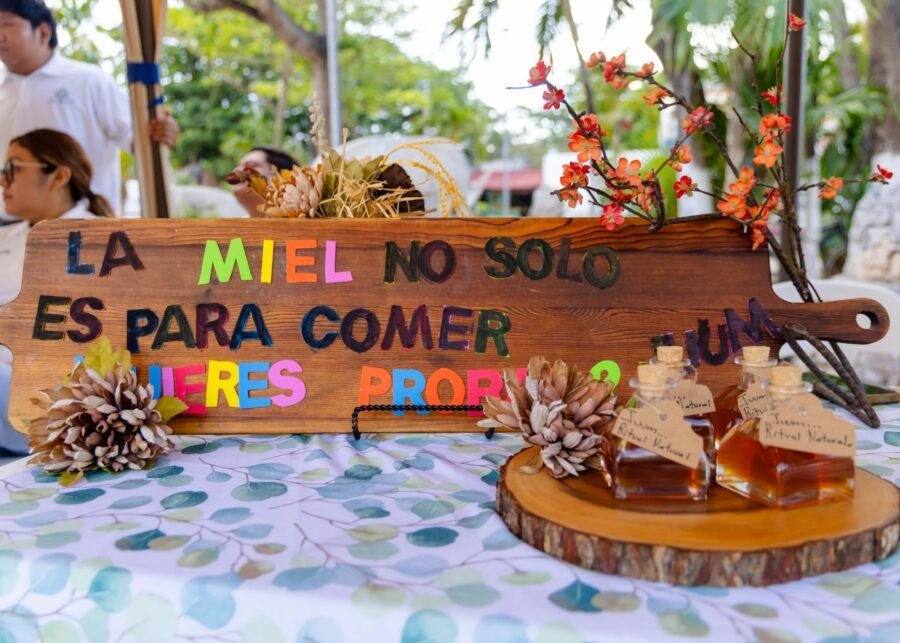
Tulum, Quintana Roo — Tulum marked World Bee Day this week with its annual Bee Festival, a two-day event designed to celebrate bees, support local honey producers and remind residents why pollinators matter so much in the Mexican Caribbean.
The festival opened Wednesday at the city hall esplanade and ran through May 21, coinciding with World Bee Day, observed internationally each year on May 20. The day was established by the United Nations to raise awareness about the importance of bees and other pollinators for food production, biodiversity and healthy ecosystems. The date honors Anton Janša, an 18th-century Slovenian pioneer of modern beekeeping.
In Tulum, the local event was organized by the municipal Economic Development Department under Mayor Diego Castañón Trejo. During the opening ceremony, Economic Development Director Melitón González Pérez said the goal was to raise public awareness about the importance of bees as pollinators and honey producers.
“The mayor has instructed us to promote all possible activities that encourage the population to protect bees,” González said.
More than 20 schools participated in educational talks led by local producers, giving students a close look at beekeeping and meliponiculture. Producers showcased melipona beehives, explained the honey-making process and shared information about the medicinal properties and health benefits traditionally associated with honey. The festival also included public conferences, cooking and drawing contests, educational exhibits and sales of honey-based products.
During the opening ceremony, the city recognized María Benita Dzib Dzib and Catalina Nah Ku for their contributions to the region’s beekeeping industry. Municipal officials noted that Tulum still has producers keeping ancestral practices alive, including traditional beekeeping and meliponiculture, the care of stingless bees. The festival aims to strengthen local consumption while supporting families dedicated to this activity.
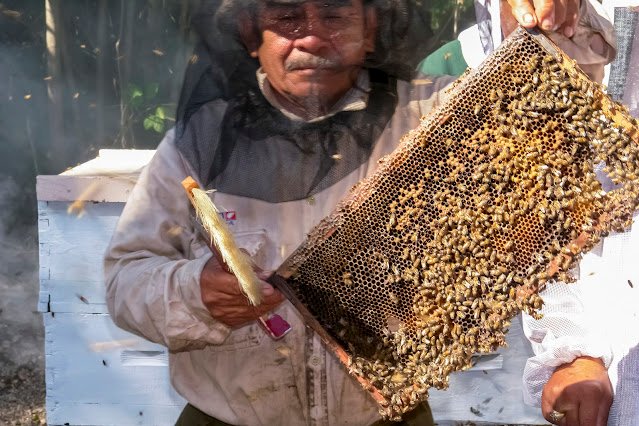
That local focus matters. In the Yucatán Peninsula, bees are not just part of the landscape. They are tied to food, forest health, Maya culture and rural livelihoods. Honey production has long been an important economic activity in the region, especially in communities where small-scale producers rely on native vegetation and seasonal flowering cycles. Healthy bee populations help pollinate crops, fruit trees and wild plants, while honey sales provide income for families who may also depend on agriculture, crafts or tourism-related work.
Melipona honey holds a particularly important place in the cultural history of the region. The stingless bee Melipona beecheii, known in Maya as xunán kab, has been cultivated by Maya communities for generations. Unlike the European honeybee, melipona bees do not produce large volumes of honey. Their honey is usually collected in smaller quantities, which is part of what makes it valuable. It is also known for its distinctive flavor, thinner texture and traditional medicinal uses.
This year’s festival came shortly after an important recognition for Quintana Roo producers. On May 12, 2026, the Diario Oficial de la Federación published the declaration protecting the geographical indication “Miel de Abeja Melipona del Corredor de la Zona Maya de Quintana Roo.” While some local reports have described it as a denomination of origin, the official federal designation is a protected geographical indication. The distinction is still significant: it legally recognizes the connection between this honey, its place of production and the traditional knowledge behind it.
The protection applies to melipona honey from the Zona Maya corridor of Quintana Roo, especially areas linked to communities in Felipe Carrillo Puerto, José María Morelos and Tulum. Local reports note that the recognition helps protect the product from imitation and unfair competition, while giving producers a stronger identity in the marketplace.
According to the official declaration, the honey is harvested only when there is a surplus, so the survival of the colony is not put at risk. That detail is important. Meliponiculture is not industrial honey production. It depends on patience, careful handling and respect for the bees’ natural rhythms.
For Tulum, the Bee Festival was more than a symbolic World Bee Day event. It connected schoolchildren, producers, municipal officials and local families around a tradition that is both ancient and highly relevant today. As development continues to reshape the Riviera Maya, protecting bees also means protecting forest habitat, local food systems and cultural knowledge that cannot be replaced once it is lost.
More Environment
- Playa del Carmen Residents Blast Six-Year Illegal Dump
- Cozumel to Host 18th Island Bird Festival Oct. 7-11
- MarAlliance Launches Free MARAP App to Track Marine Wildlife in the Mexican Caribbean
- Playa del Carmen Seeks Million-Dollar Investment for Sargassum Processing Plants
- Yucatán Officials Rule Out More Brain-Eating Amoeba Infections at Mérida’s Plaza La Isla
More Tulum
- Bus Carrying Hotel Workers Overturns Near Tulum Airport, Dozens Reported Injured
- Tulum to Host More Than 400 Riders in 2026 Federated Horse Parade
- Tulum Residents and Officials Discuss Security, Traffic and Towing Complaints
- Who Takes Tulum’s First Councilor Seat During Tah Balam’s Leave?
- Cobá Arrest Turns Violent: Officer Injured, Shots Fired