
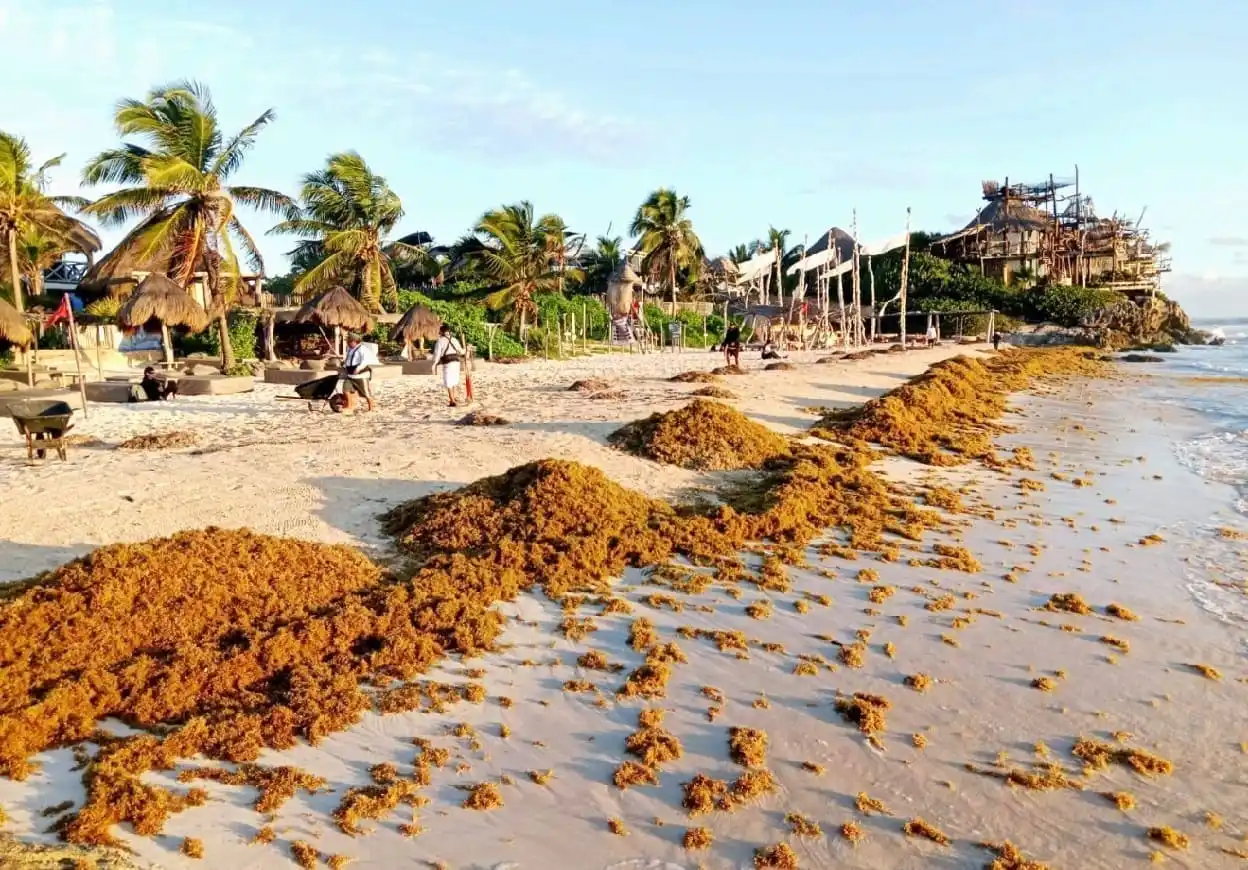
Tulum, Quintana Roo — Sargassum collection has not caused a significant loss of sand on Tulum’s beaches, though poor cleanup practices can accelerate erosion, according to David Buchanan, head of the Federal Maritime-Terrestrial Zone (Zofemat).
Buchanan said beaches in the hotel zone and Tulum National Park retain a considerable amount of sand because Zofemat, the Mexican Navy and the National Commission of Natural Protected Areas (Conanp) have reduced machinery use and avoided removing sand along with the seaweed.
Once the sargassum season ends, officials plan to launch a program to recover and redistribute sand on the most affected stretches of coastline. Buchanan said there is no estimate yet of how much material can be recovered, given how unusual and prolonged this season has been.
Regarding areas like Akumal, he said the loss of beach cannot be blamed solely on sargassum cleanup, as beaches also undergo natural changes related to sea currents and seasonal variations.
Still, he acknowledged that authorities and tourism service providers must be extra careful during cleanup work so that poor machinery operation or excessive material removal does not worsen natural erosion processes.
In a separate announcement this week, Tulum Mayor Diego Castañón Trejo said the city would step up promotion of its cleanest beaches to attract visitors now that sargassum landings have slowed.
More Environment
- Hurricane Simon Threatens Puerto Vallarta as Category 4
- Mexico’s Environment Agency Rejects Four Major Tourism Projects in Quintana Roo
- Sargassum Closes In on 53 Quintana Roo Beaches as Tulum and Puerto Morelos Take the Worst Hit
- Semarnat Denies Environmental Permit for GL Dreams Subdivision in Puerto Morelos
- Caribbean Sargassum Becomes Fertilizer for Global Beer Brands
More Tulum
- Tulum Tour Guides Train to Protect Ecosystems Visited by Tourists
- Airline Seat Cuts Threaten US Connections to Mexico’s Caribbean Coast
- Akumal Residents Say Tulum’s Garbage Collection Is Failing
- Tulum Foundation Runs Short on Medicines as Demand from Irregular Settlements Grows
- Sargassum Hits Southern Quintana Roo Hardest as 25 Beaches Report Excessive Levels