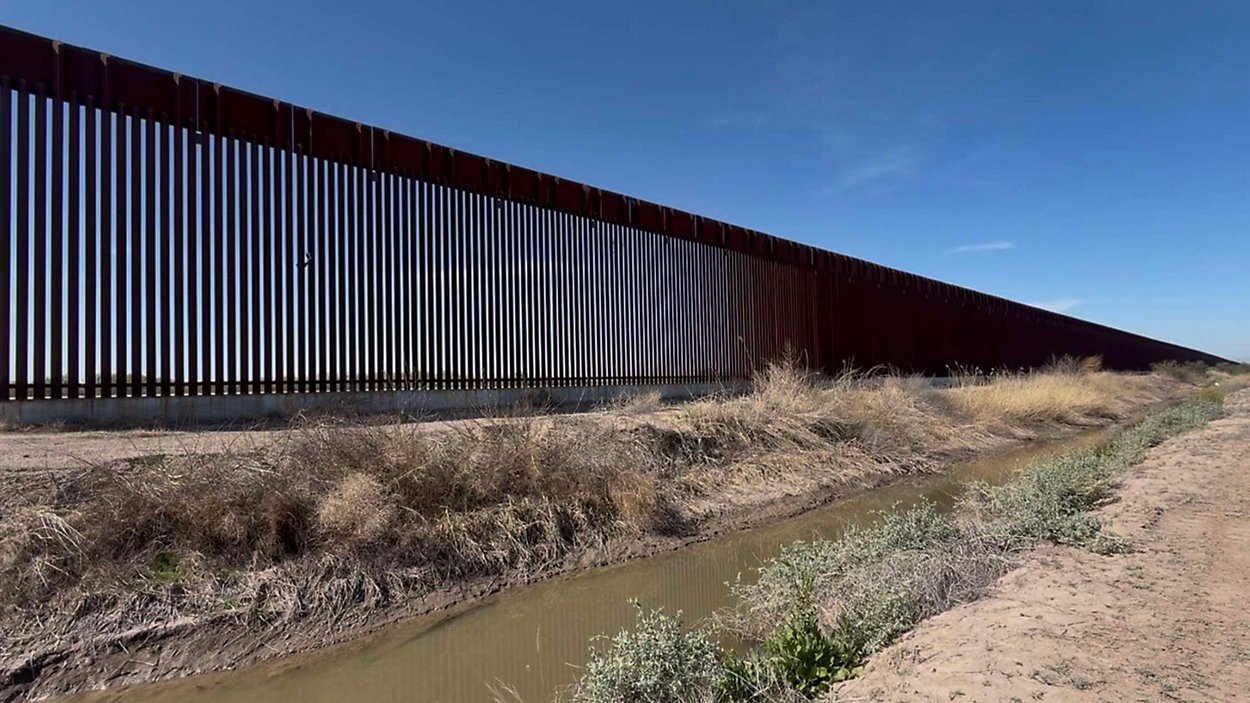
COMSTOCK, Texas — The Trump administration has begun installing a border wall across a west Texas portion of the Big Bend region, the first significant construction in a stretch of the U.S.-Mexico border where the administration’s plans have drawn intense opposition.
The move is a major marker in the administration’s $46 billion effort to furnish the border with walls, barriers, roads and technology, as President Donald Trump seeks to fulfill a central campaign pledge to complete the wall. It also coincides with U.S. Customs and Border Protection’s statement that it has doubled the pace of wall construction along the U.S.-Mexico border.
CBP told The Associated Press in a statement that “border wall panel installation is underway” in a 47-mile area of Hudspeth County in west Texas known as Big Bend 1. The roughly 500-mile Big Bend region is made up of five project areas and extends from a part of Hudspeth County south of El Paso to Lake Amistad.
According to CBP, the first panels were put up on September 15. A photo posted on the agency’s website map, which tracks wall construction along the entire southern border, showed a crane hoisting a 30-foot-tall steel panel into position as construction workers watched.
The work is distinct from a border infrastructure project in nearby Big Bend National Park, where the administration has paused construction temporarily in an effort to engage opponents.
Opposition Continues Across the Region
Across the wider Big Bend region of Texas, CBP has met organized resistance from landowners, environmental organizations, business owners and ranchers, who argue that the remote area does not see high volumes of illegal immigration. On Friday, activists said they would keep fighting the border infrastructure projects in the rest of the Big Bend region even as the panels were installed.
Clara Benson, a founder of the No Big Bend Wall Coalition, which has opposed CBP’s plans, said in an interview Friday that the group had received reports of trucks hauling supplies into the remote area along the Rio Grande and contractors clearing yards to store supplies.
Speaking from Washington, D.C., where she and other coalition members were meeting with lawmakers, Benson said the coalition and others would continue to contest wall-building plans throughout the region.
“We will continue to fight for this land no matter what the outcome is. We will continue fighting to the end,” Benson said. “You talk to people in west Texas and they say even if they put it up, we’ll fight for them to take it down. So this fight is not over.”
Administration Advances Wall Plan
The development comes as the administration pushes forward with a plan to line the entire border using a mix of 30-foot-tall steel bollard walls, vehicle barriers, new patrol roads and technologies meant to deter and detect migrants or smugglers.
CBP said it is constructing an average of 12 miles of barriers each week along the 2,000-mile border with Mexico and recently hit a milestone of 200 miles of new barriers since the second Trump administration began. That weekly average is twice the pace cited earlier this year by agency head Rodney Scott.
The agency has encountered opposition from environmental groups; a small town concerned that the wall could cause flooding; Native Americans who say construction is disturbing sacred sites; and landowners who say it will encroach on their property.
In Texas, much of the resistance has focused on CBP’s plans for Big Bend National Park, located in the state’s southwest along the Rio Grande and a destination for tourists from around the world. Outside the park, both upriver and downriver, much of the land is privately owned, and many landowners have resisted the government’s efforts.
Earlier in the week, landowners, ranchers and business owners in the Big Bend region, together with a nonprofit organization devoted to protecting the area’s landscape and heritage, filed a lawsuit to stop the administration’s plans.
Activists and landowners have also attended county meetings to urge elected officials not to work with CBP-hired contractors building the wall, and many landowners have declined to let government officials or contractors enter their land to survey it.
More Environment
- Contemporary Maya Sculpture Installed in Sacalaca Cenote to Draw Community Tourism
- Mexico to Review Private Events Held Inside Tulum National Park
- Cancún Sargassum Arrivals Ease in September, but Officials Watch the Winds
- Mexico Holds Second National Earthquake Drill; Alerts to Sound at Noon
- Brain-Eating Amoeba in Mérida Mall Lake Prompts Surveillance of 240 People