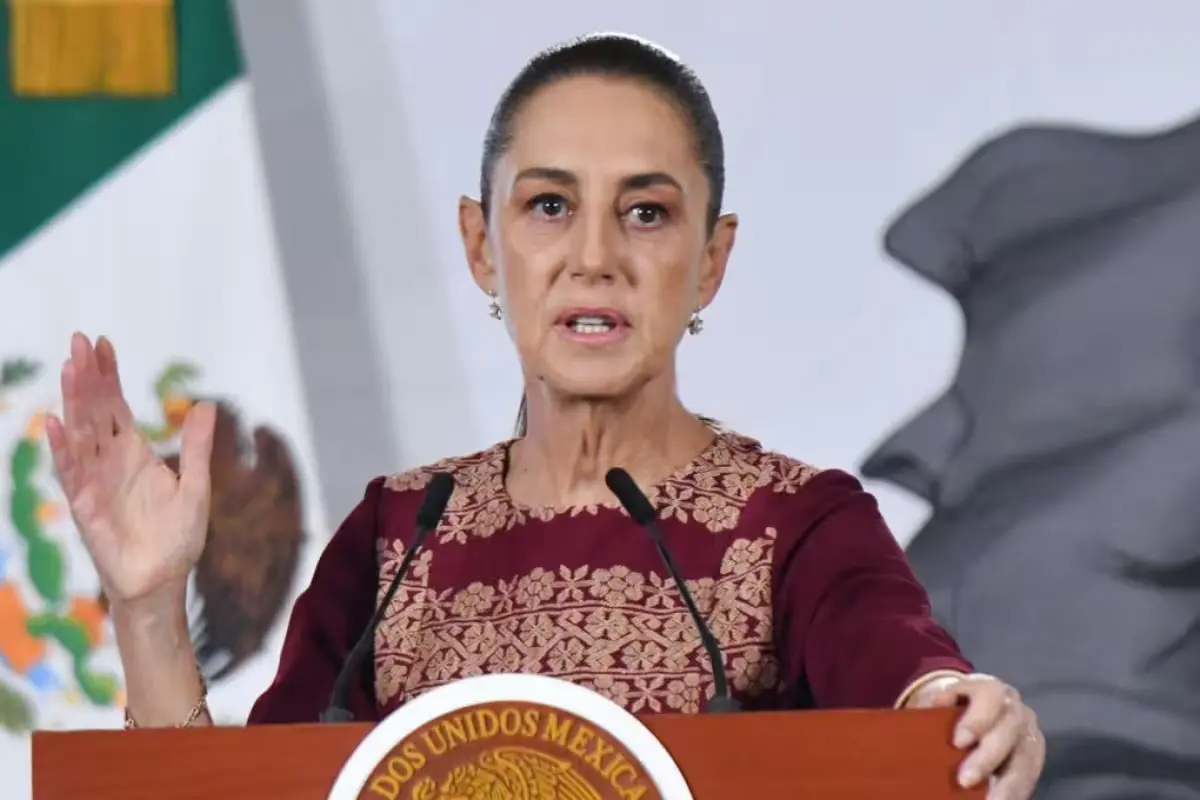
Mexico City — President Claudia Sheinbaum described her meeting with King Felipe VI of Spain at the National Palace as “cordial,” revealing that the conversation centered on the recognition of indigenous peoples and the importance of this issue for Mexico.
During her morning press conference on Friday, Sheinbaum said the hour-long meeting included Foreign Secretary Roberto Velasco, chief adviser Lázaro Cárdenas Batel, and diplomatic representatives from both countries.
Sheinbaum said she raised the significance of indigenous communities to Mexico’s national identity and explained why Mexico has insisted on acknowledging abuses committed during the Spanish conquest.
Sheinbaum explains the importance of indigenous peoples to King Felipe VI
The president detailed that she spoke about the 28 million Mexicans who identify as indigenous and the 69 languages spoken in the country. She also highlighted that the great civilizations that existed before the arrival of the Spanish are an essential part of modern Mexico, and that the resistance of indigenous peoples has been fundamental to the nation’s construction.
Sheinbaum argued that recognizing indigenous peoples is not just a historical issue but one of identity, national dignity, and a rejection of all forms of discrimination, racism, and classism.
King Felipe VI proposes continued dialogue on indigenous peoples
According to Sheinbaum, King Felipe VI listened to her presentation and noted that at the next Ibero-American summit, scheduled for November in Madrid, one of the working groups will be dedicated specifically to indigenous peoples. The president said the monarch expressed interest in continuing to work on this topic following their conversation at the National Palace.
Sheinbaum recalled that the rapprochement was made possible by previous gestures from the Spanish government and the king himself, including his visit to an exhibition on indigenous women in Spain, where he acknowledged abuses committed during the Spanish arrival in the Americas.
Mexico and Spain agree on cultural agenda
The meeting also covered cultural topics. Sheinbaum announced that three Mexican exhibitions will travel to Spain: one on the Spanish Republic and its refugees, another on Sor Juana Inés de la Cruz, and a third on Maya culture. She said these projects had been previously discussed with Spanish authorities and are part of a cultural exchange agenda between the two countries.
Meeting also addressed trade, economy, and international affairs
Beyond historical issues, Sheinbaum and King Felipe VI discussed trade, the economy, and the international situation. The president said they also talked about the importance of the United Nations Charter, the self-determination of peoples, and peace.
After the meeting, both toured Diego Rivera’s mural “The Epic of the Mexican People” on the stairway of the National Palace, where they continued their conversation about Mexico and the global context.
Sheinbaum described the encounter as positive and reiterated that the dialogue with Spain came after a previous rapprochement related to the recognition of indigenous peoples and historical grievances from the conquest.
More Politics
- New Quintana Roo Press Group Leader Calls for Consensus Journalist Protection Law
- UQRoo Cancún Union Workers Allege Rigged Election, Demand Full Rerun
- Isla Mujeres Approves Updated Development Plan With 185 Action Items
- Mexico Seeks Tariff Cuts on Steel and Autos in US Trade Talks
- No Date Set for Supreme Court Ruling in Quintana Roo Border Dispute