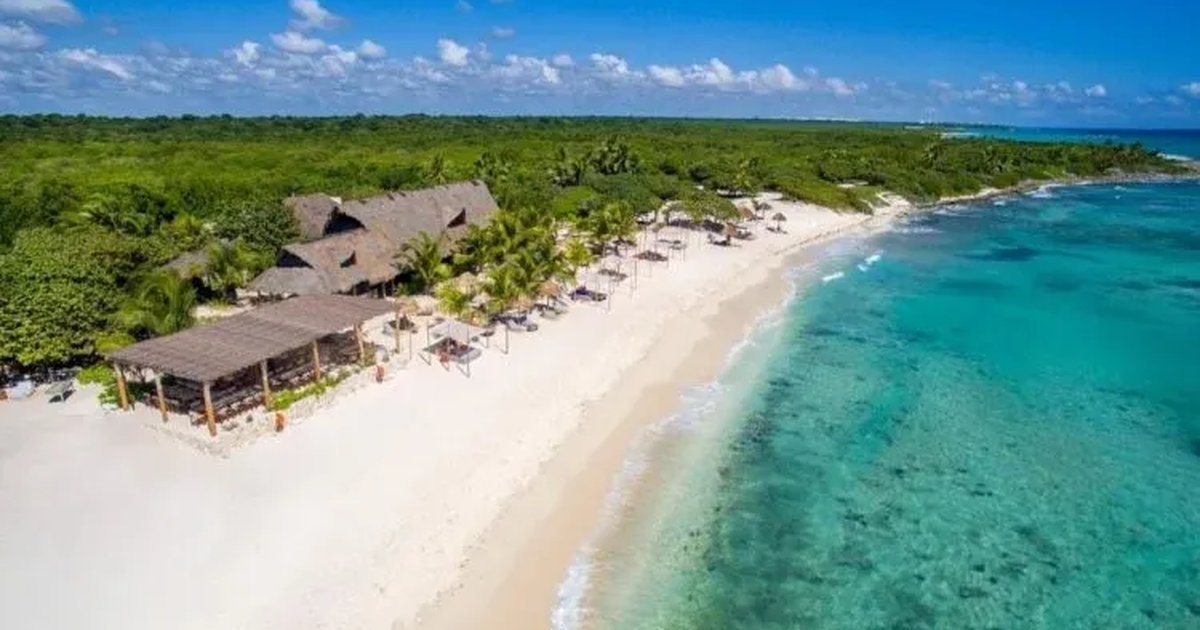
Playa del Carmen, Quintana Roo — Mexico’s Environment and Natural Resources Department (Semarnat) has rejected the construction of a 108-room hotel within the Punta Venado project because its location encroached on the 100-meter protection zone bordering the mangrove.
In a statement issued on Oct. 11, the agency said it had partially approved other parts of the tourism development under environmental conditions. The company, Residencial Punta Venado, S.A. de C.V., received authorization to build 30 suites and 23 residences, down from the 50 suites and 33 residences it originally requested.
Semarnat said an evaluation by the General Directorate of Environmental Impact and Risk (DGIRA) determined which components of the project could proceed and which had to be excluded because of their potential environmental impact.
Pools and Beach Access Also Blocked
Beyond the 108 hotel rooms, the agency denied a reverse osmosis plant, swimming pools and a series of access points, including trails and walkways leading to the beach. According to the environmental authority, those works also failed to respect the 100-meter protection zone along the mangrove.
The approved buildings were confined to areas identified as compatible through an environmental zoning study. Semarnat clarified that the 111.559 hectares cited in the case file refer to the total size of the property, not to the area authorized for construction or land clearing.
Dunes and Wildlife Corridors Must Be Preserved
Among the conditions attached to the approval, the company must keep at least 75% of the coastal dune and rocky berm in its natural state. It must also maintain a buffer strip around the property equivalent to 20% of its surface, intended to preserve biological corridors and reduce fragmentation of the ecosystem.
During its review, the agency considered technical opinions from the National Commission of Natural Protected Areas (Conanp), the National Commission for the Knowledge and Use of Biodiversity (Conabio), the National Forestry Commission (Conafor), the National Water Commission (Conagua) and the National Institute of Ecology and Climate Change (INECC).
A Project With a History of Setbacks
The development has a record of environmental noncompliance. Semarnat noted that on June 4, 2024, it rejected an earlier application tied to failures in the protection of mangroves and sea turtles.
The company refiled the request on Sept. 26, 2024, and during the review submitted additional information, modified components and surface areas, and included an environmental zoning study. Those changes formed the basis for the partial, conditional approval.
The project still needs separate authorization to change land use on forested land. According to the statement, the company had not filed that application with Semarnat as of Oct. 11, 2026.
Semarnat said Residencial Punta Venado may only carry out the works expressly authorized and must comply with the conditions set out in the environmental ruling.
More Development
- Mahahual Faces Economic Uncertainty as Perfect Day Fallout Chills Investment
- Yucatán Draws 11,566 Million Pesos in Tourism Investment, Creating 15,508 Jobs
- Monterrey’s Torre Rise Set to Become Latin America’s Tallest Building
- Cancún Finishes Demolishing Old General Hospital as Work Begins on New Maternal-Infant Facility
- Quintana Roo’s Beaches Are Disappearing Up to 14 Meters a Year
More Playa del Carmen
- Homeless Man Found Dead Beside Trash Containers in Playa del Carmen
- Quinta Avenida Board in Playa del Carmen Aims to Start Work in Early 2027
- Xcaret Forum Urges Tourism Industry to Grow Without Harming Nature
- LIPU Bus Rear-Ends Van, Flipping It Off Highway 307 Near Playa del Carmen
- Woman Shot Dead on Motorcycle With Her Daughters in Playa del Carmen