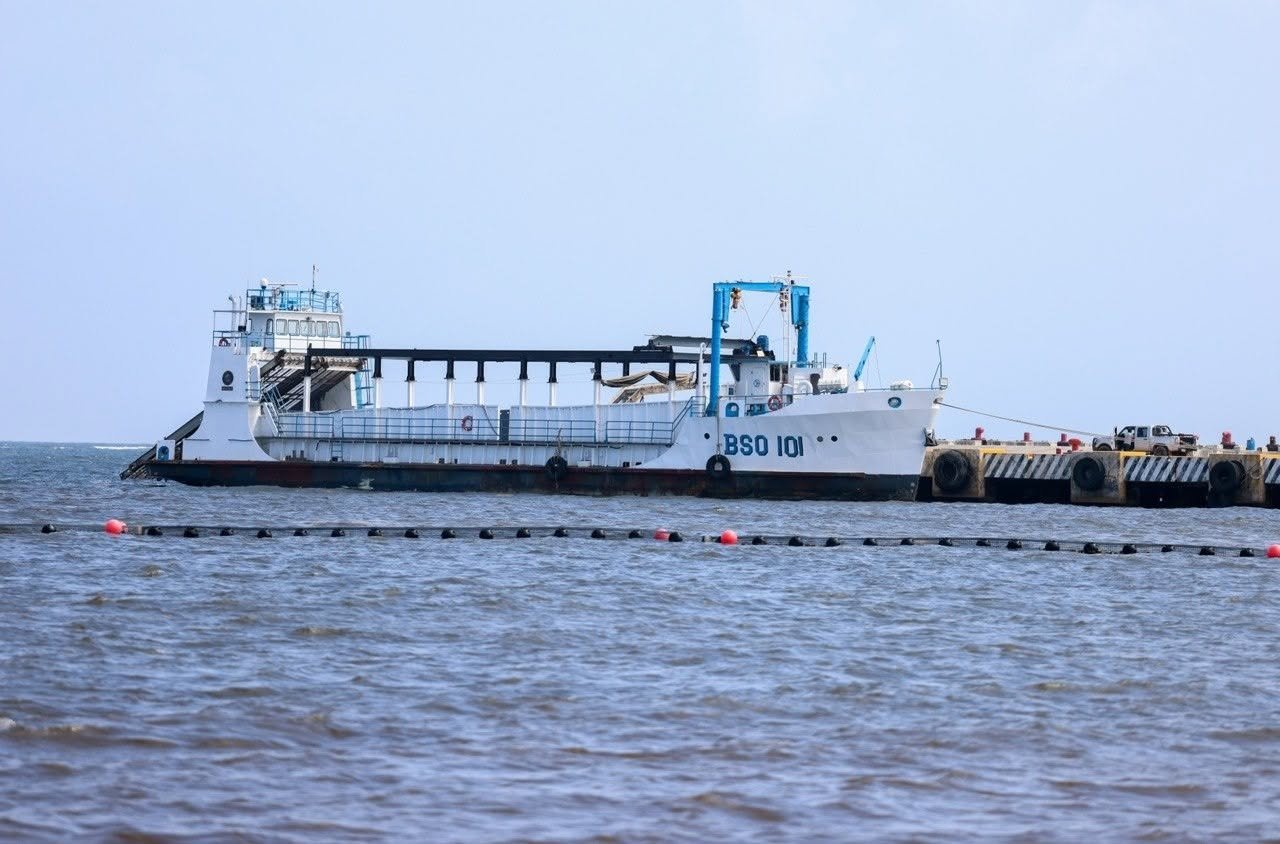
Cancún, Quintana Roo — Authorities in Quintana Roo have installed 50% of the anti-sargassum barriers acquired to mitigate the arrival of the macroalgae on the Mexican Caribbean coast, according to state Ecology and Environment Secretary Óscar Alberto Rébora Aguilera.
Of the 16,000 meters of barriers purchased, 8,000 meters have been placed. The remaining installation is pending due to weather conditions that have made it difficult to secure anchors in some maritime areas.
Rébora noted that sargassum is a global problem affecting not only Quintana Roo but also other Caribbean regions, including Florida and the Dominican Republic, which face similar conditions.
The response involves coordinated efforts among municipal and state governments, the Mexican Navy, business owners, and various tourism sector stakeholders.
The Mexican Navy continues containment operations at sea using vessels and barriers, while the state strengthens operational and infrastructure capacities, Rébora said.
Officials plan to incorporate a new large-capacity ocean vessel to bolster collection efforts. The new ship would be able to transport between 600 and 700 metric tons of sargassum, far exceeding the 200 to 250 tons that the current vessel, “Natans,” can handle.
Monitoring has identified two main entry points for the macroalgae: the area between Banco Chinchorro and Mahahual, and the maritime corridor between Cozumel and Tulum, through which approximately 80% of the sargassum reaching Quintana Roo’s coasts enters.
As of May 27, authorities had collected a total of 50,625 metric tons of sargassum.
Rébora cautioned that while this year shows a greater presence of the macroalgae, comparisons with 2025 should be made carefully, as the influx began in January this year compared to March last year.
He added that the growth of sargassum in the Atlantic is linked to various environmental factors, including global warming, ocean acidification, and deforestation processes, which have contributed to the increase in floating biomass in the region.
More Environment
- Greenpeace Finds Contamination at 17 Yucatán Wells and Cenotes as Maya Communities Demand Action
- Quintana Roo Tops 152,000 Metric Tons of Sargassum as Playa del Carmen and Cancún Lead
- Profepa Shuts Down Los Rápidos Swimming Spot in Xul-Ha Over Missing Environmental Permit
- Court Gives Profepa 72 Hours to Clarify Tren Maya Closure Order
- National Geographic Names Maya Ka’an Among Top Destinations to Visit in 2027
More Quintana Roo
- Quintana Roo Beaches Lose Up to 14 Meters of Sand a Year as Restoration Plan Advances
- Quintana Roo Youth Sailors Join Mexico’s Team for Optimist Championship in Uruguay
- Mara Lezama Hands Out 100 Sewing Machines in Chetumal to Boost Women’s Self-Employment
- Tourism Slump Forces 35% of Skål México Businesses to Borrow to Cover Payroll
- Crystal Meth Addiction Surges in Quintana Roo, Fuels Nearly 90% of Homicides