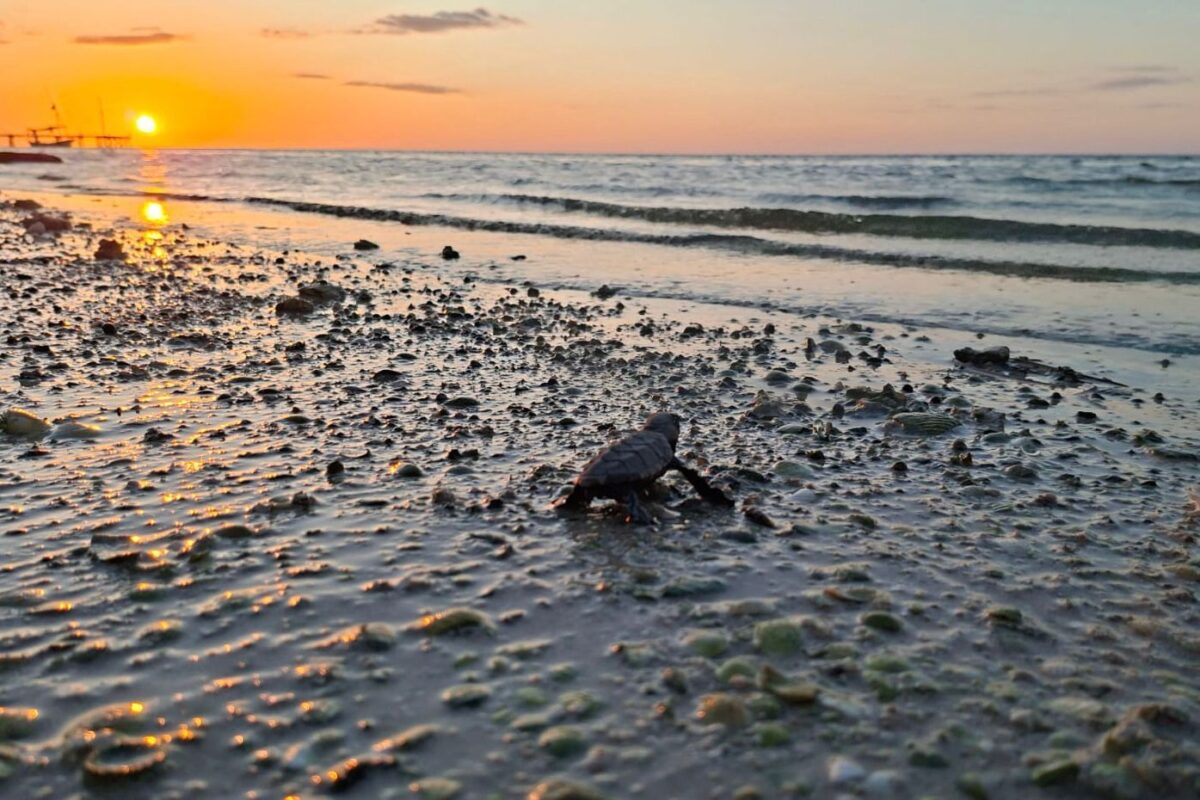
MEXICO — Mexico is one of the most important countries in the world for sea turtles. Six of the seven species found globally occur in Mexican waters and beaches, including the green, loggerhead, hawksbill, leatherback, olive ridley and Kemp’s ridley turtles. But climate change, coastal development, erosion and pollution are placing growing pressure on many of the beaches where these animals return to nest.
One of the most unusual threats comes from the sand itself. Unlike mammals, sea turtles do not have sex determined at conception. Instead, the temperature of the nest during a critical stage of incubation influences whether hatchlings develop as male or female. Cooler conditions generally produce more males, while warmer sand produces more females.
That has led to growing concern as global temperatures rise. In some sea turtle populations, researchers have already documented extremely female-skewed hatchling ratios, and prolonged warming can eventually reduce the production of males enough to threaten the long-term stability of a population. Very high nest temperatures can also become lethal to developing embryos.
A common claim is that nests above 29°C produce only females, but the science is more nuanced. The exact pivotal temperature varies by species and population. Around that point, warmer temperatures tend to produce increasingly more females rather than creating an immediate all-female cutoff.
Mexico’s Nesting Beaches Are Also Physically Disappearing
Heat is only part of the problem. Rising sea levels, stronger storms and coastal erosion can reduce the amount of suitable nesting habitat available to turtles. Nests may be flooded, washed away or squeezed between the sea and hotels, roads, seawalls and other development.
This is particularly relevant in rapidly developing coastal destinations such as Quintana Roo, where green, loggerhead and hawksbill turtles nest on beaches along the Mexican Caribbean. CONANP identifies Xcacel, Chemuyil, Xel-Há and Aventuras DIF among important loggerhead nesting areas in the state, alongside other nesting sites in Cozumel, Puerto Morelos, Sian Ka’an and Tulum.
The loss of a nesting beach is especially serious because female sea turtles often return to the same general region where they were born to lay their own eggs.
Plastic Is a Problem, But Not Quite for the Reason Often Claimed
Trash and plastics can also threaten sea turtles, but it is important to be precise about how. Plastic debris can obstruct nesting females, trap hatchlings or create physical barriers as newborn turtles attempt to reach the sea. Once in the ocean, young turtles are also particularly vulnerable to ingesting plastic, which can cause internal injuries and other health problems.
However, the claim that every piece of plastic left on the beach directly raises the sand temperature is too broad to state as fact. The stronger and better-documented concern is that marine debris creates obstacles, entanglement and ingestion hazards, while the broader rise in nest temperatures is being driven primarily by climate change.
Mexico Has a Long History of Turtle Protection
Mexico has played an important role in sea turtle conservation for decades. All sea turtle species found in the country are legally protected, and harvesting has been prohibited nationally since 1990.
Conservation programs now monitor major nesting beaches, relocate threatened nests when necessary, guard eggs from poaching and predators, and help hatchlings reach the sea safely. These efforts have produced real successes for some populations, even as others remain in serious trouble.
The situation is not as simple as saying Mexico is “running out of male turtles.” Different species and populations are affected differently, and some turtle populations have shown encouraging signs of recovery. But the underlying warning is real: increasingly hot nesting beaches can produce heavily female-skewed generations, while erosion, storms and development reduce the amount of safe nesting habitat available.
For the Riviera Maya, where sea turtles are part of both the ecosystem and the identity of the coast, the issue is especially close to home. Protecting them means more than guarding nests for a few months each year. It means preserving the beaches themselves, reducing artificial light, controlling coastal development, keeping nesting areas free of obstacles and trash, and recognizing that a warming climate is already changing conditions beneath the sand.
For an animal whose survival depends on returning to the same beaches generation after generation, losing the beach can mean losing the future.
More Environment
- Quintana Roo’s Beaches Are Disappearing Up to 14 Meters a Year
- Rabies Found in Fox That Scratched Baby in Cancún
- Cozumel’s Reefs Get a 3D Map Divers Can Explore Before Entering the Water
- Documentary Exposes 30 Years of Pollution in Cancún’s Chacmuchuch Lagoon
- Crocodile Surprises Tourists Swimming at Cozumel’s El Cielo Sandbar