
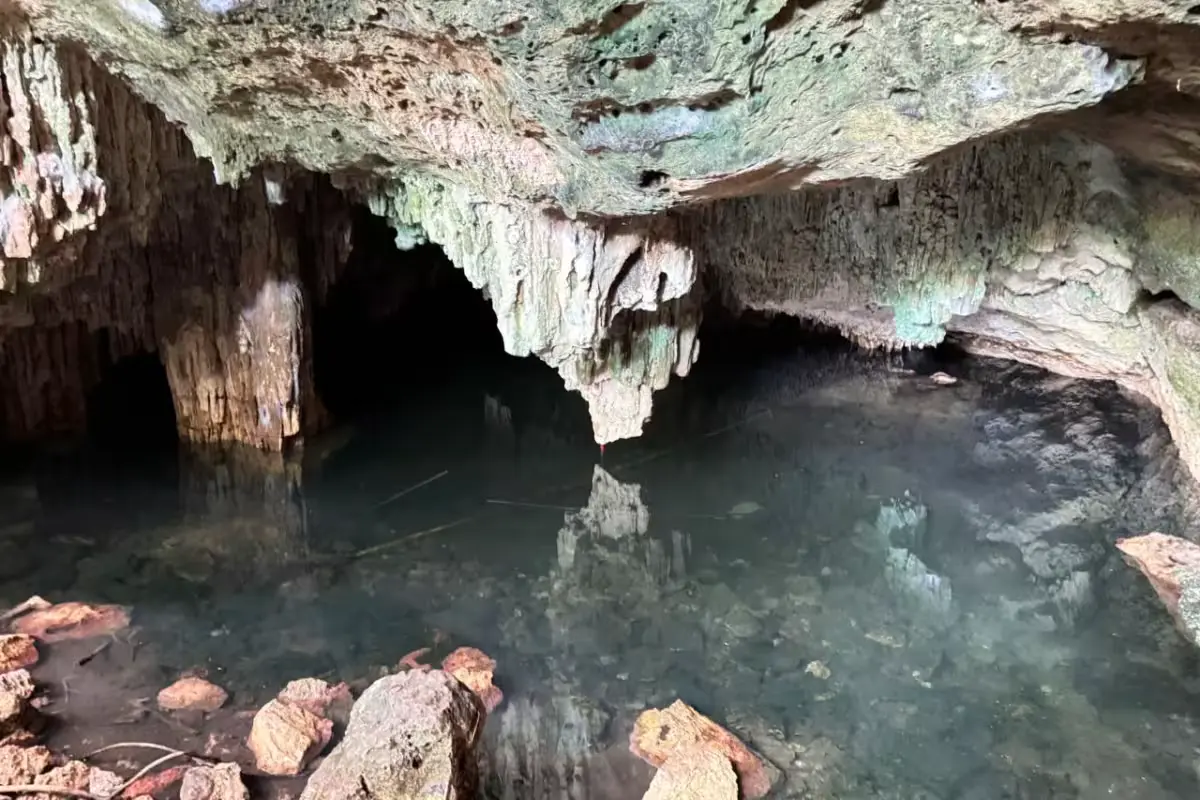
Playa del Carmen, Quintana Roo — Residents and environmental activists are calling on municipal authorities to clean and rehabilitate a cenote in the Misión del Carmen neighborhood that they say has been abandoned and is likely contaminated.
The cenote, located on Misión Santa Fe street, has become a dumping ground for solid waste, according to neighbors. They report that while the city occasionally clears surrounding vegetation, no efforts have been made to clean the water or restore the site.
“This cenote remains forgotten. The municipal authorities only cut the grass around it, but they don’t carry out water cleaning programs. People throw trash because they lack environmental awareness,” said resident Virgilio Alvarado.
Activist Guadalupe de la Rosa emphasized the ecological and cultural importance of cenotes. “Cenotes are vital for the Yucatan Peninsula because they represent the main source of fresh water and act as an interconnected ecosystem. They also have invaluable historical value and sustain the region’s tourism economy,” she said.
Adriana Rosas, another activist, explained that cenotes function as a filtration and storage system that supplies water to Playa del Carmen. Their underground river networks connect the jungle and the sea, harbor endemic species, and protect environmental balance.
“For the ancient Maya, cenotes were the center of life — water sources in areas without surface rivers and sacred portals to the underworld (Xibalba). They were ceremonial centers and preserve valuable archaeological and paleontological remains from the Ice Age. But they are gradually deteriorating and being contaminated by real estate development,” Rosas said.
Activist Roger Mora noted the economic impact of cenotes. “These resources drive the economy. They are the engine of adventure tourism and exploration, attracting thousands of visitors for diving, swimming, and ecotourism, generating significant local revenue. The problem is that municipal authorities don’t want to invest in infrastructure for rescue and to promote adventure tourism,” he said.
Residents say the cenote is full of fresh water but not safe for swimming due to pollution. They are urging the city to clean it, restore it, and promote it as a tourist attraction.
More Environment
- Screwworm Cases Detected in Two Dogs and a Horse in Tulum
- Playa del Carmen Recognized as International Bull Shark Zone
- Five Zones in Playa del Carmen Lose Urban Jungle to Construction Boom
- Hurricane Isaias Strengthens to Category 3 as Heavy Rain Hits Quintana Roo
- Hurricane Isaías to Bring Rain and Heat to Cancún and Playa del Carmen This Weekend
More Playa del Carmen
- Quintana Roo Riders Resume ‘Vest Law’ Talks, No Protests
- Quintana Roo Plans Two Wastewater Plants and Two Aqueducts for Cancún and Playa del Carmen
- Playa del Carmen Ranks Second in HIV Cases in Quintana Roo, Official Says
- Playa del Carmen to Build Tactical Operations Center to Boost Fifth Avenue Security
- Environmentalists Submit Citizen Initiative to Protect Playa del Carmen’s Chen Zubul Site From Submarine Power Line
