
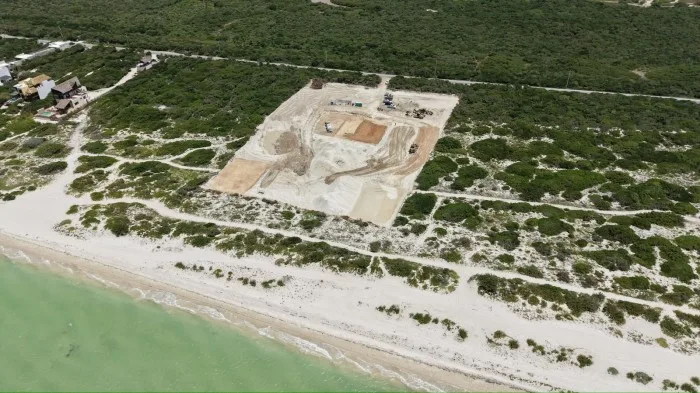
Mérida, Yucatán — Mexico’s Federal Attorney for Environmental Protection (Profepa) has ordered the total temporary closure of the Las Dunas residential development in Chuburná Puerto, Yucatán, after inspections revealed damage to protected species and multiple environmental violations.
Profepa carried out inspections on July 28–30 to evaluate the project’s environmental impact and forestry compliance. Officials said the construction site already showed evidence of land clearing, topsoil removal, sand excavation, and the construction of platforms.
According to the agency, the work had stripped all vegetation from 1.3 hectares, equal to 30.8 percent of the area authorized for land-use change. Protected species were found on approximately 0.65 hectares — half of the cleared land. These included cotton plants (Gossypium hirsutum), a species subject to special protection, and the endangered cat’s-head cactus (Mammillaria gaumeri). Inspectors also documented black spiny-tailed iguanas (Ctenosaura similis), Yucatan wrens (Campylorhynchus yucatanicus), and Mexican sheartail hummingbirds (Doricha eliza), all listed under the national environmental standard NOM-059-SEMARNAT.
Profepa said the two protected plant species had not been reported in the project’s Environmental Impact Statement (MIA) nor included in its flora rescue program. Inspectors also found bromeliads, orchids, agaves, and cacti outside their natural environment and dying, with no signs they had been rescued for relocation to the conservation areas specified in the project.
The agency said the damage to the coastal dune ecosystem is irreversible and represents a significant loss of biodiversity. It also found violations of the General Law on Sustainable Forestry Development, citing the project’s failure to comply with the conditions of its land-use change authorization and the deterioration of the area’s characteristic dune scrub and mangrove species.
Along with the temporary closure, Profepa has initiated an administrative proceeding. The agency warned that the omissions in the Environmental Impact Statement and the harm to protected species could constitute a crime against biodiversity under Article 420, Section IV of the Federal Criminal Code, and said it will evaluate what additional legal action to take.
More Environment
- White Sea Turtle Rescued in Cancún’s Hotel Zone
- Quintana Roo Records 29,413 Sea Turtle Nests at Season’s Midpoint
- Quintana Roo Reports 1,200 Screwworm Cases as Officials Await Sterile Fly Release
- Semarnat Approves Floating Marina in Cancún’s Nichupté Lagoon
- Cancún’s Benito Juárez Recycling Drive Recovers 6.8 Tons of Waste