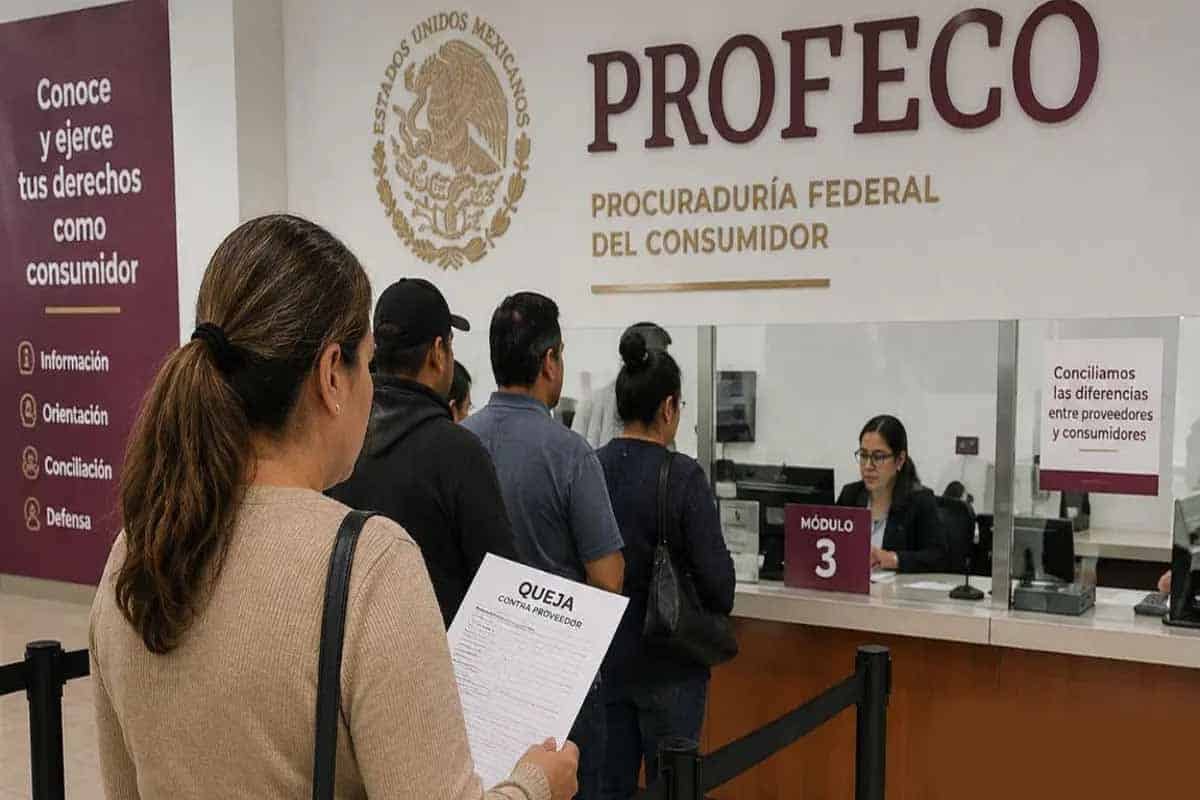
Mexico City — Mexico’s Federal Consumer Protection Agency (Profeco) has reminded consumers that they have formal mechanisms to file complaints when a provider fails to meet agreed terms in a purchase or service. The agency outlined the steps to recover money, demand guarantees, or correct commercial irregularities through legally backed procedures designed to protect consumer rights.
When a company does not honor advertised prices, agreed quantities, delivery deadlines, or sales conditions, consumers can turn to Profeco to initiate a formal claim. The process aims to create a dialogue between both parties and find a solution that avoids further conflict, while strengthening trust in commercial relationships within the country.
Profeco handles cases involving unfulfilled promotions, denied warranties, or improper charges. Many people are unaware they have legal tools to defend themselves, so disseminating these mechanisms is essential to prevent abuse and promote more transparent business practices.
Documents Required to Start the Process
To file a complaint, consumers must gather evidence that proves the commercial relationship with the provider. Invoices, receipts, contracts, account statements, advertisements, and payment proofs can serve as evidence during the procedure and help evaluate the reported facts.
In addition to documentation related to the purchase or service, Profeco requires a valid official ID and the complainant’s full details. It is also necessary to provide enough information to locate the provider involved, allowing proper follow-up and summoning of both parties.
Another key requirement is a detailed description of the events that led to the complaint. The agency recommends clearly explaining what happened, when it occurred, and what breach was detected, as these elements help build a solid case file.
Where to File a Complaint
Consumers can visit the nearest Consumer Defense Office in person. These offices accept the required documents and provide guidance on the next steps to ensure the request progresses correctly.
Profeco also offers digital mechanisms for certain providers enrolled in online conciliation programs. This alternative streamlines procedures, reduces travel, and facilitates communication between the parties, especially when technology can speed up reaching agreements.
Even Mexicans living abroad have special service channels. Through international conciliation platforms, Profeco provides options for consumers residing overseas to defend their rights when facing issues with purchases or services made in Mexico.
Cases Where Profeco Cannot Intervene
Although the agency has broad authority in consumer matters, the law limits its involvement in certain situations. These include conflicts arising from labor relations, employment contracts, or disputes that fall outside consumer protection.
Profeco also does not handle issues related to various financial services regulated by specialized bodies. In such cases, affected individuals must turn to the competent authorities that have specific powers to address complaints involving banking products, loans, or financial systems.
The agency notes that understanding these limitations is important to avoid wasting time and to direct complaints correctly. It often guides citizens to the appropriate institutions when it determines that the issue falls outside its legal scope.
How Conciliation Works Between Consumer and Provider
When a complaint is deemed valid, Profeco initiates a conciliation procedure with a specialist who facilitates dialogue. The main goal is to bring the consumer and provider together to find a mutually acceptable solution without resorting to more complex processes.
Depending on the nature of the conflict, agreements may include refunds, replacement of defective products, proper fulfillment of the contracted service, or financial compensation. Each case is analyzed individually, so solutions vary according to the specific circumstances.
During this stage, Profeco acts as an impartial intermediary. While it promotes agreements and protects consumer rights, the agency must also respect the current legal framework, so negotiations take place within parameters established by Mexican law.
What Happens If No Agreement Is Reached
If the parties cannot reach a conciliation, Profeco can guide the consumer on other legal avenues, such as arbitration procedures or specialized opinions that allow continued defense of affected rights through complementary channels.
The agency also has programs like Conciliaexprés, designed to resolve certain conflicts more quickly when participating providers are pre-registered in this scheme. This modality allows some disputes to be settled in less time and with fewer administrative steps.
Profeco emphasizes that information and prevention remain essential tools to avoid consumer problems. Knowing the requirements, keeping receipts, and acting promptly can make the difference between losing money or achieving a favorable solution backed by current legislation.
More Lifestyle
- Tulum’s Mureco Museum Adds 53 Mesoamerican Pieces for Second Anniversary
- Chetumal Entrepreneur Develops Automatic Hammock Rocker for Mexico
- Cancún Prepares Janal Pixán 2026 at Puerto Juárez, Aims to Double Attendance
- Mental Health and Addiction Top Concerns Among Playa del Carmen Youth, Survey Finds
- Cancún Opens Registration for Janal Pixan 2026 Catrina and Altar Contests