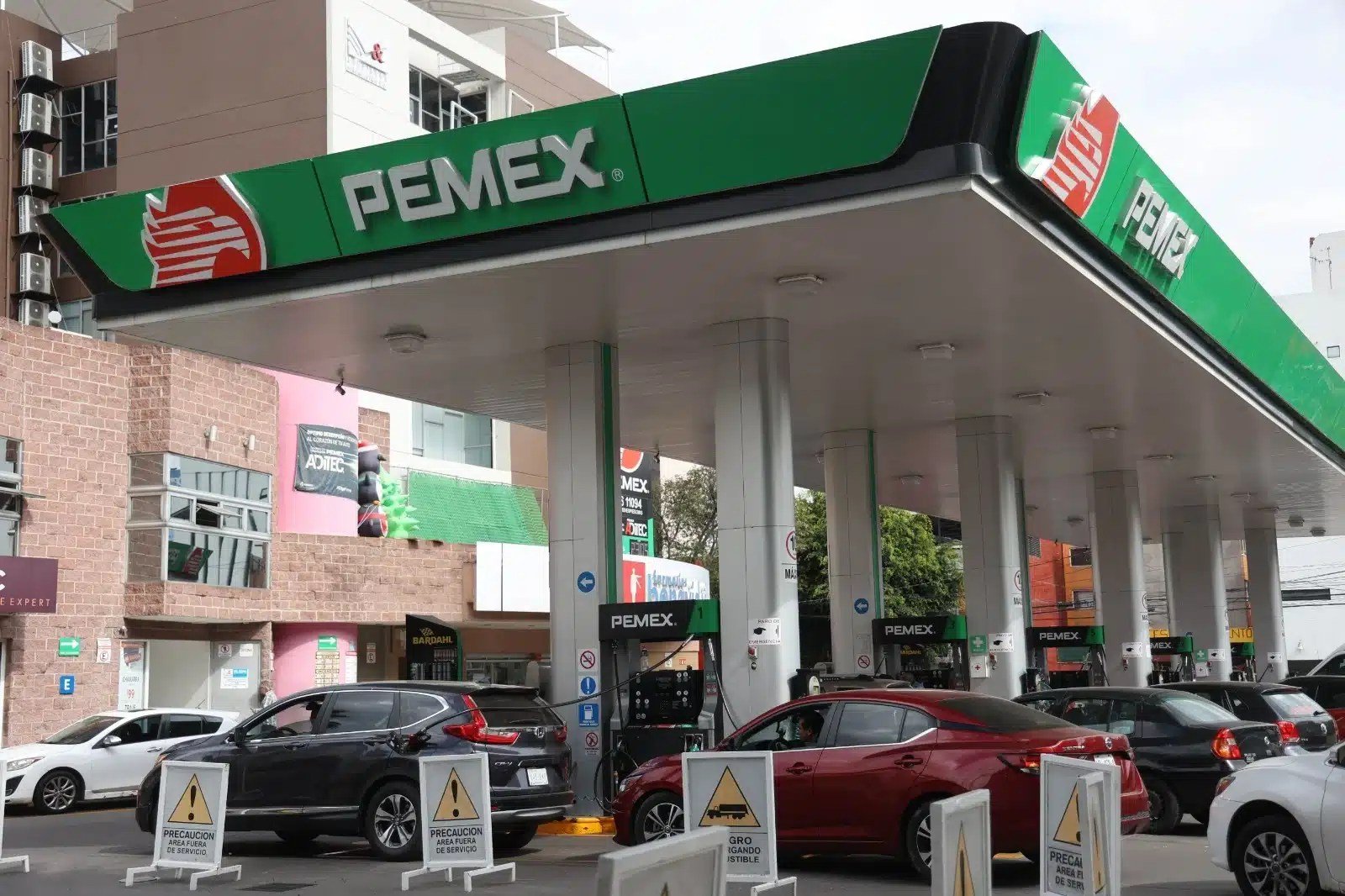
Mexico City — Mexico’s strategy to strengthen state oil company Pemex and expand refining capacity has helped keep gasoline and diesel prices stable despite volatile international markets, President Claudia Sheinbaum said in a recent public address.
Sheinbaum attributed the price stability to investments in new refineries, upgrades to existing facilities, and a push to reduce dependence on imported fuels. The approach is part of a broader energy sovereignty policy aimed at insulating the country from global supply disruptions and price swings.
Key projects include the Olmeca Refinery in Dos Bocas, Tabasco; the acquisition of the Deer Park refinery in Texas; and modernization of strategic installations across Mexico. These investments are designed to process a larger share of domestically extracted crude oil into gasoline, diesel, and other derivatives within the country.
When a nation relies heavily on imported refined fuels, it becomes more exposed to external factors such as international price fluctuations, logistical problems, or supply chain interruptions. By expanding domestic refining capacity, Mexico aims to strengthen its energy security and reduce those risks.
The energy sovereignty discussion also extends to electricity generation. The Federal Electricity Commission (CFE) is central to expansion plans, with new combined-cycle plants and projects to increase installed capacity in the coming years. Authorities also plan to incorporate more renewable sources into the national energy mix, aligning with global trends.
Beyond fuels and electricity, energy infrastructure investments have a direct impact on economic activity. Refineries, power plants, pipelines, and distribution systems create jobs, boost supply chains, and strengthen strategic sectors. Countries with solid energy infrastructure are generally better equipped to weather periods of international economic uncertainty.
As energy demand grows, the government faces the challenge of ensuring reliable supply without compromising economic competitiveness. Mexico’s current strategy combines oil production, domestic refining, grid strengthening, and a gradual expansion of renewables. This approach aims to provide greater stability in the face of changing international scenarios and reduce vulnerability to external factors that could affect energy supply.
Analysts, businesses, consumers, and international organizations will closely monitor the evolution of these projects, as their impact could influence key sectors of the national economy.
More Lifestyle
- Tulum’s Mureco Museum Adds 53 Mesoamerican Pieces for Second Anniversary
- Chetumal Entrepreneur Develops Automatic Hammock Rocker for Mexico
- Cancún Prepares Janal Pixán 2026 at Puerto Juárez, Aims to Double Attendance
- Mental Health and Addiction Top Concerns Among Playa del Carmen Youth, Survey Finds
- Cancún Opens Registration for Janal Pixan 2026 Catrina and Altar Contests