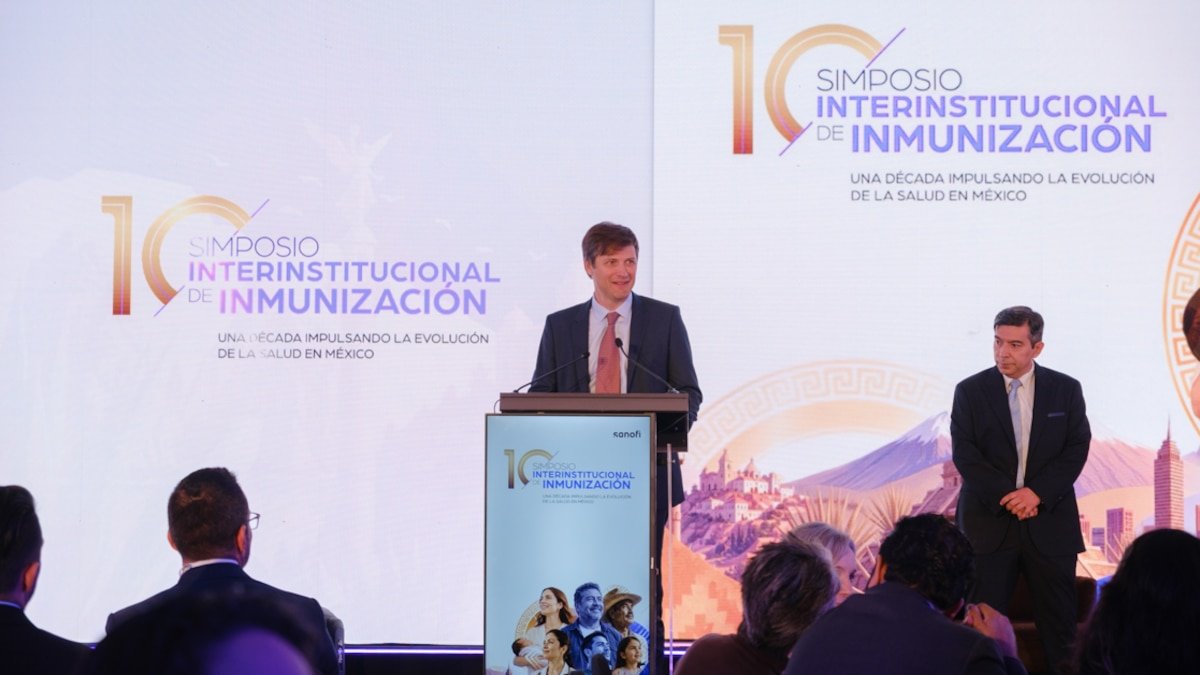
Mexico City — The 10th Interinstitutional Immunization Symposium opened Aug. 25-26 in Mexico City, bringing together health officials, physicians and vaccine specialists for two days of discussions on Mexico’s evolving vaccination needs. The event, supported by Sanofi, has reached more than 20,000 health professionals across its ten editions and is considered one of the country’s most significant immunization forums.
This year’s agenda centered on a fundamental shift: immunization in Mexico is no longer just about protecting children, but about accompanying people from infancy through older adulthood.
Mexico’s population has grown to more than 134 million, the birth rate has fallen by nearly 24% in ten years, and life expectancy has reached a record 75.63 years. The COVID-19 pandemic also drove childhood vaccination coverage down by as much as 13 percentage points in key vaccines, a shortfall the country is still working to overcome.
“Over the past decade, we have expanded our vision of immunization,” said Patricia Cervantes, medical director of vaccines at Sanofi Mexico. “Today we know that preventing a disease not only protects people’s health, it also helps avoid hospitalizations, reduce the pressure on health systems and generate economic benefits for families and the country. Innovation allows us to accompany people from the first months of life through older adulthood with solutions that did not exist before.”
Childhood vaccination recovery still lags
Mexico has one of the most comprehensive immunization programs in Latin America, but coverage has yet to return to recommended levels. According to the National Health and Nutrition Survey (ENSANUT) from 2021–2023, none of the essential childhood vaccines reached the World Health Organization’s 95% target needed for community protection.
The fallout has been tangible. In 2025, the National Committee for Epidemiological Surveillance issued an alert over rising whooping cough cases, a highly contagious illness that can be particularly dangerous for infants under six months.
RSV: A decade of new prevention tools
Respiratory syncytial virus (RSV) remains one of the biggest respiratory threats to infants, causing an estimated 3.6 million hospitalizations and 100,000 deaths worldwide each year in children under five, according to the WHO. A decade ago, there were few options for protecting newborns. Today, the WHO recommends a combined approach using monoclonal antibodies for infants and maternal vaccination during pregnancy to reduce severe disease and hospitalizations.
Flu prevention shifts to older adults
Mexico is also aging rapidly. More than 17 million people — 14% of the population — are 60 or older, and by 2030 the country is projected to have more older adults than children under 15. That change demands new vaccination priorities, particularly against influenza, which hits older adults disproportionately: people over 60 account for 70% of flu hospitalizations and 85% of flu-related deaths.
“Thanks to scientific advances, there are now immunization options designed specifically for the needs of the immune system at these ages,” said Julissa Rodríguez, medical manager for vaccines at Sanofi.
Influenza also poses cardiovascular risks. A Scottish study published in the European Respiratory Journal found that the infection can raise the risk of heart attack by up to 10-fold and stroke by 8-fold in the week after infection.
More Lifestyle
- Isla Mujeres Cultural Night Blends Music, Dance and Breast Cancer Awareness
- Buen Fin 2026 Set for November 13-17 With Five Days of Deals in Cancún
- IMSS Launches Winter Vaccination Drive in Quintana Roo With 263,000 Doses
- Playa del Carmen Announces Second ‘Desayuno Rosa’ Fundraiser for Breast Cancer Prevention
- Playa del Carmen Delivers 88 Birth Certificates to Residents Without Legal Identity