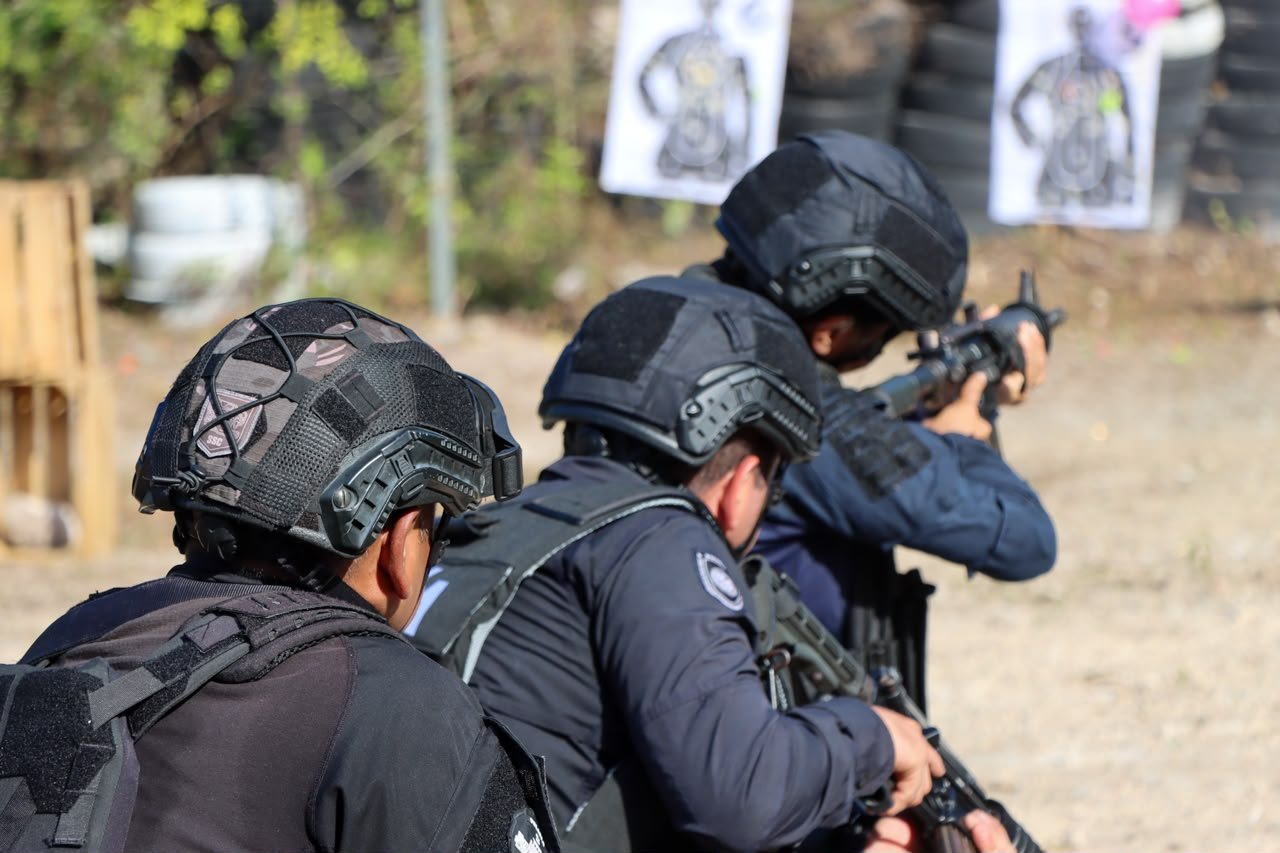
Playa del Carmen, Quintana Roo — New municipal police officers in Playa del Carmen are undergoing more than 1,000 hours of training as part of the Initial Training Program for Community Policing, a professionalization initiative led by Mayor Estefanía Mercado’s administration.
Through the Public Security Department, recruits receive theoretical and practical instruction to develop the knowledge, skills, and abilities needed to perform their duties with discipline, professionalism, and adherence to the law.
The training is delivered by specialists from the University of Security Sciences and Discipline of Quintana Roo (UNSEQ), who teach courses focused on strengthening operational capabilities as well as ethical training and respect for human rights.
Subjects include Weapons and Police Shooting, a 50-hour course in which recruits learn safe and responsible handling of institutional weapons, along with shooting practice to improve accuracy, discipline, and response capacity.
Another course, Public Demonstrations and Gatherings, spans 20 hours and trains personnel on protocols for handling protests and assemblies, prioritizing dialogue, respect for human rights, and public order maintenance.
The program also covers Police Instruction and Discipline, Police Defense Techniques, Human Development, Emotional Intelligence, Police Ethics and Responsibility, Human Rights, Culture of Lawfulness, Use of Force, Police Investigation, and Victim Assistance.
Additional training includes Civic Justice, Public Safety, Social Proximity, Civil Protection, First Aid, Arrest and Transport of Persons, police vehicle operation, radio communication equipment, surveillance and patrol, as well as specialized workshops.
Public Security Secretary Carlos Montesinos García emphasized that ongoing training is a key pillar for strengthening the municipal police force, noting that better-prepared officers can more effectively and professionally meet the community’s needs.
He added that the comprehensive training aims to strengthen not only the operational capabilities of future officers but also their commitment to discipline, ethics, respect for human rights, and the rule of law.
More Law Enforcement
- Two Drivers Hurt in Playa del Carmen Crash at Wet Zazil-Há Intersection
- Trump Escalates Pressure on Mexico, Demands Action Against Cartel-Allied Officials
- Alleged Owner of Cancún Home Rented by Puerto Morelos Mayor Linked to Ultramar Fraud Case
- Chetumal Traffic Officer Shoots Two Dead, Then Kills Himself
- Canine Unit Finds 10 Kilos of Cocaine Hidden in Suitcase at Cancún Airport
More Playa del Carmen
- Playa del Carmen Taps HR Directors to Boost Local Hiring
- Influencer Discards 2,500-Peso SpongeBob Cake at Nickelodeon Riviera Maya, Citing Bad Taste
- Quintana Roo Tops 152,000 Metric Tons of Sargassum as Playa del Carmen and Cancún Lead
- Playa del Carmen Opens Registration for Audiovisual Workshops
- Playa del Carmen Businesses Seek Later Closing Hours for Bars and Restaurants